Push pull legs for beginners is a way to split your week into push days (chest, shoulders, triceps), pull days (back and biceps) and leg days, and the research suggests it works best when each muscle gets trained about twice a week.
Table of Contents
Quick Summary
- What it is: a split where you train pushing muscles on one day, pulling muscles on another and legs on a third.
- 3-day version: each muscle is trained once a week. It is easy to fit in, but it is below the twice-a-week rhythm that several sources point to.
- 6-day version: each muscle is trained twice a week, but it takes six training days.
- What the evidence says: when total sets are equal, how often you train a muscle makes little difference to muscle growth. So pick the version you can stick to.
- Beginner caution: the American College of Sports Medicine (ACSM) recommends full-body training 2 to 3 days a week for novices.
Most guides present push pull legs as the best split for everyone and cite no research. This one explains how each version works, what the studies say, and gives you a 3-day home plan with dumbbells and bands.
What Is a Push Pull Legs Split?
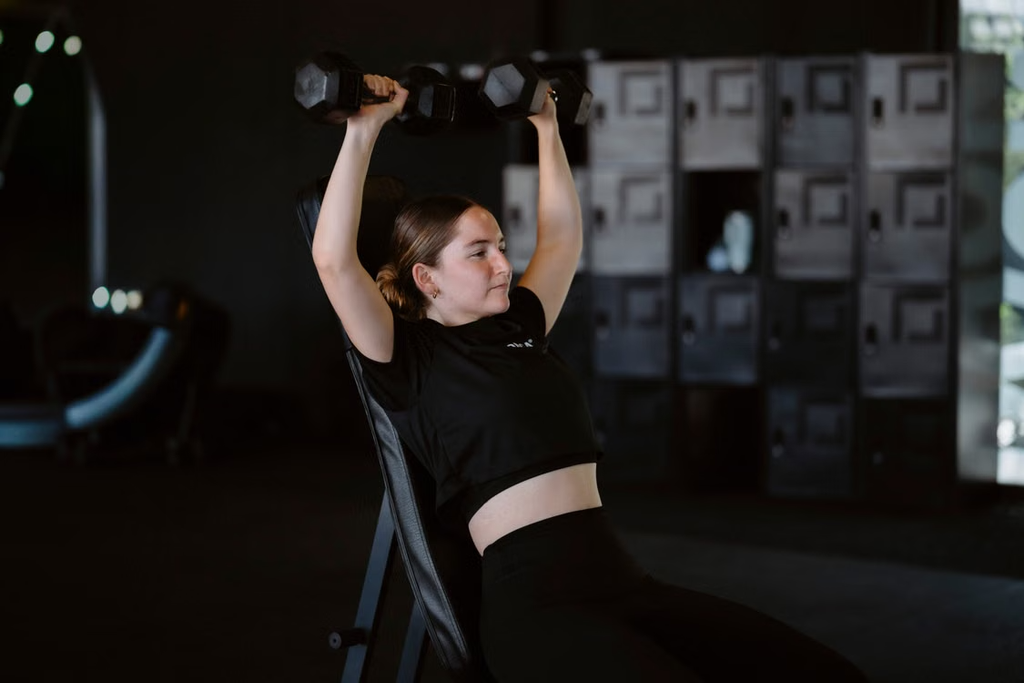
Push pull legs (PPL) groups exercises by movement:
- Push day: chest, shoulders and triceps, using pressing moves.
- Pull day: back and biceps, using rowing and pulling moves.
- Leg day: quads, hamstrings, glutes and calves.
In the 3-day version, you do one of each across a week, for example Monday, Wednesday and Friday. In the 6-day version, you run the cycle twice. One of the pages we read, from Myprotein, describes the advanced version as two days on and one day off.
Is Push Pull Legs for Beginners a Good Idea?
It can work, but the research does not make it the first choice for true beginners.
The ACSM position stand on resistance training progression (2009) recommends that novices train the entire body 2 to 3 days a week, using 1 to 3 sets per exercise at 8 to 12 repetitions. It lists a split routine that trains each muscle twice for intermediate lifters, not novices.
The Mayo Clinic says to lift two to three days a week for each muscle group, with at least 48 hours of rest after working a muscle to fatigue. The CDC asks for muscle-strengthening on 2 or more days a week that works all major muscle groups.
A 3-day PPL hits each muscle once a week, which is below that 2 to 3 times. A 6-day PPL meets it. We found no head-to-head study of PPL against full-body training in beginners, so we cannot say one is better for you.
The practical view: if you can only train three days, a 3-day PPL is fine as a starting point. Just know it is not the version the guidelines point to. If you want twice-a-week training for every muscle on three days, a full-body plan fits better. Our full body vs split workout at home guide compares the two.
What the Research Says About Training Frequency
How often should you train a muscle? A 2016 meta-analysis by Schoenfeld, Ogborn and Krieger in Sports Medicine covered 10 studies and found that training a muscle twice a week beat once a week when total volume was equal. The gain was 0.49 versus 0.30 in effect size terms.
A larger 2019 meta-analysis by Schoenfeld, Grgic and Krieger in the Journal of Sports Sciences pooled 25 studies and refined that finding. When total sets were equal, training frequency did not significantly or meaningfully change muscle growth. In other words, frequency is mainly a way to spread out your weekly volume.
There are limits. Volume was counted as sets times reps, which ignores how heavy the weight was. Some studies may have been grouped wrongly as volume-equated, and the participants were a mix of people, not only beginners. We read the 2019 paper through a research database record and a critique, because PubMed and the journal page were blocked.
What this means for you: you do not need a perfect split. A plan that gets enough weekly sets for each muscle, and that you will actually follow, matters more than the label.
A 3-Day Push Pull Legs Home Plan
This push pull legs for beginners plan is our own starting point, not a clinical program or a published routine. It uses dumbbells, bands and a doorway pull-up bar. Train on three non-consecutive days, such as Monday, Wednesday and Friday.
Push day
| Move | Sets and reps |
|---|---|
| Dumbbell floor press or push ups | 3 x 8-12 |
| Dumbbell overhead press | 3 x 8-12 |
| Lateral raise (dumbbell or band) | 2-3 x 12-15 |
| Overhead triceps extension | 2-3 x 10-15 |
Pull day
| Move | Sets and reps |
|---|---|
| One-arm dumbbell row (each side) | 3 x 8-12 |
| Band pull-apart or reverse fly | 2-3 x 12-15 |
| Assisted pull-up or band pulldown | 3 x 6-10 |
| Biceps curl | 2-3 x 10-12 |
Leg day
| Move | Sets and reps |
|---|---|
| Goblet squat | 3 x 8-12 |
| Dumbbell Romanian deadlift | 3 x 8-12 |
| Reverse or split lunge (each leg) | 2-3 x 8-10 |
| Glute bridge | 3 x 12-15 |
| Standing calf raise | 2-3 x 12-20 |
Rest 1 to 2 minutes between sets. That rest range is our suggestion, since we could not confirm a specific rest-time rule from the sources we read.
For help with specific moves, see our guides on the dumbbell chest workout without bench, dumbbell back workout at home, goblet squat for beginners and zero to first pull-up.
How to Progress
When you reach the top of the rep range on every set with good form, add a little weight or use a stronger band next session. Our progressive overload at home guide explains how. The ACSM stand suggests starting with a load you can lift 8 to 12 times and adding weight in small steps.
Want Twice a Week? The 6-Day Option
Once you are consistent, you can run the cycle twice: push, pull, legs, push, pull, legs, then rest. Every muscle then gets trained twice a week, which matches the frequency several sources point to.
It is a big time commitment, and we found no study showing it beats a full-body plan for beginners. If six days feels like too much, a middle path is a 4-day upper and lower split. Either way, build up slowly and take rest days seriously.
Recovery and Safety
- Rest. The Mayo Clinic says to rest a muscle at least 48 hours after working it to fatigue. The ACSM stand also stresses rest days to reduce the chance of overtraining.
- Warm up. Our warm up before a workout guide shows how.
- Stop for pain. Mayo says injuries often come from swinging weights, poor technique or lifting too heavy.
- Check with a doctor first if you have a chronic condition or have been inactive for a long time.
What You Need
- Adjustable dumbbells: one set covers most of the plan. Check the listing for the weight range.
- Resistance band set: for pull-aparts, pulldowns and lateral raises.
- Doorway pull-up bar: for pull day. Check the listing for door frame fit.
- Exercise mat: for floor presses and glute bridges.
Common Mistakes
- Skipping legs. Leg day is a third of the split.
- Training the same muscles on back-to-back days. Keep a rest day between.
- Adding weight too fast. Move up in small steps.
- Ignoring pulling. Make sure pull day gets as much effort as push day.
- Copying a gym plan with home gear. Use the moves in this plan instead.
Quick Answers
Is push pull legs good for beginners? It can work, but ACSM recommends full-body training 2 to 3 days a week for novices.
How many days a week is push pull legs? Three days (one cycle) or six days (two cycles).
Can I do push pull legs at home? Yes, with dumbbells, bands and a doorway pull-up bar.
How long should I rest between sets? One to two minutes is a common choice, though we found no firm beginner rule.
The Bottom Line
Push pull legs for beginners is a simple way to organize your week, but it is not magic. The research suggests you should train each muscle about twice a week, and that total weekly sets matter more than the split itself.
Start with the 3-day plan if three days is what you have, build up slowly and consider the 6-day version or a full-body plan as your schedule allows.
Disclaimer & Affiliate Disclosure
This article is for informational purposes only and should not be taken as medical advice. Always consult with a qualified healthcare provider or certified fitness professional before starting or changing your diet or exercise routine. This article may also contain affiliate links. If you purchase through these links, we may earn a small commission at no extra cost to you.