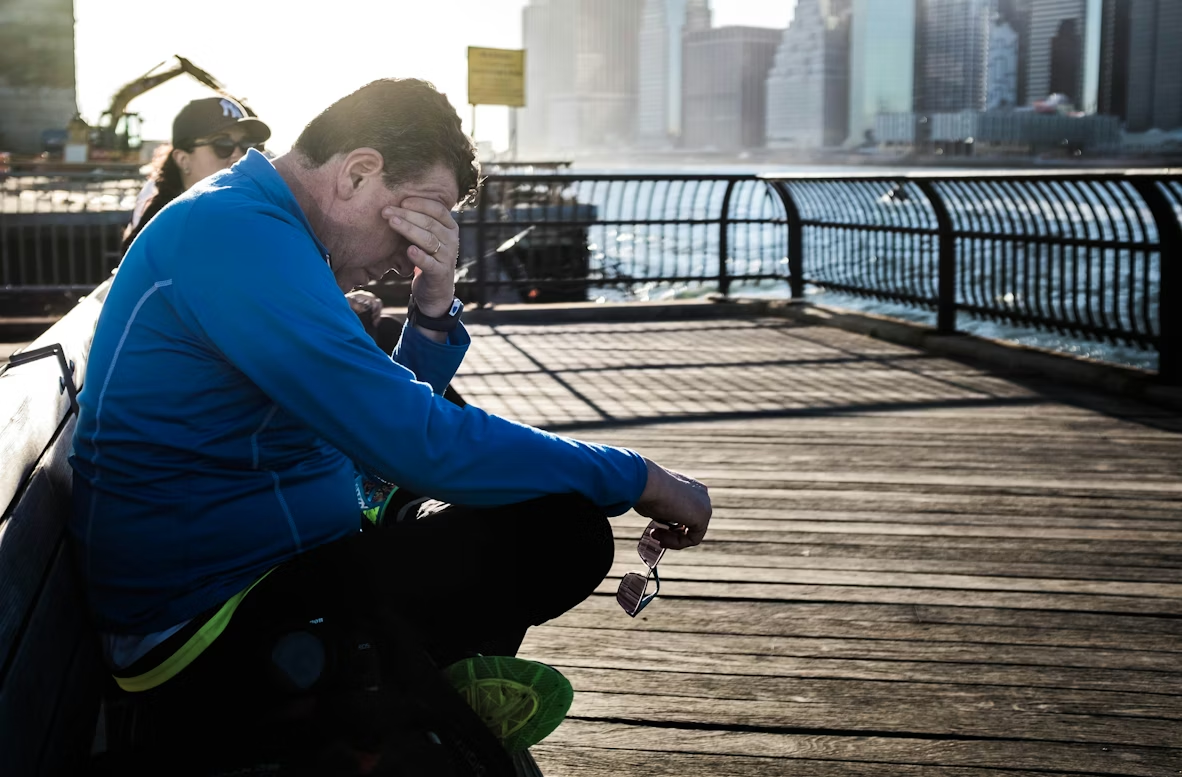
The active recovery vs rest day decision is one that confuses almost every beginner — and even plenty of experienced gym-goers. Should you push through and do something light? Or should you do absolutely nothing and let your body fully rest? The answer isn’t the same every time, and getting it wrong in either direction can slow your progress, increase your injury risk, or leave you feeling worse than before. Here’s exactly how to make the right call every single time.
Table of Contents
Why Your Off Days Matter More Than You Think
Here’s something most beginners don’t realise: the actual gains from your training don’t happen during your workout. They happen after it, during recovery. When you train, you’re creating stress on your muscles and nervous system. Your body responds to that stress by repairing, adapting, and coming back stronger. But only if you give it the conditions to do so.
This is why off days are not wasted days. They are arguably the most important part of your training week. The question is simply what kind of off day your body actually needs right now. If you’re wondering how recovery fits into your broader training strategy, read our breakdown on whether are home workouts actually effective.
Active Recovery vs Rest Day: The Traffic Light Decision Framework

Instead of guessing, use this simple decision framework every time you’re unsure what to do on a rest day.
Red Light — Take a Full Rest Day
Some days, the right answer is genuinely to do nothing. Take a complete rest day when you experience any of the following:
You have sharp or severe joint pain that goes beyond normal muscle soreness. Joint pain is your body’s clearest signal that something needs time to heal without added movement stress.
You’re experiencing extreme systemic fatigue — the kind where even basic daily tasks feel heavy and your motivation has completely disappeared. This is a sign of accumulated training stress that only full rest will resolve.
You’re ill. Training while sick diverts the immune resources your body needs to fight the illness and typically makes recovery take longer, not shorter.
You slept fewer than six hours the night before. Sleep is when the majority of muscle repair and hormonal recovery happens. Training on severe sleep deprivation impairs performance, increases injury risk, and produces minimal adaptive benefit.
On full rest days, the goal is simple: sleep well, eat well, stay hydrated, and let your body do its job undisturbed. Restoring hydration is critical on off days, so adding a zero-sugar electrolyte powder on Amazon to your water helps replenish essential minerals without added carbs
Green Light — Do Active Recovery
Active recovery is appropriate when you feel mild muscle stiffness from a previous session — what most people know as DOMS — but your energy levels are reasonable and you have no sharp pain or illness. You’re not wrecked. You’re just stiff and a little sore.
You might also choose active recovery when you want to maintain your movement momentum without adding training stress. Staying in the habit of moving daily, even gently, is a powerful consistency tool for beginners who are building a new routine.
The key distinction is this: active recovery should feel good while you’re doing it. If it doesn’t — if it starts to feel like a workout, causes pain, or leaves you more tired than before — you’ve crossed the line from recovery into training. That’s not what this is for.
What Active Recovery Actually Looks Like: 3 Easy 20-Minute Options
Effective active recovery doesn’t require structure, equipment, or intensity. Here are three simple approaches that work well for beginners.
Option 1 — The Low-Impact Flush Walk
A gentle 20-minute walk is one of the most effective recovery tools available and it costs nothing. Walking at a comfortable pace increases circulation, delivers oxygen and nutrients to sore muscles, and gently moves your joints through their range of motion without adding any meaningful training stress.
Keep the pace conversational — you should be able to hold a full conversation throughout without any breathlessness. If you’re working hard enough to get out of breath, you’ve moved from active recovery into low-intensity cardio, which is a different thing entirely.
Aim for flat terrain wherever possible. Hills add challenge, which is great for training days but counterproductive for recovery.
Multiple studies on active recovery and muscle soreness confirm that gentle blood flow stimulation helps clear metabolic waste far faster than complete inactivity.
Option 2 — Full-Body Mobility and Gentle Stretching
Spending 20 minutes moving through gentle mobility work and static stretching is one of the best investments you can make in your long-term movement quality. Stiff, immobile joints are more injury-prone, and beginners often have significant restriction from sedentary daily habits that mobility work directly addresses.
A simple full-body sequence might look like this: hip circles, leg swings, shoulder rolls, and cat-cow movements to warm up the spine — followed by a hip flexor stretch, a seated hamstring stretch, a doorway chest stretch, and a child’s pose to finish. Hold each static stretch for 30 to 60 seconds and breathe steadily throughout.
Don’t push into pain. Stretching should feel like mild productive discomfort — a gentle pull, never a sharp sensation.
Option 3 — Foam Rolling and Myofascial Release
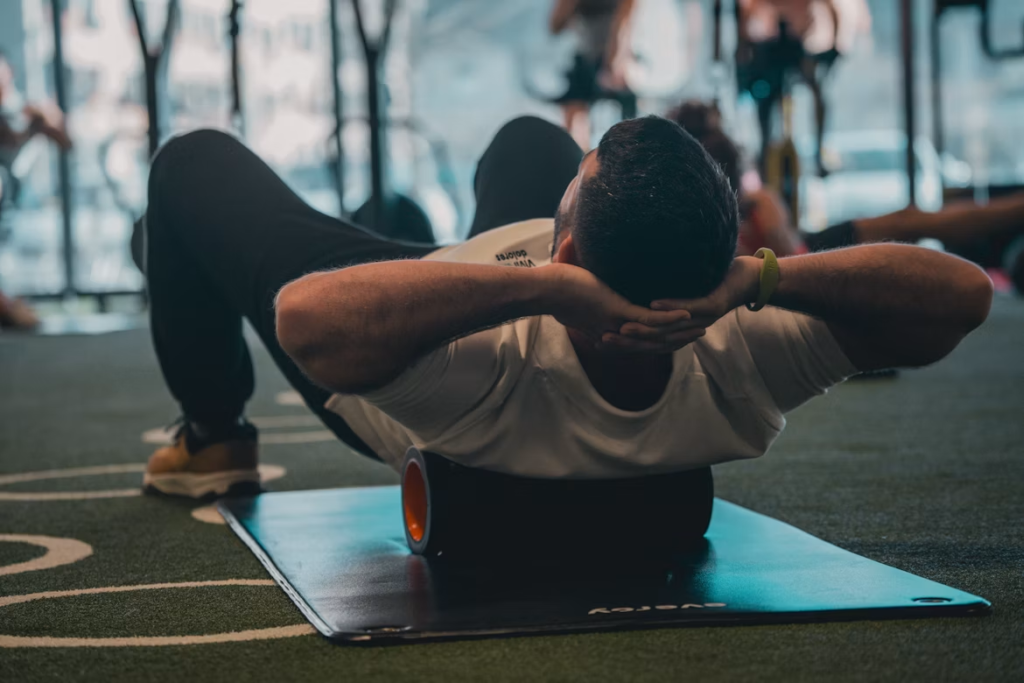
Foam rolling — also called myofascial release — applies sustained pressure to tight muscle tissue, helping to break up adhesions, improve tissue quality, and reduce perceived soreness. The research on exactly how it works is still evolving, but the practical experience of most people who use it consistently is clear: rolling sore muscles feels significantly better than not rolling them.
Focus on the areas most likely to be tight after training: your quads, calves, glutes, and upper back. Spend 60 to 90 seconds on each area, rolling slowly and pausing on any spots that feel particularly tender. Breathe through the pressure rather than tensing against it.
A high-density foam roller for sore muscles is one of the most practical pieces of recovery equipment you can own — affordable, durable, and usable every single day. You can find a wide range of options on Shopee to suit every budget.
Key Rules to Keep Active Recovery Actually Restorative
Two principles make the difference between active recovery that genuinely helps and active recovery that secretly becomes another training session:
Stay under an RPE of 3 to 4
RPE stands for Rate of Perceived Exertion — a simple 1 to 10 scale where 1 is lying still and 10 is maximum effort. All active recovery should feel like a 3 to 4 at most. Easy. Comfortable. Sustainable for a long time without fatigue building. The moment it starts feeling like a 5 or 6, you’ve crossed from recovery into training and need to ease off.
Prioritise hydration and sleep above everything else
No foam rolling session or gentle walk will compensate for consistently poor sleep and inadequate hydration. Aim for 7 to 9 hours of quality sleep every night — particularly on the nights following hard training sessions. Drink enough water that your urine is a pale yellow throughout the day.
If your muscles are particularly sore and inflamed after a tough session, a soothing muscle relief balm applied topically can help manage localised discomfort and make your recovery days more comfortable. Watsons carries a good selection of these alongside other recovery and wellness essentials.
Putting It Into Practice: A Sample Recovery Week
For a beginner training two to three times per week, a well-structured week might look like this:
Monday — Training session
Tuesday — Active recovery (20-minute walk or mobility work)
Wednesday — Training session
Thursday — Full rest day
Friday — Training session
Saturday — Active recovery (foam rolling and stretching)
Sunday — Full rest day
This isn’t a rigid prescription — it’s a framework. Adjust based on how you actually feel each day using the traffic light system above. Some weeks you’ll need two full rest days. Other weeks, active recovery every off day will feel great. Both are normal. To pair these active recovery days with a structured training routine, check out our full beginner home workout plan.
The Bottom Line
The active recovery vs rest day decision comes down to one honest question: what does my body actually need today? Sharp pain, illness, extreme fatigue, or poor sleep means rest completely. Mild soreness and reasonable energy means light movement will help more than doing nothing. Both answers are valid. Both serve your progress.
The athletes and beginners who make the fastest long-term progress are not the ones who train the hardest every day — they’re the ones who recover the smartest on the days in between. Build that skill alongside your fitness and you’ll find that the combination of smart training and smart recovery produces results that neither achieves alone.
Disclaimer & Affiliate Disclosure
This article is for informational purposes only and should not be taken as medical advice. Always consult with a qualified healthcare provider or certified fitness professional before starting or changing your exercise routine. This article may also contain affiliate links. If you purchase through these links, we may earn a small commission at no extra cost to you.