A dumbbell back workout at home needs only a pair of dumbbells and four simple moves: a bent-over row, a single-arm row, a reverse fly and a Romanian deadlift, done twice a week.
Table of Contents
Quick Summary
- The 4 moves: bent-over row, single-arm row, reverse fly and Romanian deadlift (a hip hinge).
- How often: twice a week, with a rest day between sessions. The CDC asks adults for muscle-strengthening on at least 2 days a week.
- How hard: pick a weight you can lift comfortably 12 to 15 times, according to the Mayo Clinic.
- No bench needed: a sturdy chair or sofa can stand in for a bench. That is our adaptation, not a certifying-body method.
- Safety: keep your spine neutral, hinge from the hips and stop for pain. See a doctor for back pain with leg numbness or weakness.
Most guides list 6 to 10 exercises and skip the safety side. This one keeps the list short, shows what each move needs, gives a simple weekly plan and flags what the research does and does not say.
What Does a Dumbbell Back Workout Train?
Your back is not one muscle. Mayo Clinic describes the bent-over row as working the back of the shoulder and the upper back. Most dumbbell back moves are pulls, so they balance all the pushing you do in push ups and chest work.
If you already train your chest at home, our dumbbell chest workout without bench guide pairs well with this one. Our dumbbell exercises for beginners guide covers the rest of your body.
Dumbbell Back Workout at Home: The 4 Best Moves
Bent-Over Dumbbell Row
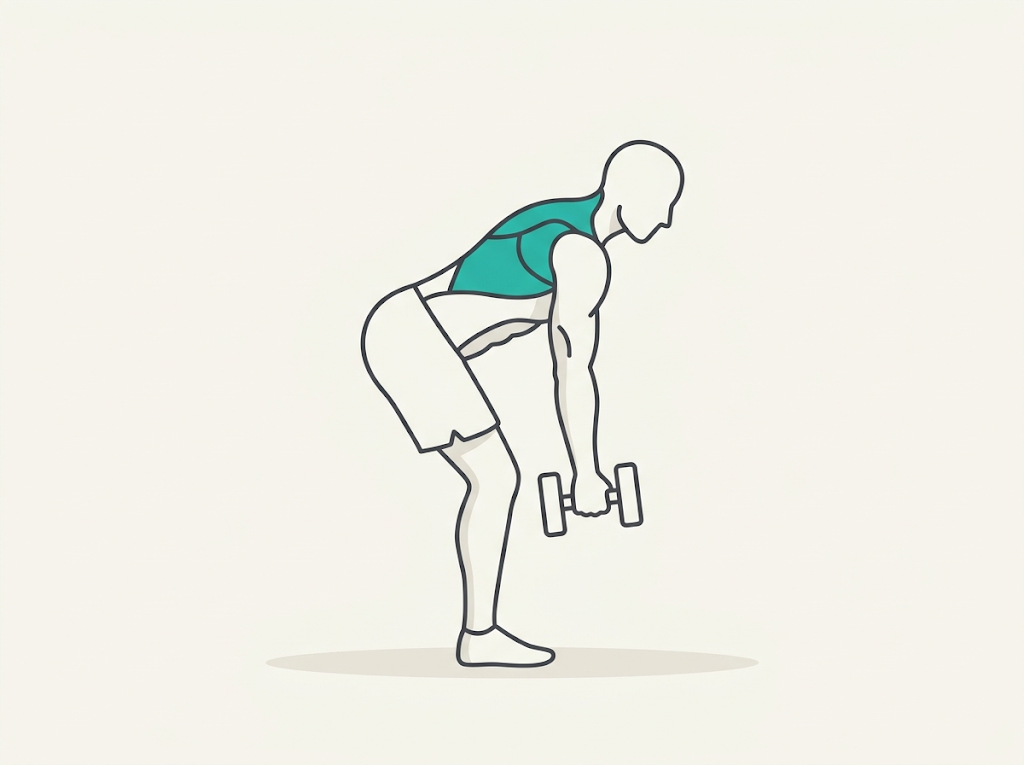
The Mayo Clinic’s bent-over row page gives these cues:
- Stand with your feet shoulder-width apart, engage your core and soften your knees.
- Hinge forward from your hips with your back flat, and let your arms hang from your shoulders.
- Raise the weight until your elbow sits just below shoulder height, in line with your torso.
- Lower slowly, keeping your spine neutral and your shoulder still.
Mayo says one set of 12 to 15 reps is enough for most people. Do not let your shoulder roll forward.
Single-Arm Dumbbell Row
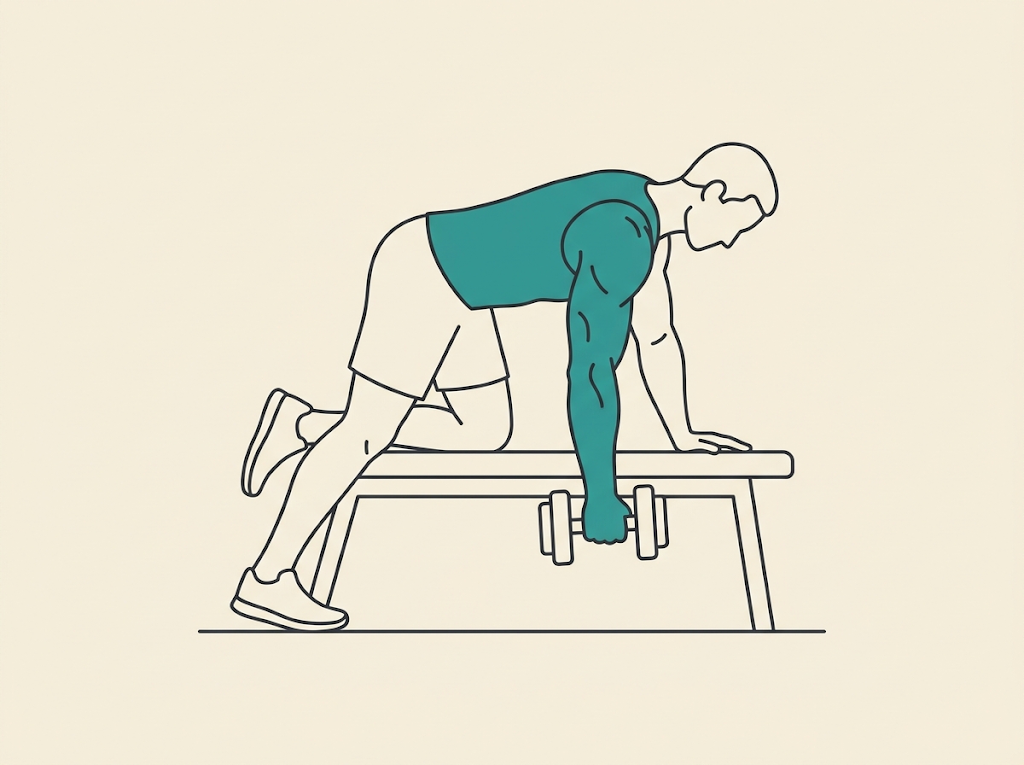
The American Council on Exercise describes this move with one knee and one hand on a bench. Brace your core, keep your back level and your shoulder blades down and back, and do not arch your lower back. Bend your elbow and draw your upper arm back close to your body, with no twisting. Breathe out as you pull and lower slowly.
No bench? A sturdy chair or sofa can work as the support. That is our own adaptation, so use something that will not slide and keep your hand directly under your shoulder.
Reverse Fly
The Mayo Clinic’s reverse fly page has you sit with your knees bent, lean forward until your arms hang near your calves, keep a slight bend in your elbows and raise the weights until your elbows reach shoulder height. Lower slowly, and avoid hunching or swinging the weights.
Mayo adds that if you have back problems or cannot keep good form, you can do the same motion lying face-down on a bench. Use light dumbbells here.
Romanian Deadlift (Hip Hinge)
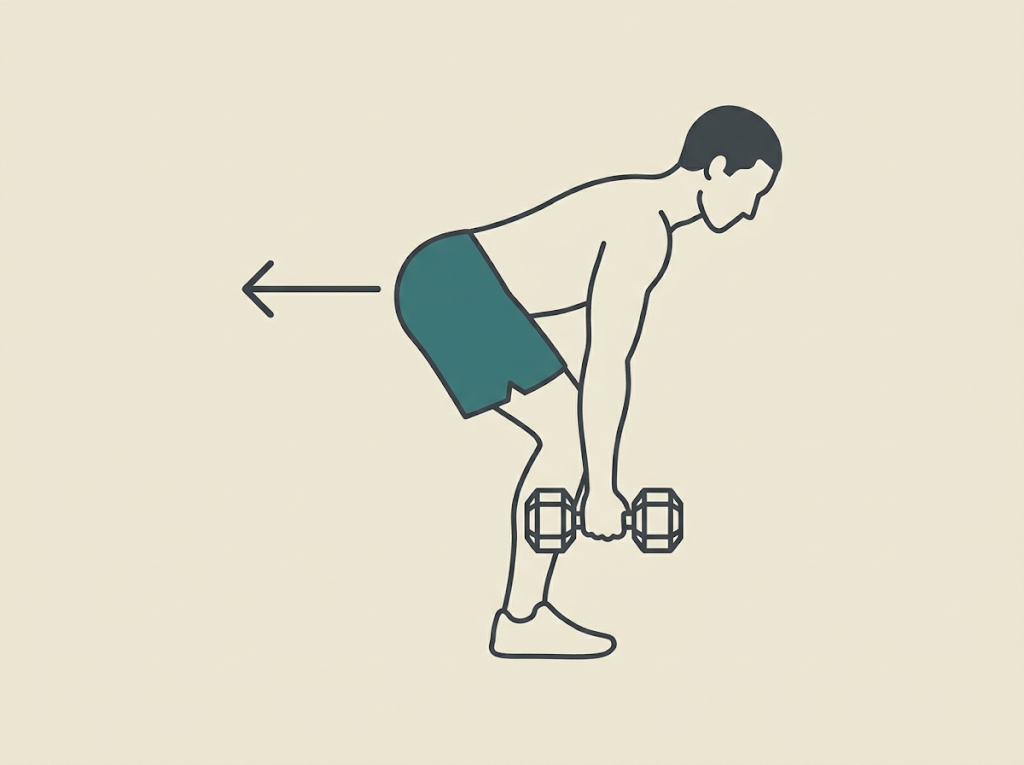
The ACE technique guide for the Romanian deadlift is written for trainers, but its cues work for beginners:
- Push your tailbone back to hinge at the hips, with a slight bend in your knees.
- Keep the weights close, sliding down your thighs.
- Keep your spine long and do not round your back.
- Lower until you feel tension in the back of your thighs, then stand by pushing your heels into the floor and your hips forward.
ACE suggests practicing the hinge with no weight until you can do 10 to 15 clean reps, then adding light dumbbells. The page uses a barbell, so the dumbbell version is our adaptation.
How Heavy Should the Dumbbells Be?
Use the Mayo Clinic rule: start with a weight you can lift comfortably about 12 to 15 times, and raise it once it feels easy. Learn the form before you add weight. Reverse flies should be much lighter than rows.
Because your needs change, adjustable dumbbells are a practical choice. You change the weight instead of buying several pairs.
Your Dumbbell Back Workout at Home Plan
This plan is our own starting point, not a clinical program. Do it twice a week, such as Monday and Thursday.
| Move | Weeks 1-2 | Weeks 3-4 |
|---|---|---|
| Bent-over row | 2 sets of 10-12 | 3 sets of 10-12 |
| Single-arm row (each side) | 2 sets of 10-12 | 3 sets of 10-12 |
| Reverse fly | 2 sets of 12-15 | 2 sets of 12-15 |
| Romanian deadlift | 2 sets of 8-10 | 3 sets of 8-10 |
Rest about a minute between exercises, and longer if you need it to keep good form. Mayo Clinic says one set per exercise is enough for health, and suggests a full rest day before working the same muscles again.
To train the rest of your body, see our 3-day dumbbell workout schedule for beginners. To make rows harder over time, see progressive overload at home.
What the Research Says About Sets and Frequency
How many sets do you need? A 2017 meta-analysis by Schoenfeld, Ogborn and Krieger in the Journal of Sports Sciences pooled 15 studies and found that each extra weekly set per muscle group was linked with about 0.37 percent more muscle gain. Doing 10 or more sets a week looked better than fewer, but that difference was only a trend, not statistically significant.
There are limits. Few studies were in trained people, there was little data above 12 sets a week, and the result was weaker when muscle was measured by indirect methods. It is about muscle growth in general, not the back specifically.
A separate 2016 review by Schoenfeld and colleagues in Sports Medicine found that training each muscle twice a week beat once a week when total sets were equal.
The takeaway for beginners is modest: more sets help a little, and twice a week is a good rhythm. You do not need high volume to start. We read the full text of the first paper on a copy hosted at paulogentil.com, and the second as a PubMed abstract.
Back Safety: What to Watch For
- Warm up first. The Mayo Clinic suggests 5 to 10 minutes of brisk walking before you lift.
- Stop for pain. Mayo says to stop if an exercise causes pain and try again in a few days with a lighter weight.
- Do not arch your back. ACE and Mayo both say to keep your spine neutral in rows.
- Control the weight. Lift slowly with no momentum, and do not hold your breath.
- Check with a doctor first if you have a chronic condition or back problems.
See a doctor promptly if back pain comes with numbness or weakness in your legs, trouble with your bladder or bowels, fever, or pain after a fall. The Cleveland Clinic and the Mayo Clinic list these warning signs. We found no source that says dumbbell rows are especially risky, so good form and a sensible weight are the main protections.
What You Need for a Dumbbell Back Workout
- Adjustable dumbbells: one set covers every move here, and you can add weight as you get stronger. Check the listing for the weight range.
- Adjustable bench: optional. It gives the single-arm row a stable support and lets you do the reverse fly lying face-down. Check the listing for the weight limit and whether it folds.
- Exercise mat: cushions the floor for hinge practice and warm-ups. Check the listing for thickness.
- Resistance band set: bands give you another way to pull. Our resistance band back workout guide shows how, and our at-home back workout with pull-up bar guide covers pulling from a bar.
Common Mistakes
- Rounding your lower back. Hinge from your hips and keep your spine long.
- Using momentum. Slow reps work the muscle better and are safer.
- Letting the weight drift away from you. Keep it close during deadlifts.
- Twisting your torso on single-arm rows. Keep your shoulders level.
- Going too heavy on flyes. Use light dumbbells and control the move.
Quick Answers
What is the best dumbbell back exercise? There is no single best move. The bent-over row and single-arm row are the simplest to learn.
Can I train my back with one dumbbell? Yes. Single-arm rows and Romanian deadlifts both work with one dumbbell.
How many times a week should I train my back? Twice a week, with a rest day between sessions, is a solid start.
Do I need a bench? No. A sturdy chair or sofa can work for single-arm rows, and the other moves are done standing or seated.
The Bottom Line
A dumbbell back workout at home is simple: pick four moves, choose a weight you can lift 12 to 15 times with good form and train twice a week. Keep your spine neutral and stop if something hurts.
Follow the plan for four weeks, add weight slowly and pair it with some pushing exercises for balance. A bench can wait until you want it.
Disclaimer & Affiliate Disclosure
This article is for informational purposes only and should not be taken as medical advice. Always consult with a qualified healthcare provider or certified fitness professional before starting or changing your diet or exercise routine. This article may also contain affiliate links. If you purchase through these links, we may earn a small commission at no extra cost to you.