High protein breakfast ideas are easiest to build around a few foods with a lot of protein per serving, such as Greek yogurt, cottage cheese, eggs, tofu and tempeh, and a beginner can aim for roughly 20 to 30 grams of protein at breakfast.
Table of Contents
Quick Summary
- Top protein foods: cottage cheese (about 25 g per cup), plain Greek yogurt (about 24.5 g per cup), tempeh (about 33.7 g per cup) and edamame (about 18.5 g per cup).
- Eggs: about 6 g each, so two eggs give around 12.5 g.
- A realistic target: 20 to 30 g at breakfast for most adults. Many pages say 30 to 50 g, but we found no source for that.
- What research shows: in one small trial, a 35 g protein breakfast made young women feel fuller than a 13 g cereal breakfast and cut evening snacking on high-fat foods.
- Vegan options exist: tofu, tempeh, edamame, soy milk and hemp seeds.
Most breakfast lists give recipe totals with no sources. This one gives per-serving numbers with the serving size, shows where each came from, and flags which ones we estimated.
How Much Protein Do You Need at Breakfast?
The recommended daily amount is 0.8 grams per kilogram of body weight, according to Harvard Health, which describes it as the minimum to avoid deficiency, not an ideal target. Our how much protein for beginners guide covers the daily numbers, and the protein intake calculator gives you a personal estimate.
For a single meal, the International Society of Sports Nutrition position stand suggests about 0.25 g per kilogram, or 20 to 40 g of high-quality protein per serving, according to a NutraIngredients summary. Schoenfeld and Aragon, writing in the Journal of the International Society of Sports Nutrition, suggested a target of 0.4 g/kg per meal across at least four meals, and said that figure is not an ironclad or universal limit.
For a 70 kg person, that works out to roughly 18 to 28 g per meal, which is our own arithmetic. So 20 to 30 g at breakfast is a defensible target. We did not find a source for the 30 to 50 g numbers some sites use.
How Many Grams of Protein Are in Common Breakfast Foods?
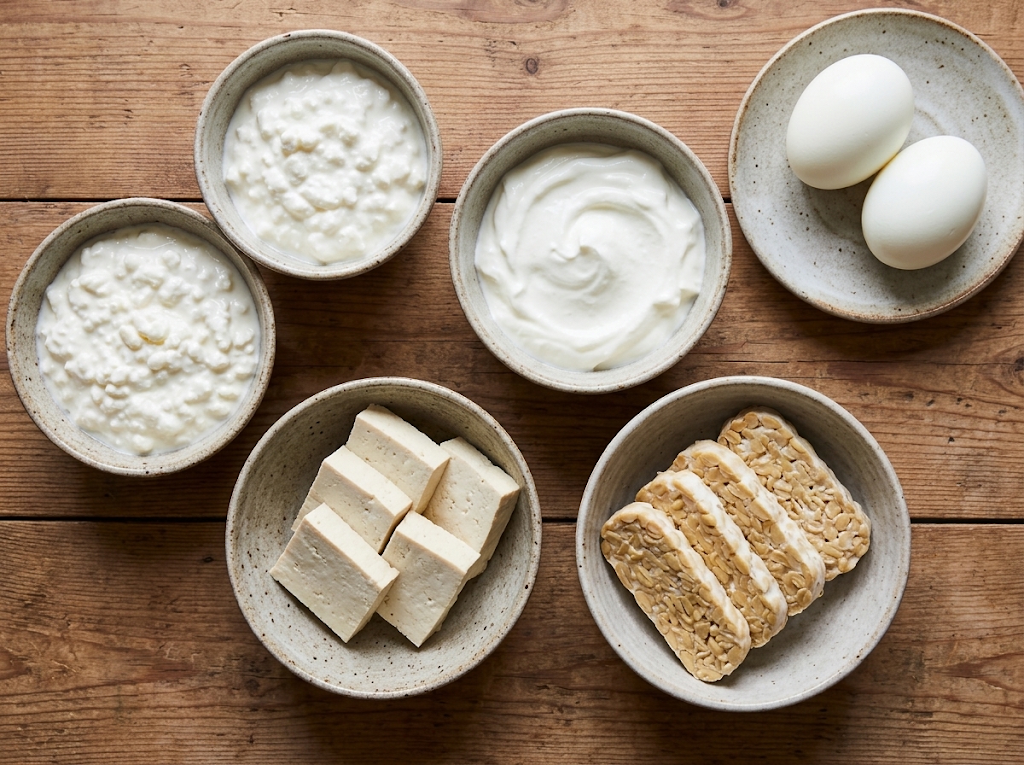
These figures come from Peloton’s high-protein breakfast guide, which links to USDA FoodData Central, unless noted. We could not open the USDA site itself, so check the label on the food you buy.
| Food | Serving | Protein |
|---|---|---|
| Tempeh | 1 cup | about 33.7 g (USDA data via a mirror site) |
| Cottage cheese | 1 cup | about 25 g |
| Plain Greek yogurt | 1 cup | about 24.5 g |
| Edamame (vegan) | 1 cup | about 18.5 g |
| Smoked salmon | 3 oz | about 15.5 g |
| Eggs | 2 large | about 12.5 g |
| Tofu (vegan) | 3.5 oz | about 10 g |
| Chicken or turkey sausage | 2 links | about 10 g |
| Hemp seeds (vegan) | 3 tbsp | about 9.5 g |
| Cow’s milk | 1 cup | about 8 g |
| Soy milk (vegan) | 1 cup | about 8 g |
| Peanut butter | 2 tbsp | about 6 g |
| Whey protein powder | 1 scoop | about 25 g, varies by brand |
Serving size and type matter. A second source, WebMD, lists about 15 g in 6 oz of whole-milk Greek yogurt, because the serving and fat level differ. Always check the serving size.
High Protein Breakfast Ideas You Can Make
The totals below are our own estimates, built by adding the sourced numbers in the table. They are not lab values.
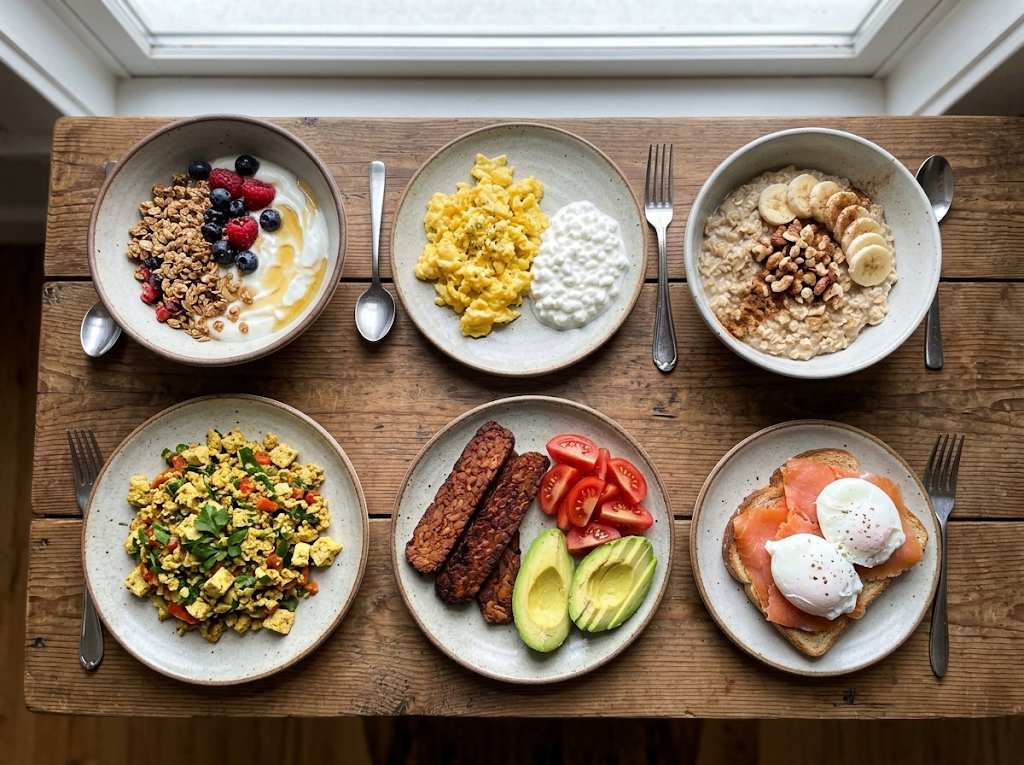
- Greek yogurt bowl: 1 cup plain Greek yogurt plus 3 tbsp hemp seeds, about 34 g.
- Eggs and cottage cheese: 2 eggs with half a cup of cottage cheese, about 25 g.
- Protein oats: 40 g of dry oats (about 5 g) cooked in 1 cup of milk (8 g), about 13 g. Stir in a scoop of whey to reach roughly 38 g.
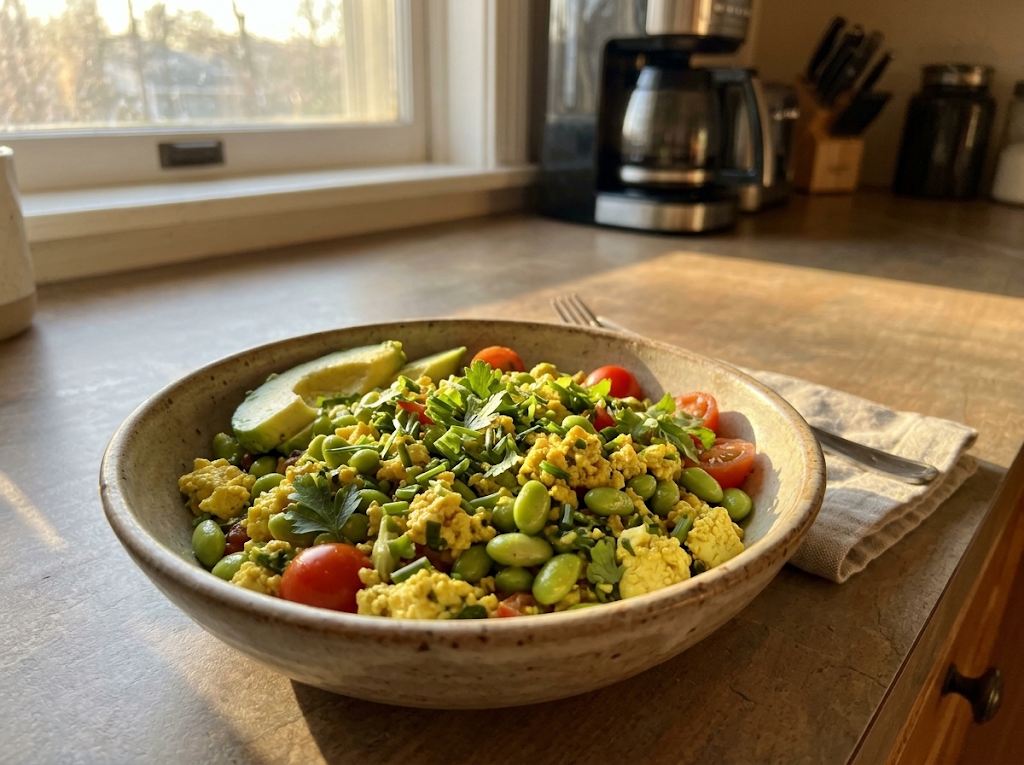
- Tofu and edamame scramble: 3.5 oz tofu with 1 cup edamame, about 28 g, and it is vegan.
- Tempeh breakfast plate: 1 cup tempeh, about 34 g, and also vegan.
- Smoked salmon and eggs: 3 oz smoked salmon with 2 eggs, about 28 g.
For other local mornings, soy-based options such as tofu, soy milk and edamame are covered by the numbers above, and half-boiled eggs follow the same egg figures. We did not find a reliable protein number for kaya toast or other local breakfast dishes, so we have not guessed.
If you prefer to prepare ahead, our high-protein meal prep for beginners guide shows how.
What the Research Says About a High-Protein Breakfast
Does a bigger protein breakfast keep you full? A 2013 randomized crossover trial by Leidy and colleagues in the American Journal of Clinical Nutrition tested this in 20 overweight, breakfast-skipping young women aged about 19. Each woman followed three conditions for six days: skipping breakfast, a 350-calorie cereal breakfast with 13 g of protein, and a 350-calorie egg and beef breakfast with 35 g of protein.
The 35 g protein breakfast produced the biggest rise in fullness. It was also the only one that reduced evening snacking on high-fat foods compared with skipping breakfast. Total daily calorie intake did not differ between conditions, so the trial does not show that a high-protein breakfast leads to weight loss. A ScienceDaily summary of the University of Missouri release covers the same result.
There are limits. It was a small trial of one sex and age group, and it lasted only six days. The two breakfasts also differed in food type, not only protein. We read the abstract on an egg-industry website and a press summary, because PubMed was blocked, so check the journal’s disclosures if you want the funding details.
The sensible takeaway is modest: a protein-rich breakfast may help some people feel fuller, but it is not a weight-loss trick.
Safety and Allergy Notes
- Eggs: Harvard Health reports that a review found eggs did not raise heart attack or stroke risk, and that it is safe to eat one egg a day. People with diabetes were an exception, with higher heart disease risk at higher egg intakes. Ask your doctor if that applies to you.
- Kidneys: Examine.com says the evidence for healthy adults is inconclusive. A 2018 meta-analysis of 1,358 healthy adults found no drop in kidney function at about 1.8 g/kg. People with kidney disease should follow their clinician’s advice, not this article.
- Allergens: the FDA lists milk, eggs, fish, tree nuts, peanuts, wheat, soybeans and sesame among the major food allergens. Several foods above are on that list.
- Processed meat: Peloton suggests limiting sausage to about once a week.
- Protein powder: choose a third-party tested product, and ask a professional if you have a health condition.
What You Need
- Whey protein powder: the easiest way to lift oats or yogurt to 30 g or more. Check the listing for protein per scoop and flavors. Our protein shake vs protein powder guide explains the difference.
- Digital food scale: lets you weigh a serving, so you can match the numbers in the table. Check the listing for the maximum weight.
- Body composition scale: optional, for tracking progress if you are changing your eating. Home scales are estimates, so use the trend, not a single reading.
Common Mistakes
- Trusting recipe totals without a serving size. Always check the serving.
- Chasing 50 g at breakfast. 20 to 30 g is a sensible target for most people.
- Relying only on powder. Whole foods bring other nutrients too.
- Forgetting allergens. Eggs, dairy, soy and nuts are common triggers.
- Skipping the label. Brands vary, especially for powders and yogurt.
Quick Answers
How much protein should I eat for breakfast? About 20 to 30 g works for most adults, according to the per-meal ranges above.
What is the highest-protein breakfast food? In our table, tempeh and cottage cheese lead per cup.
Can I get enough protein at breakfast without eggs? Yes. Greek yogurt, cottage cheese, tofu, tempeh and edamame all work.
Is a high-protein breakfast good for weight loss? It may help you feel fuller, but the trial we found did not show that it changes total calories.
The Bottom Line
High protein breakfast ideas do not need to be complicated. Pick one or two foods from the table, aim for about 20 to 30 g, and check serving sizes and labels.
A protein-rich breakfast may help you feel fuller, but the evidence is small and short-term. Use it as one habit among many, and ask a professional about your own protein needs if you have a health condition.
Disclaimer & Affiliate Disclosure
This article is for informational purposes only and should not be taken as medical advice. Always consult with a qualified healthcare provider or certified fitness professional before starting or changing your diet or exercise routine. This article may also contain affiliate links. If you purchase through these links, we may earn a small commission at no extra cost to you.