Knee pain with squats is common, and it usually comes from overload, weak hip and thigh muscles or a sudden jump in training, but only a doctor or physical therapist can tell you the actual cause of your pain.
Table of Contents
Quick Summary
- Most common cause: patellofemoral pain, a dull ache at the front of the knee that flares with squatting, stairs and kneeling.
- Depth is not the villain: for healthy knees, recent reviews found no good evidence that deep squats or knees passing your toes damage the joint. That does not mean your squat is fine if it already hurts.
- What helps most sources agree on: rest from what aggravates it, a lower load, and strengthening the hip and thigh muscles.
- When to get checked: pain that does not improve in a few weeks, or any red flag listed below, such as locking, giving way, swelling or an injury with a pop.
- This is not a diagnosis. Squat pain has several possible causes.
Most guides jump straight to exercises. This one starts with when to see a doctor, then covers common causes, what the research says about depth, and a simple way to scale your squat while you wait.
When to See a Doctor First
Check this section before you try any fix. The Mayo Clinic says to get urgent or emergency care if knee pain follows a major injury, or if:
- Your knee cannot bear weight.
- Your knee joint looks bent or deformed.
- There was a popping sound at the time of an injury.
- You have intense pain or the knee swelled suddenly.
The Northern Ireland government health service, NI Direct, adds that you should see a GP if the pain does not improve within a few weeks, if the knee locks or gives way, or if you have pain at night or at rest. It says to go to an emergency department for a badly swollen knee or a very high temperature with heat or redness around the knee, which can point to infection. NHS 111 Wales lists similar signs.
If none of these apply, the sections below cover the more common, overload-type pain.
What Causes Knee Pain With Squats?
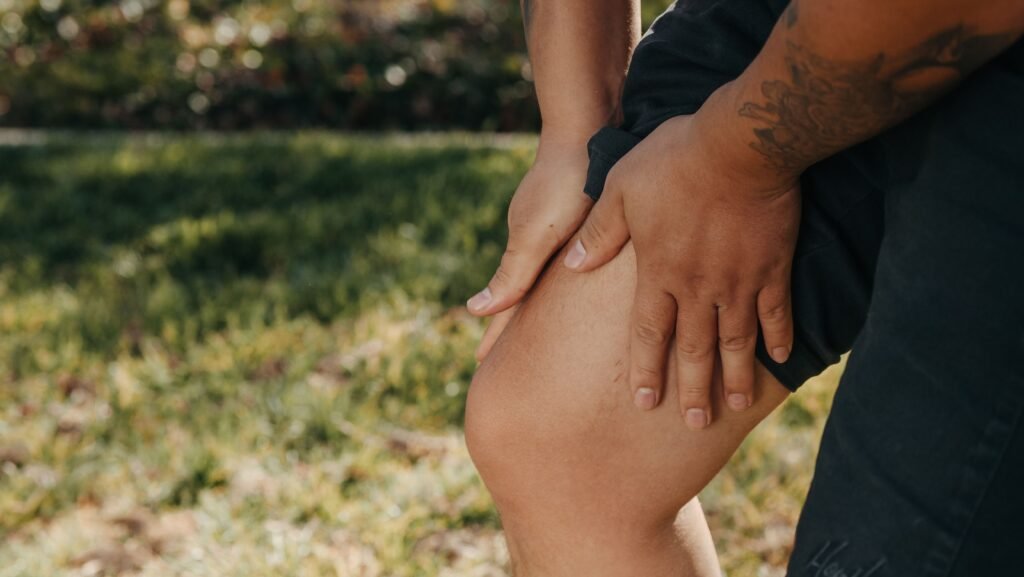
The most common cause sources list is patellofemoral pain syndrome (PFPS), sometimes called runner’s knee. The American Academy of Orthopaedic Surgeons describes a dull ache at the front of the knee that is triggered by activities that repeatedly bend it, including stairs, running, jumping and squatting. It says kneecap alignment problems and overuse from vigorous training are often significant factors.
The Cleveland Clinic lists weak or tight muscles (especially the quadriceps), a sudden increase in activity, poor form such as knees collapsing inward, and the shape of the kneecap. The Hospital for Special Surgery adds weak large leg muscles, tight hamstrings, flat feet and tight hip flexors.
Other conditions can also hurt during squats. Pain just below the kneecap, for example, can point to patellar tendonitis, which the Mayo Clinic links to repeated jumping and running and sudden training increases. You cannot tell these apart from home, so treat this list as background, not a self-test.
Knee Pain With Squats: Is Squat Depth the Problem?
You have probably heard that deep squats or letting your knees pass your toes ruins your knees. The evidence is more reassuring for healthy knees.
A 2024 scoping review by Rojas-Jaramillo and colleagues in Frontiers in Sports and Active Living looked at 15 studies on deep squats. It concluded that the deep squat appears to be safe for knee joint health when proper technique is kept. Only one single-person case study suggested possible cartilage damage, and that was a hypothesis, not proof of cause.
A 2021 literature review in Studia sportiva reached a similar view: no greater risk in healthy people without degenerative changes in the joint, with good technique.
There are limits. These reviews cover healthy knees and mostly measured strength and performance, not injury rates. They do not tell you that your squat is fine if your knee already hurts. Sources such as the Hospital for Special Surgery advise temporarily avoiding squats and lunges while patellofemoral pain is present.
So depth is not automatically the problem, but it is a useful dial. If a certain depth hurts, scale it back and build up again.
What Helps: Sources Agree on These Basics
For patellofemoral pain, the AAOS, Hospital for Special Surgery, Cleveland Clinic and Mayo Clinic information all point the same way:
- Relative rest. Avoid the activities that aggravate the pain, such as squats and lunges, for a while.
- Ice. The AAOS suggests cold packs for 20 minutes at a time, several times a day. Wrap the pack in a cloth.
- Check pain relievers with a pharmacist or doctor. Sources give different advice on how long over-the-counter pain relievers are suitable, so ask what is right for you.
- Strengthen the hip and thigh muscles. The AAOS and Mayo Clinic information both recommend physical therapy that strengthens the quadriceps and hip muscles.
- Return gradually once the pain settles.
Cleveland Clinic says to see a provider if the pain does not get better on its own after a few weeks, and Mayo Clinic information says to call your provider if it does not improve within a few days or the knee gets harder to move.
What the Research Says About Exercise
A 2018 consensus statement from the 5th International Patellofemoral Pain Research Retreat, by Collins and colleagues in the British Journal of Sports Medicine, was voted on by 41 experts. It supports exercise therapy for patellofemoral pain, “especially the combination of hip-focused and knee-focused exercises.”
A summary of the American Physical Therapy Association guideline in American Family Physician says the primary treatment for patellofemoral pain is a combination of posterior hip and quadriceps exercises. It lists examples such as single-leg squats, step-downs, squats, lunges and resistance-band hip exercises, and says the guideline does not prescribe one specific program.
Two limits matter. The abstract we read gives no specific exercises or doses, and we could not open the full guideline, so we are not giving you a rep scheme from it. A physical therapist can set that up for your knee.
How to Scale Your Squat While You Wait
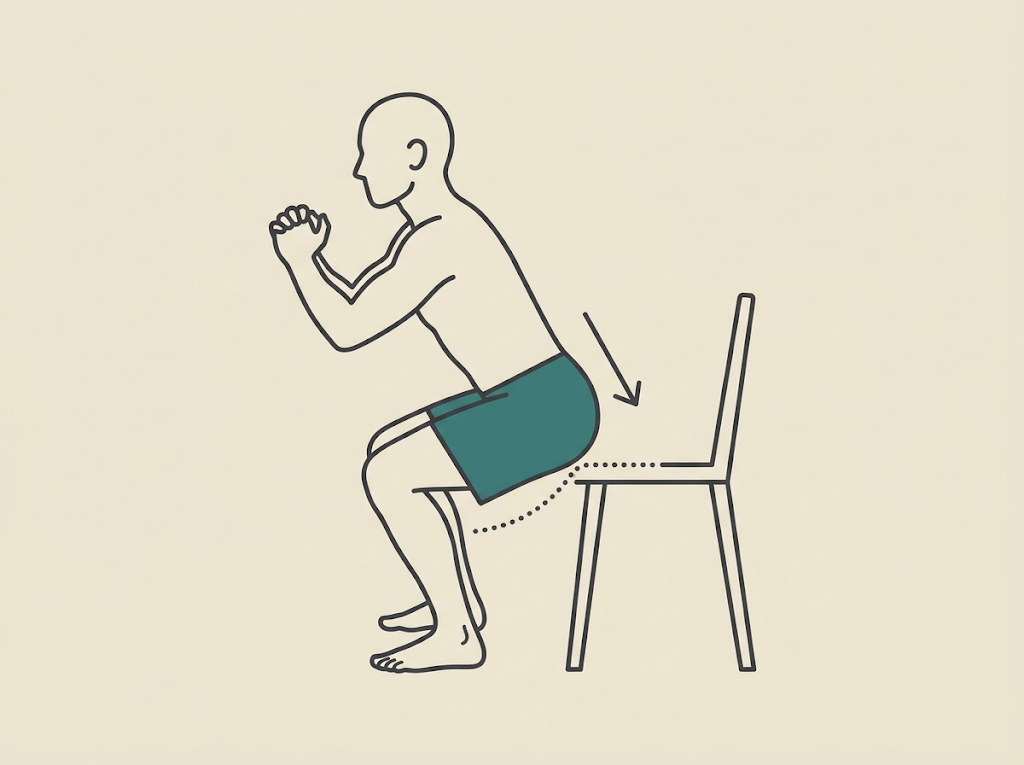
No certifying body we found publishes a list of squat modifications for knee pain, so the options below are practical suggestions from health-system and clinic pages, not trial results. Use pain as your guide.
- Reduce the depth. Squat only as far as feels comfortable. Hackensack Meridian Health suggests a wall-supported squat to control depth.
- Cut the load. If pain started after you added weight or volume, scale back and add rest days. Our goblet squat for beginners guide has a chair version with a light weight.
- Slow down. A controlled squat is easier to judge than a fast one. This is a coaching suggestion with no study behind it.
- Keep your knees tracking over your toes. Cleveland Clinic lists knees collapsing inward as a cause, so avoid letting them cave in.
- Try low-load options such as a wall sit for beginners only if they do not hurt.
Do not use the common cue “keep your knees above your heels, not your toes.” That rule is not backed by the research above.
Hip and Thigh Strength Moves to Ask About
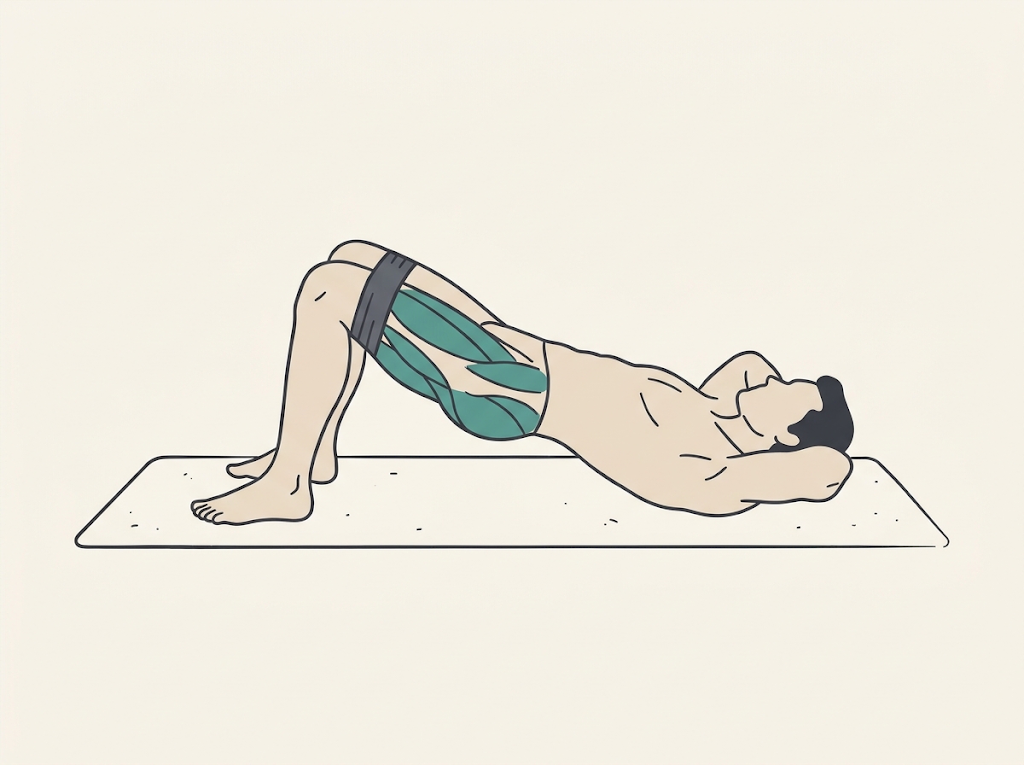
Because the exercise evidence points to the hips and thighs, simple band work is a common starting point. Our leg workout with resistance band and lunges with resistance bands guides cover options, but skip any that bring on knee pain and ask a physical therapist about your own plan.
Warm up before you train. Our warm up before a workout guide shows how. If your pain started after ramping up quickly, our how to prevent gym injuries guide covers easing in. The same logic applies to running: our how to prevent shin splints guide explains why sudden jumps in training cause problems.
What You Need
- Resistance band set: for hip strengthening exercises. Check the listing for the resistance levels.
- Hip circle band: a loop band used for glute and hip work. Sources do not specifically recommend it for knee pain, so treat it as a tool for hip exercises.
- Exercise mat: cushions the floor for floor-based hip work. Check the listing for thickness.
None of these treats knee pain. They only help you do the strengthening exercises a clinician may suggest.
Common Mistakes
- Pushing through sharp pain. Stop and scale down.
- Ignoring red flags. Locking, giving way or swelling need a doctor.
- Jumping straight back to your old weight. Return gradually.
- Trusting the “knees behind toes” rule. It is not supported by the research above.
- Only training the knee. The evidence favors adding hip work.
Quick Answers
Are squats bad for your knees? For healthy knees, recent reviews found no good evidence that squatting, even deep, damages them. If your knees hurt, though, scale back and get checked.
Can I keep squatting with knee pain? Sources advise avoiding the aggravating activity for a while. If you try a lighter, shallower version, stop if it hurts.
How long does it take to improve? Cleveland Clinic says to see a provider if it does not improve after a few weeks.
The Bottom Line
Knee pain with squats is usually an overload problem, but it can also be something that needs a doctor. Check the red flags first, back off the load and depth, and add hip and thigh strength work once the pain settles.
If your knee locks, gives way, swells or hurts at rest, or if the pain does not improve in a few weeks, get it checked. A physical therapist can build a plan around your knee.
Disclaimer & Affiliate Disclosure
This article is for informational purposes only and should not be taken as medical advice. Always consult with a qualified healthcare provider or certified fitness professional before starting or changing your diet or exercise routine. This article may also contain affiliate links. If you purchase through these links, we may earn a small commission at no extra cost to you.