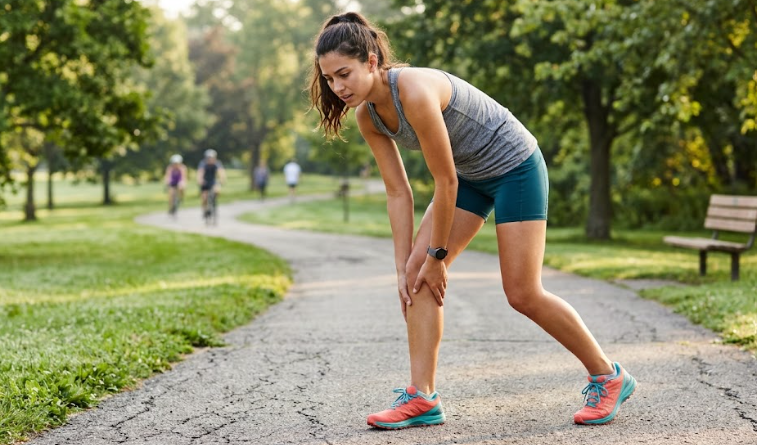
How to prevent shin splints mostly comes down to building up your running or walking gradually, wearing supportive shoes and listening to early pain, although the research behind most prevention tips is weaker than most articles admit.
Table of Contents
Quick Summary
- What they are: pain along the inner edge of your shinbone, called medial tibial stress syndrome. It is common in new runners and is usually not serious.
- Biggest risk: doing too much, too soon. The American Academy of Orthopaedic Surgeons lists sudden increases in frequency, duration or intensity as a main cause.
- What the evidence says: a randomized trial found that a gradual plan based on the “10% rule” did not lower injury rates in novice runners. Gradual build-up is still sensible, but the 10% number is not proven.
- Shoes, insoles, stretching, compression: all have weak or mixed evidence for prevention.
- Know the warning signs: pain at rest, or pain in one small spot, can mean a stress fracture. See a doctor.
Most guides present prevention tips as settled fact. This one shows what each tip is based on, what is still unproven and how to tell shin splints from something more serious.
What Are Shin Splints?
Shin splints is the everyday name for medial tibial stress syndrome, or MTSS. The American Academy of Orthopaedic Surgeons describes it as pain along the inner edge of the shinbone (the tibia), which can be sharp or dull, shows up during or after exercise and is often tender when you press on the spot.
The NHS calls it not serious and says it usually improves in a few weeks. The exact mechanism is not fully settled.
Shin Splints vs Stress Fracture

This is the part most guides skip, and it matters. A stress fracture is a small crack in the bone and needs medical care.
The Hospital for Special Surgery says shin splints cause diffuse pain over a wider area that sometimes eases as you warm up, while a stress fracture causes pain in one spot that is often tender to touch, persists and does not ease with continued exercise. UChicago Medicine adds that stress-fracture pain may spread from running to walking and daily activities and may continue at rest.
See a doctor if:
- The pain does not improve with rest and a gradual return to activity.
- You have pain at rest.
- The pain is in one small spot, or that spot of the shinbone is tender to touch.
- You have swelling, redness or warmth.
What Raises Your Risk?
Several sources agree on the main causes. Mayo Clinic and the AAOS list:
- Starting a running program or suddenly increasing how long, how often or how hard you train.
- Running or jumping on hard surfaces, or running hills.
- Flat feet or rigid arches, and worn or unsuitable shoes.
Research adds a few more. A 2013 review of 10 prospective studies by Newman and colleagues found that a previous episode of shin splints and fewer years of running experience were linked with a higher risk. A 2015 review by Hamstra-Wright and colleagues linked a higher body mass index and some foot and hip measures to shin splints. These are associations, not proof of cause.
For a beginner, the clearest message is simple: being new to running is itself a risk factor, so build up slowly.
How to Prevent Shin Splints: What the Evidence Supports
The honest summary is that no prevention method has strong proof. The Cochrane Collaboration’s review of ways to prevent lower-limb running injuries rated the evidence “very weak,” and most of the trials were in military recruits. Here is how the common tips stack up.
| Tip | What sources recommend | How strong is the evidence? |
|---|---|---|
| Build up gradually | Mayo, the AAOS and the NHS all advise it | Sensible, but the specific “10% a week” figure is not proven (see below) |
| Supportive shoes | The AAOS and Mayo recommend well-cushioned shoes that suit your feet | Weak. Shoes fitted to foot type did not beat standard shoes in the Cochrane review |
| Replace worn shoes | Mayo suggests roughly every 350 to 500 miles | A rule of thumb with no study behind it |
| Softer surfaces and fewer hills | The NHS and Mayo list hard surfaces and hills as risk factors | Based on risk-factor lists, not trials |
| Warm up and stretch | The NHS, Cleveland Clinic and others advise it | Expert opinion. Cochrane found no clear evidence that stretching reduces injuries |
| Strengthen calves, feet, hips and core | Mayo and Cleveland Clinic suggest it | Plausible, but we found no trial showing it prevents shin splints |
| Cross-train | The AAOS and Mayo suggest swimming or cycling on some days | Expert advice, mainly for managing load |
| Insoles or orthotics | Mayo mentions arch supports and shock-absorbing insoles | Weak. One trial in military recruits suggested custom insoles may help |
So a good plan uses several sensible habits together, without expecting any one of them to be a guarantee.
The 10% Rule: What the Evidence Shows
You will see “increase your running by no more than 10 percent a week” on nearly every shin splints page. It is a reasonable guideline, but it is not a proven threshold.
In a 2008 randomized trial by Buist and colleagues in the American Journal of Sports Medicine, novice runners preparing for a 4-mile event followed either a standard 8-week program or a graded 13-week program built on the 10% rule. Running-related injuries were almost identical: 20.8 percent in the graded group against 20.3 percent in the standard group. It covered all running injuries, not shin splints alone, and the programs differed in length, so it does not show gradual progression is useless.
A 2014 study by Nielsen and colleagues in the Journal of Orthopaedic and Sports Physical Therapy followed novice runners for a year. Overall injury risk did not differ significantly between weekly distance increases under 10 percent, between 10 and 30 percent, and over 30 percent. A group of distance-related injuries that includes shin splints was higher in the over-30 percent group, but the result was not statistically significant. The authors suggested novices may be wise to progress by less than 30 percent over two weeks.
What should you do with this? Keep building up slowly, because every medical source advises it, but do not treat 10 percent as magic. If your shins hurt, ease off, whatever the number says.
A Sensible Way to Start

If you are new to running, a run-walk approach lets your legs adapt. Our start running for beginners plan uses short run intervals mixed with walking. These habits fit the guidance above, but they are our own suggestions, not a proven program:
- Alternate run and walk, with a rest day between runs while your legs adapt.
- Choose softer surfaces where you can, and avoid steep hills early on.
- Warm up for a few minutes. Our warm up before a workout guide shows how.
- Cross-train with walking, cycling or swimming on other days.
- Stop if pain starts to build, instead of running through it.
Strengthening: Helpful, but Unproven
Strong calves, feet and hips make sense, and Mayo Clinic and Cleveland Clinic both suggest them. But the evidence is limited. A 2012 trial by Moen and colleagues compared a graded running program alone with the same program plus calf stretching and strengthening in athletes who already had shin splints. It found no difference in how long recovery took. That was a treatment study, not a prevention study, but it shows the benefit is not guaranteed.
If you add strength work anyway, simple options are calf raises and slow toe raises (lifting your toes while your heels stay down). These are our suggestions, not a researched program. Our how to prevent gym injuries guide has more on easing into training.
Shoes and Insoles
Supportive, cushioned shoes that suit your feet are standard advice from the AAOS and Mayo, but shoes fitted to foot shape did not beat standard shoes in the Cochrane review. Cochrane also found one trial of 146 people suggesting custom insoles may reduce shin splints. One trial is weak evidence, so if you have flat feet or a history of shin pain, ask a podiatrist or sports medicine professional.
Compression Sleeves and Foam Rolling
These are popular, so here is what the evidence shows.
- Compression: the AAOS lists compression bandages as part of first-aid care to limit swelling. The one trial we found tested a compression stocking and found no effect on recovery time (Moen 2012). A 2013 review by Winters and colleagues said compression stockings had not been shown to be effective, and that the trials were too weak to recommend any treatment. Sleeves can feel supportive, but we found no proof they prevent shin splints.
- Foam rolling: no guideline source we read recommends it for shin splints. Rolling your calves may feel good, but avoid pressing directly on a tender shinbone. That last point is general caution, not a study result. For technique, see our foam roller for legs guide.
- Kinesiology tape: we found no evidence either way.
Treat these as optional comfort tools, not prevention.
If Shin Pain Starts
The AAOS, Mayo Clinic and NHS give similar advice for early shin splints:
- Rest from the activity that causes the pain. The AAOS suggests several weeks.
- Stay active in other ways. Swimming, cycling or an elliptical machine are common choices.
- Ice the area for about 15 to 20 minutes at a time, wrapped in a thin cloth, not directly on skin.
- Ask a pharmacist or doctor before taking pain relievers.
- Return gradually. The AAOS says to resume only when you have been pain-free for at least two weeks, then do less than before and build slowly.
See a doctor if the pain does not improve with rest, if it returns every time you restart or if you notice any of the warning signs listed earlier. The Mayo Clinic’s treatment page has more detail.
What You Need
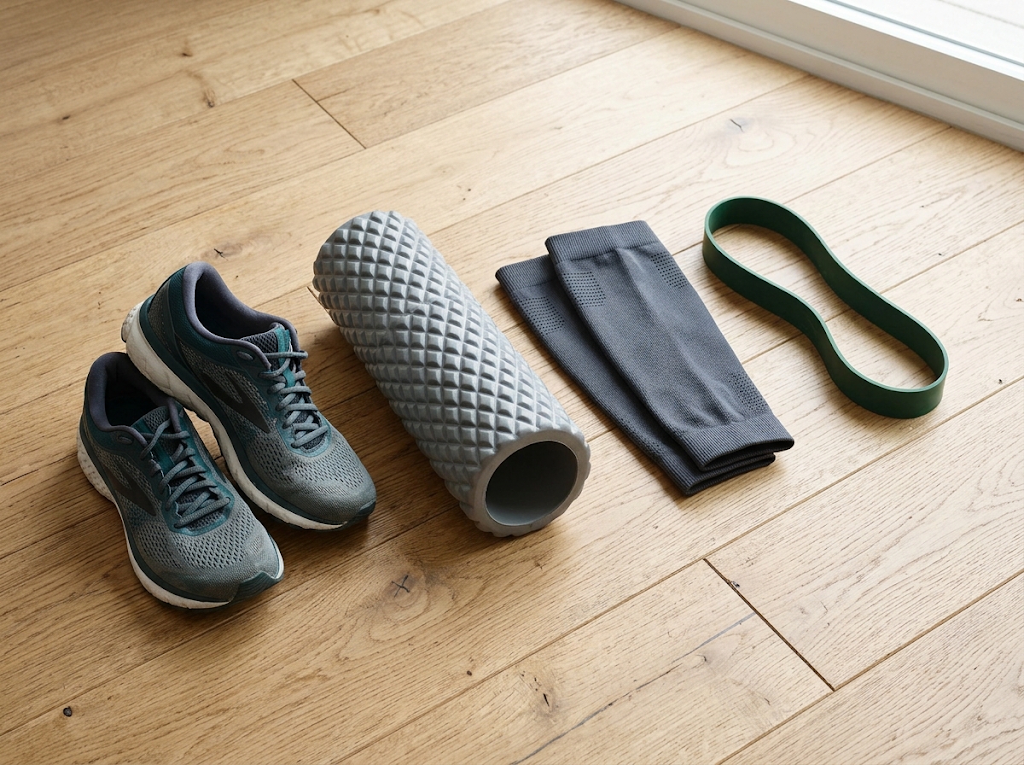
You do not need much. These items help some people, but none is a proven shin splints fix.
- Running shoes: supportive, cushioned shoes are standard advice. Check the listing for sizing and fit before you buy.
- Foam roller: for rolling your calves after a run. Check the listing for the density.
- Calf compression sleeves: an optional comfort item. Evidence that they prevent shin splints is limited.
- Resistance band set: useful for ankle and calf strengthening. Our foam roller routine for beginners guide covers recovery.
Quick Answers
Can shin splints be prevented completely? No method guarantees it, and the evidence for most tips is weak. Gradual build-up and good habits lower your risk.
Can I keep running with shin splints? The AAOS advises resting from the painful activity and returning gradually once you are pain-free.
The Bottom Line
How to prevent shin splints is mostly about patience: build up slowly, wear supportive shoes that fit and give your legs rest days. The evidence is weaker than the confident tips online suggest, and the 10% rule is a guide, not a guarantee.
If your pain stays in one spot, shows up at rest or does not improve, see a doctor. Everything else can wait while you ease back in.
Disclaimer & Affiliate Disclosure
This article is for informational purposes only and should not be taken as medical advice. Always consult with a qualified healthcare provider or certified fitness professional before starting or changing your diet or exercise routine. This article may also contain affiliate links. If you purchase through these links, we may earn a small commission at no extra cost to you.