Sit ups vs crunches comes down to range of motion: a crunch lifts only your head and shoulders, while a sit up lifts your whole torso and puts far more work on your hip flexors.
Table of Contents
Quick Summary
- Crunch: a short lift that mostly trains your abs and is easier on your neck and lower back when done with good form.
- Sit up: a full lift where your hip flexors do a lot of the work. A lab study found bent-knee sit ups among the highest hip flexor activity of the exercises it tested.
- Best pick for most beginners: crunches, or a plank, with sit ups skipped if your lower back is sensitive.
- Belly fat: neither one removes fat from your stomach. A six-week trial found no change in belly fat from ab exercises alone.
Most guides stop at “crunches are safer.” This one shows what the research actually found, how many reps are sensible, and what to do instead if neither move suits you.
What Is the Difference Between Sit Ups and Crunches?
Both moves start the same way: you lie on your back with your knees bent. The difference is how far you travel.
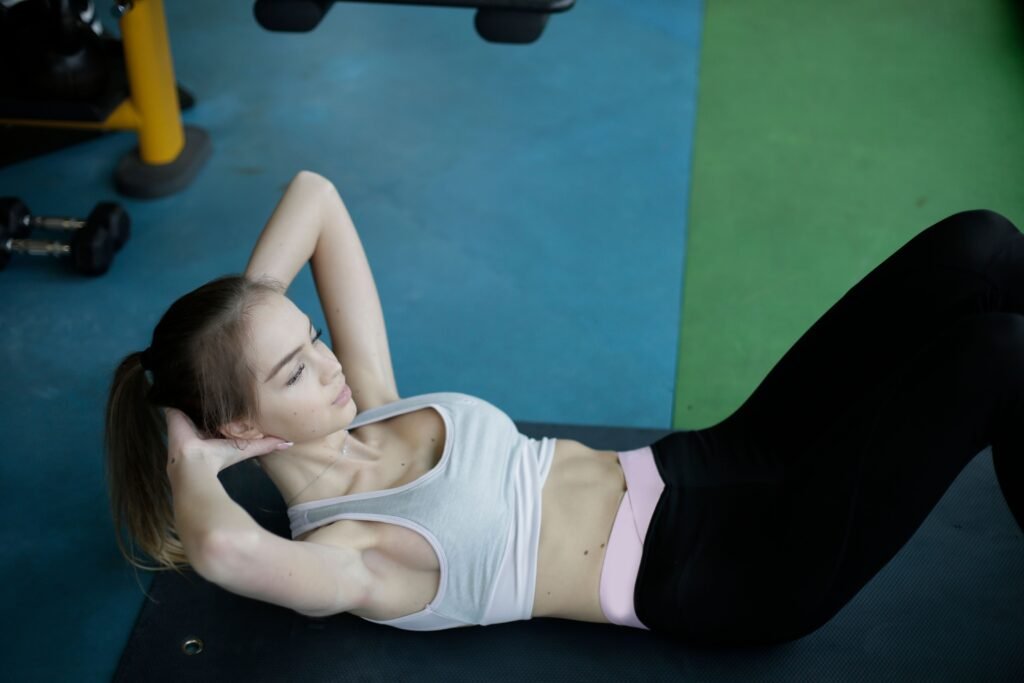
In a crunch, you curl your head and shoulder blades off the floor and stop. Your lower back stays on the ground, so the movement is short and your abs do most of the work.
In a sit up, you lift your whole torso until you are sitting upright. Because your hips have to bend to get you all the way up, your hip flexors (the muscles at the front of your hips) join in heavily.
That single difference explains almost everything else in this guide, including why one feels harder on your back than the other.
Sit Ups vs Crunches: What the Research Shows
The best-known comparison is a 2006 lab study by Escamilla and colleagues in the journal Physical Therapy. The researchers used surface electrodes to measure muscle activity in 21 healthy adults aged 23 to 43 while they did a range of abdominal exercises, including crunches and bent-knee sit ups.
Two findings matter for beginners:
- The bent-knee sit up produced some of the highest activity in the rectus femoris, one of your hip flexors.
- Activity in the lower back muscles was low and similar across the exercises.
The authors noted that high hip flexor activity may be a problem for people with low back problems. That is the research behind the usual advice to be careful with sit ups if your back is sensitive.
There are limits worth knowing. The study was small, it measured muscle activity rather than injuries or results, and it did not report a simple head-to-head winner for “best ab exercise.” So it supports a cautious choice, not a ban.
For context, the US Army’s old fitness test timed sit ups for two minutes, and its replacement test no longer includes them, according to NBC News coverage of the change. The article does not say sit ups were dropped for a specific back-safety reason, so treat that as background, not proof.
Which Muscles Does Each Exercise Work?
| Crunch | Sit up | |
|---|---|---|
| Range of motion | Short: head and shoulder blades lift | Long: whole torso lifts |
| Main muscle | Rectus abdominis (the “six-pack” muscle) | Rectus abdominis plus heavy hip flexor work |
| Hip flexor involvement | Low | High |
| Neck strain risk | Higher if you pull on your head | Higher if you pull on your head |
| Good for beginners? | Yes, with good form | Yes if your back is healthy, but not essential |
Notice that both exercises train the same main abdominal muscle. The extra work in a sit up comes mostly from your hips, not from a stronger core.
Are Sit Ups Bad for Your Back?
Not automatically. Plenty of healthy people do sit ups without trouble. The concern is that they repeatedly bend your spine while your hip flexors pull on your pelvis, which can bother a sensitive lower back.
A few simple rules reduce the risk:
- Do not pull on your neck. The Mayo Clinic’s crunch guidance says not to clasp your hands behind your head, because it puts your neck at risk. Cross your arms over your chest instead.
- Keep it smooth and controlled. Mayo also says to move smoothly and stop when your form starts to suffer.
- Respect your recovery. The American Council on Exercise suggests keeping total spinal-flexion work to roughly 60 reps per session and allowing about 48 hours between sessions, and advises avoiding it for about an hour after waking, after long periods of sitting, or if you have a diagnosed disc problem.
- Stop if you feel sharp pain. If back or neck pain keeps coming back, see a healthcare professional.
If you have a history of back problems, ask a healthcare provider or physical therapist before adding either exercise.
Will Either One Burn Belly Fat?
No, and this is the biggest myth in this topic. In a randomized trial of 24 sedentary adults, one group did seven abdominal exercises (two sets of 10 reps) five days a week for six weeks while eating the same diet as the control group. According to coverage of the study at Fit&Well, the exercise group did not lose body fat or belly circumference, although their ab endurance improved.
That means sit ups and crunches build ab strength and endurance, but they do not spot-reduce fat. To see your abs, you need a calorie deficit, enough protein and a full-body routine. Our guide on how to get abs explains how that works.
How to Do a Crunch Correctly
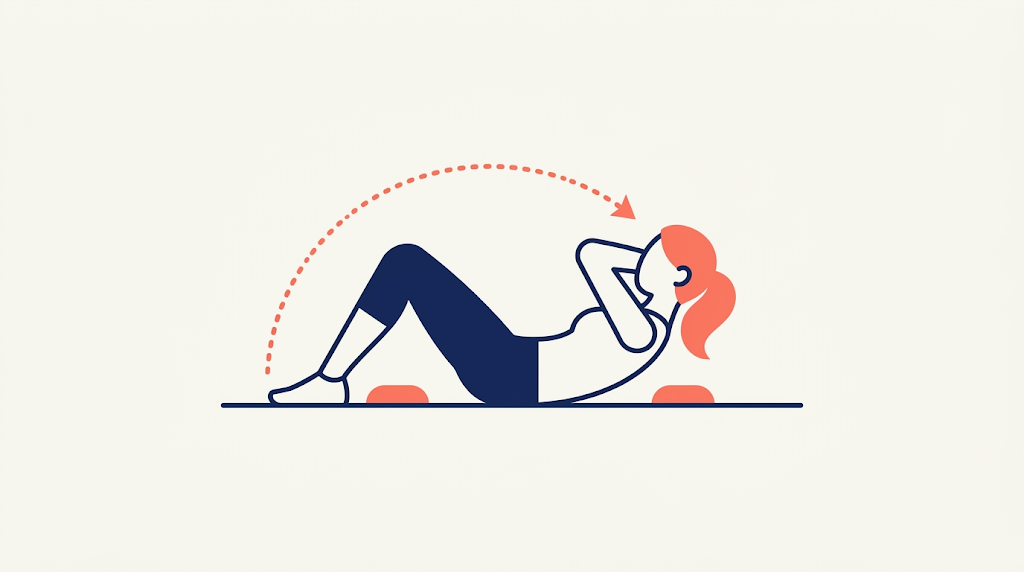
- Lie on your back with your knees bent and feet flat on the floor.
- Cross your arms over your chest, or lightly rest your fingertips by your ears without pulling.
- Tighten your abs, then lift your head and shoulder blades a few inches off the floor.
- Pause for a second, then lower slowly. Keep your lower back on the floor.
Aim for a gentle curl, not a big lift. Looking at a spot on the ceiling helps keep your neck in line.
How to Do a Sit Up Safely
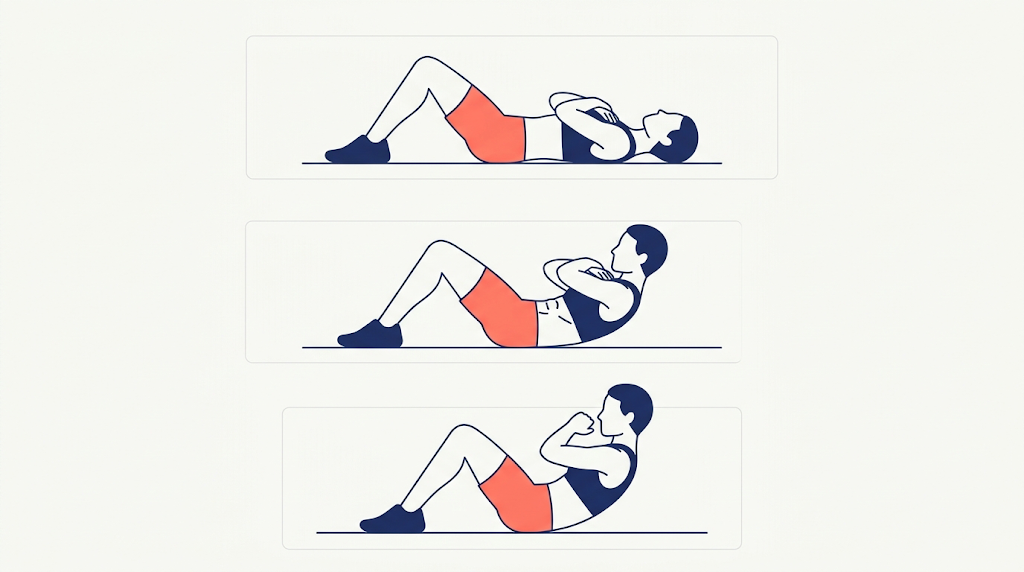
- Lie on your back with your knees bent and feet flat. Anchor your feet under a sofa or have a partner hold them if you need to.
- Cross your arms over your chest.
- Curl your head and shoulders up first, then continue until you are sitting upright.
- Lower back down slowly, one segment at a time, instead of dropping.
If you find yourself pulling with your neck or swinging your arms, switch to crunches for now.
How Many Sit Ups or Crunches Should You Do?
There is no official beginner number for either exercise. A sensible starting point, based on the trial protocol above and the ACE guidance, is:
- 2 sets of 10 to 15 crunches, two to three days a week
- Rest at least one day between ab sessions
- Add a few reps a week only while your form stays clean
Because ab muscles recover quickly, it is tempting to do them daily. Resist that. More reps will not melt belly fat, and your lower back benefits from rest.
Better Core Exercises If Neither Feels Right
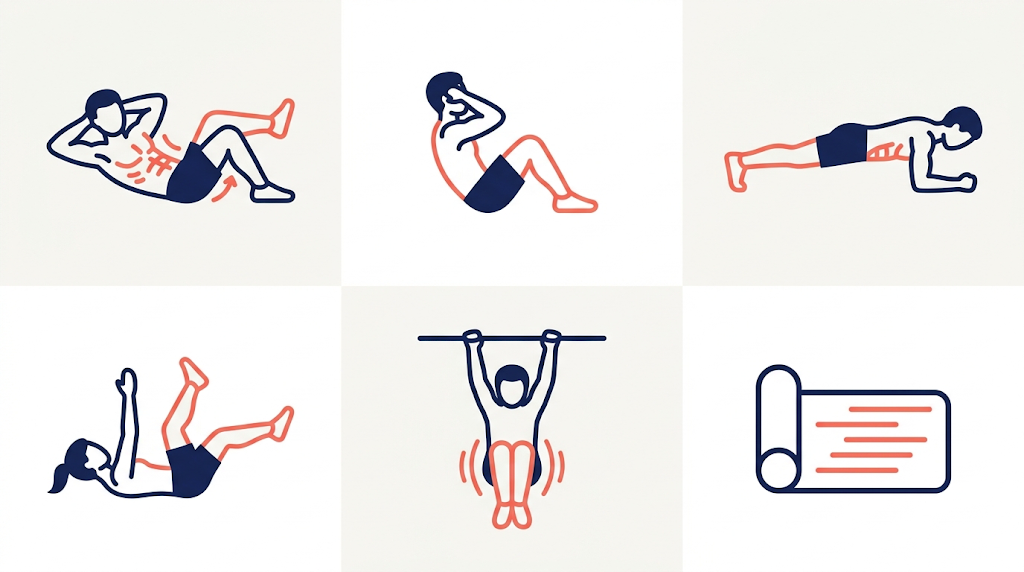
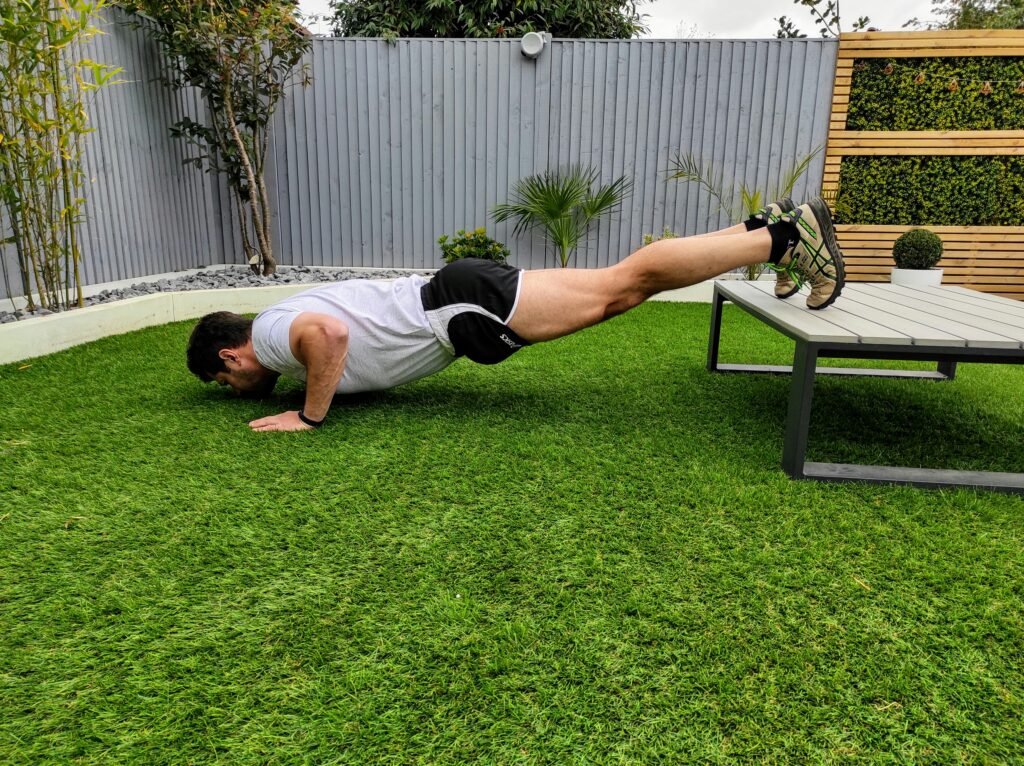
If sit ups hurt and crunches bore you, there are good alternatives. Planks train your abs without bending your spine, and hanging knee raises add a challenge once you are stronger. Our guide to pull-up bar ab workouts covers the second option.
A mix is usually best: one spine-bending move such as a crunch, one stability move such as a plank, and one rotation or leg move such as a dead bug.
What You Need to Train Your Core at Home
You need very little. Here is what helps.
- Exercise mat: it protects your tailbone and spine during floor exercises. Check the listing for thickness and size.
- Doorway pull-up bar: for hanging knee raises once you are ready. Check your doorframe fits the bar before you buy.
- Resistance band set: bands add resistance to dead bugs and other core moves, and they are useful for the rest of your body too.
Quick Answers
Which is better for abs, sit ups or crunches? Both train your rectus abdominis. Crunches are gentler on most backs, while sit ups add heavy hip flexor work.
Can sit ups and crunches give you a six-pack? They build the muscle, but abs only show when your body fat is low enough. That depends on your diet and overall training.
Are sit ups vs crunches different for women? No. The muscles and the safety points are the same for everyone.
Should I do both? You can, but you do not need to. One ab exercise you can do with good form beats two you do badly.
The Bottom Line
When it comes to sit ups vs crunches, crunches are the safer starting point for most people, and sit ups are optional. Keep your neck relaxed, do a few controlled sets and give your abs a rest day between sessions.
Do not expect either one to shrink your stomach on its own. Pair them with a plank, a solid strength plan and sensible eating, and give it a couple of months before you judge the result.
Disclaimer & Affiliate Disclosure
This article is for informational purposes only and should not be taken as medical advice. Always consult with a qualified healthcare provider or certified fitness professional before starting or changing your diet or exercise routine. This article may also contain affiliate links. If you purchase through these links, we may earn a small commission at no extra cost to you.