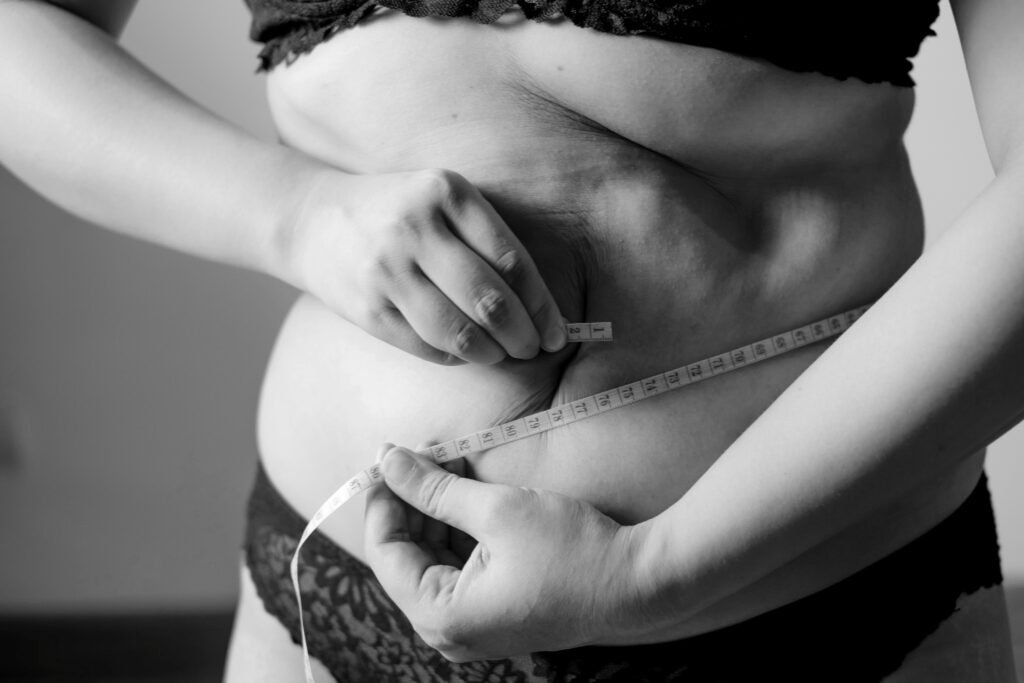
Learning how to get abs starts with a fact most articles bury: you almost certainly already have them — the real work is revealing them, not building them from scratch.
Table of Contents
Quick Summary
- You can’t “spot reduce” fat from your stomach specifically. Ab exercises strengthen the muscle underneath, but where your body loses fat from is determined by genetics, not which exercises you do.
- Visible abs typically require a body fat range of roughly 6-15% for men and 14-25% for women — sources vary meaningfully here, which is itself worth knowing rather than trusting one falsely precise number.
- The realistic timeline varies enormously by source — anywhere from “30 days” to “15-21 months” depending on who you ask. The honest answer: it depends entirely on your starting point, which is why we built a calculator below instead of giving you one generic number.
- The 3 things that actually matter: a genuine calorie deficit, resistance training to preserve muscle, and ab-specific work as a smaller, supporting piece — not the main driver.
- Very low body fat carries real health risks (hormonal disruption, and in women, potential menstrual cessation) — leaner isn’t automatically better or healthier.
The Truth About “Spot Reduction”
This is worth stating plainly: you cannot choose where your body loses fat from first. Doing hundreds of crunches doesn’t preferentially burn stomach fat — your body decides that pattern based on genetics, not which muscle you’re currently exercising. This is well-established and consistent across essentially all reputable sources on the topic.
What ab exercises do accomplish: they strengthen and thicken the rectus abdominis muscle itself, which can make abs appear more defined once fat is low enough to reveal them. But the exercises alone, without addressing overall body fat, won’t reveal anything — no matter how many reps you do.
How Low Does Your Body Fat Actually Need to Be?
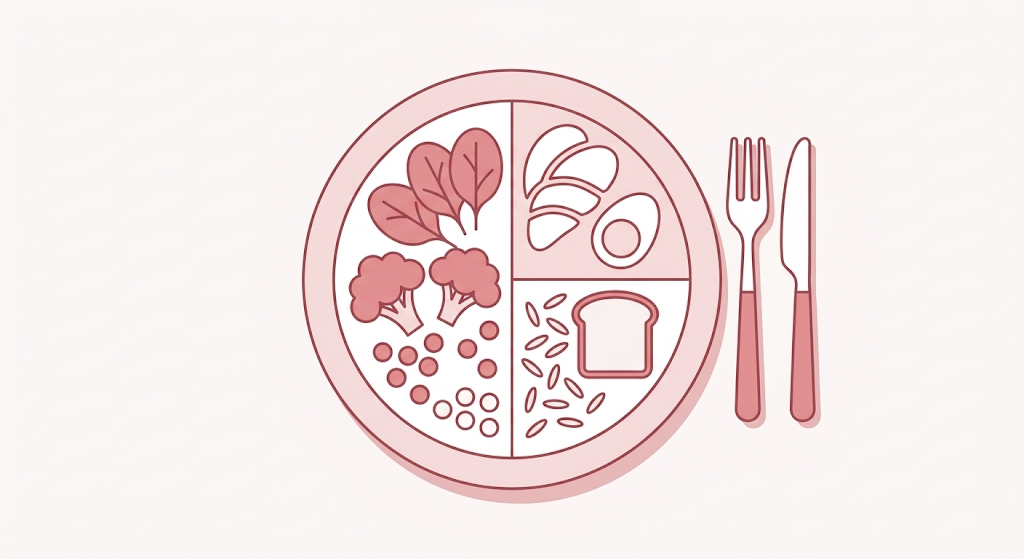
Here’s something worth being upfront about: sources genuinely disagree on the exact number, and that disagreement is itself informative. Depending on which source you check, visible ab definition is cited anywhere from 6-13% up to 15-20% for men, and 14-19% up to 20-25% for women — a real, meaningful range, not just rounding differences. Genetics play a significant role too: two people at the identical body fat percentage can look noticeably different based on fat distribution and how developed the underlying muscle already is.
The practical takeaway: treat these numbers as a general zone to aim toward, not an exact target to hit precisely. And worth saying clearly — very low body fat isn’t automatically healthier. Going below essential fat levels (roughly 5% for men, 12% for women) carries real risks, including hormonal disruption and, in women, potential loss of menstrual cycle. This is a look to consider carefully, not a default goal to push toward as far as possible.
Calculate Your Realistic Timeline
Your Realistic Abs Timeline
Skip the generic “30 days” promises — this uses your actual starting point to estimate a genuinely realistic timeline.
How to Get Abs: The 3 Things That Actually Matter
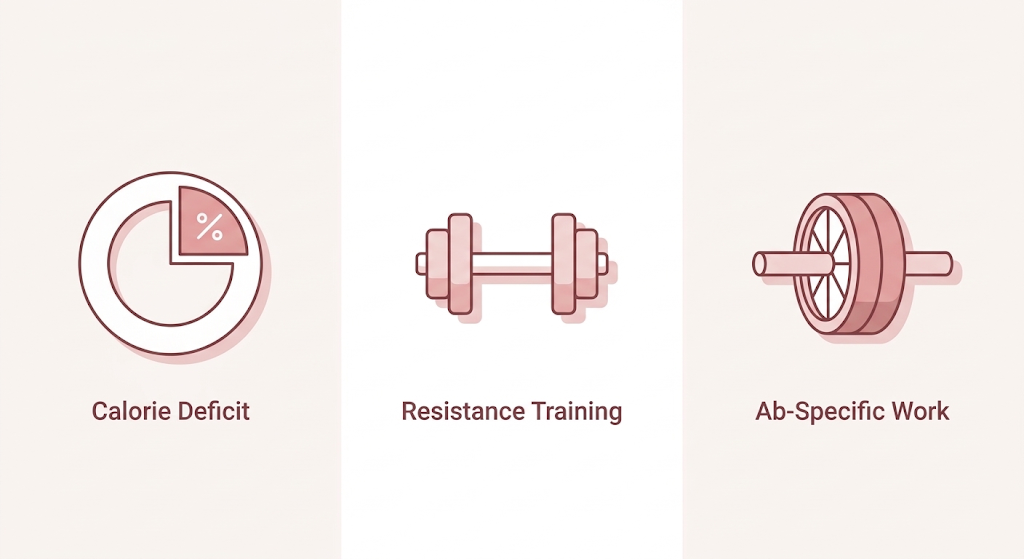
A genuine calorie deficit. This is the actual primary driver — without it, no amount of ab training reveals anything underneath. Our calorie deficit guide walks through setting this up properly.
Resistance training. This preserves the muscle you already have while you're in a deficit — losing muscle alongside fat actually works against the "defined" look, not toward it.
Ab-specific work, as a supporting piece. Once body fat is low enough for definition to show, direct ab training helps the muscle look more developed. An ab roller is a genuinely effective, beginner-friendly way to do this — our ab roller guide covers proper form.
Common Mistakes to Avoid
- Doing endless ab exercises while ignoring diet. As covered above, this is the single most common wasted effort in pursuit of visible abs.
- Chasing an unrealistic 30-day timeline. Some sources promise this; the honest math rarely supports it for most starting points.
- Losing muscle along with fat. This actually works against the defined look you're going for — resistance training matters throughout, not just cardio.
- Pushing toward extremely low body fat as a default goal. Leaner isn't automatically healthier past a certain point — the essential fat floor is a real limit worth respecting.
Learning how to get abs really comes down to accepting an honest timeline based on where you're actually starting, rather than chasing a number some article promised without knowing your situation. Use the calculator above for your own realistic estimate, and lean on genuine diet and training consistency rather than searching for a shortcut that doesn't really exist.
Disclaimer & Affiliate Disclosure
This article is for informational purposes only and should not be taken as medical advice. Always consult with a qualified healthcare provider or certified fitness professional before starting or changing your diet or exercise routine. This article may also contain affiliate links. If you purchase through these links, we may earn a small commission at no extra cost to you.