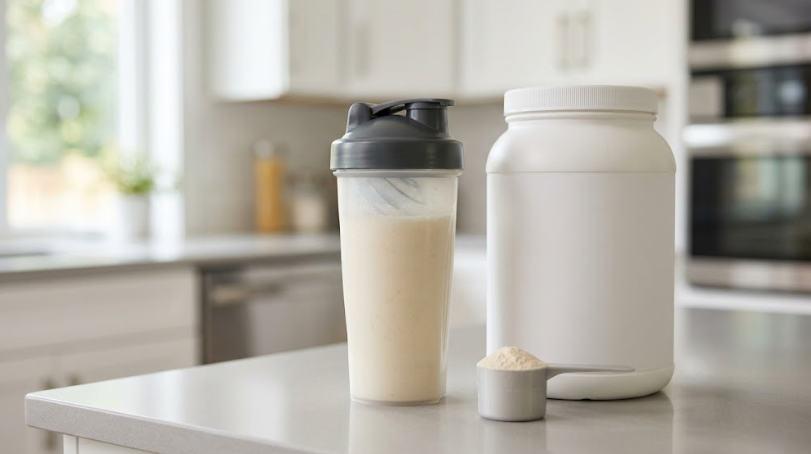
Protein shake vs protein powder is mostly a mix-up of words: the powder is the dry ingredient, and the shake is the drink you make from it, or buy ready-made.
Table of Contents
Quick Summary
- Protein powder: a dry product you mix into water, milk or food. It is usually the cheaper and more flexible option.
- Protein shake: the finished drink. You can make it from powder, or buy a ready-to-drink bottle for convenience.
- How much protein you need: the official minimum (RDA) is 0.8 g per kg of body weight, and the ISSN position stand says 1.4 to 2.0 g per kg a day suits most exercising people.
- Timing: a meta-analysis found total daily protein matters more than whether you drink it right after training.
- Quality: supplements are not approved by the FDA before sale, and Consumer Reports found lead in many protein products, so pick carefully.
Most articles on this topic compare brands. This one explains the difference, whether you need either one, and how to choose a safer product.
Protein Shake vs Protein Powder: What Is the Difference?
The two terms overlap, which is why people compare them as if they were rival products.
- Protein powder is the ingredient. It usually comes in a tub, and you measure a scoop and mix it.
- A protein shake is the drink. You can make one yourself from powder and a liquid, or buy a ready-to-drink (RTD) bottle or carton.
So the real choice is between making your own shake from powder and buying ready-made shakes. The same product can be both, depending on how you use it.
Powder vs Ready-Made Shakes
| Powder (you make the shake) | Ready-to-drink shake | |
|---|---|---|
| Convenience | Needs a shaker or blender | Open and drink |
| Cost per serving | Usually lower | Usually higher |
| Flexibility | Mix with water, milk, fruit or oats | Fixed recipe |
| Storage | Long shelf life, easy to carry | Bulky and may need chilling |
| Control over ingredients | High | Low |
Powder gives you control, and ready-made shakes give you convenience. Many people keep powder at home and a few bottles for busy days. Check the label for the amount of protein per serving, because it varies a lot between products.
Do You Actually Need a Protein Shake?
Not necessarily. According to the ISSN position stand on protein and exercise, physically active people can meet their protein needs from whole foods, and supplements are a practical option for getting enough quality protein without extra calories.
So a shake is a convenience, not a requirement. If you already eat enough eggs, dairy, meat, fish, beans or tofu, you may not need one. If you struggle to reach your target, a shake is an easy way to close the gap.
For a personal number, use our protein intake calculator or read how much protein beginners need.
How Much Protein Do You Need Per Day?
Two numbers are worth knowing:
- The RDA: Harvard Health states the Recommended Dietary Allowance for protein is a modest 0.8 grams per kilogram of body weight. That is the minimum to prevent deficiency, not an ideal for people who train.
- For exercisers: the ISSN position stand says an overall daily intake of 1.4 to 2.0 grams per kilogram of body weight is enough for most exercising people. The NIH Office of Dietary Supplements gives a similar range (1.2 to 2.0 g/kg for athletes) and reports no safety concerns at intakes up to about 2.0 g/kg for athletes.
The ISSN also suggests about 0.25 grams per kilogram per meal, or roughly 20 to 40 grams, spread through the day.
If you have kidney disease or another medical condition, ask your doctor before raising your protein intake.
Does When You Drink a Protein Shake Matter?
You may have heard about an “anabolic window,” the idea that you must drink protein within 30 minutes of training. The research does not support that strongly.
A 2013 meta-analysis by Schoenfeld, Aragon and Krieger looked at protein timing and muscle growth. As summarized by Nutrition Evidence, once the studies were adjusted for total protein, timing around the workout made no significant difference to strength or muscle growth, and total protein intake was the strongest predictor of muscle gain.
The ISSN position stand says the best time to take protein is likely a matter of individual tolerance. So drink your shake when it is convenient. Reaching your daily number matters more than the clock.
Are Protein Powders Safe? What to Check
This is the part most blogs skip. Supplements are not tested by the government before you buy them. The NIH Office of Dietary Supplements notes that there are no provisions in the law for the FDA to approve supplements for safety or effectiveness, and that quality control varies by manufacturer.
In a 2025 test, Consumer Reports analyzed 23 protein powders and shakes. According to Food Safety News’ coverage, about 70 percent exceeded its level of concern for lead, and plant-based products averaged roughly nine times the lead of dairy-based ones. Half of the products had lead levels high enough that experts advised against daily use.
That does not mean every product is unsafe, and the findings do not say which brands are fine. It does mean a few habits are worth it:
- Look for independent testing. Choose products that publish third-party lab results.
- Do not use powder as your only protein source. Whole foods should still do most of the work.
- Read the label. Check protein per serving, sweeteners and added ingredients.
- Be careful if you drink several shakes a day. Heavy daily use of a product with higher lead raises your total exposure.
Whey, Casein or Plant Protein?
Powders come in a few types, and the right one depends on your diet:
- Whey: a milk-based protein that mixes easily. If you are lactose intolerant, whey isolate or a non-dairy option may be easier on your stomach, and it is worth asking a doctor if dairy often upsets you.
- Casein: another milk protein that digests slowly. The ISSN position stand mentions 30 to 40 grams of casein before sleep as one option.
- Plant protein: made from peas, rice, soy or blends. It suits vegans, but remember the Consumer Reports finding above that plant-based products had higher lead on average, so independent testing matters even more here.
None of these is magic. Choose the one you tolerate, enjoy and can afford.
A Quick Buying Checklist

Before you buy any powder or ready-made shake, run through this list:
- Check the protein per serving on the label.
- Check the serving size, since some scoops are small.
- Look for third-party testing and read the brand’s published results if available.
- Scan the ingredients for added sugar, sweeteners and fillers.
- Compare the price per gram of protein, not per tub.
- Confirm it fits your diet, such as dairy-free or vegan.
Protein Shake vs Creatine: Are They the Same?
No. Protein is a macronutrient that provides amino acids, while creatine is a separate supplement. A protein shake does not replace creatine, and creatine does not replace protein. Our creatine dosage guide covers how beginners use it, and a plain creatine monohydrate powder is the usual form. Check the listing for serving size before you buy.
What You Need to Make Protein Shakes at Home
You do not need much.
- Whey protein powder: the main ingredient. Check the label for protein per serving, and whether you tolerate milk-based protein.
- Digital food scale: helps you measure your powder and the foods you add, so your daily protein number is accurate.
- A shaker bottle or blender: for mixing smoothly. Any standard shaker works.
- Water, milk or a milk alternative: milk adds extra protein and calories.
How to Make a Simple Protein Shake
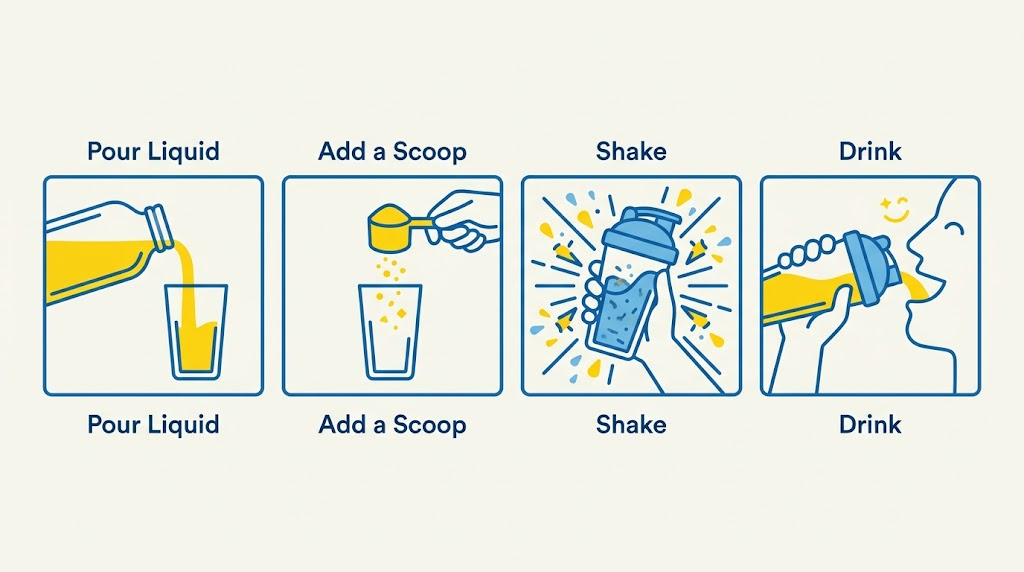
- Add about 250 to 300 ml of cold water or milk to your shaker.
- Add one scoop of powder.
- Shake for 20 to 30 seconds until smooth.
- For a meal replacement, blend in a banana, oats or peanut butter.
If you are drinking shakes to lose weight, remember that milk, fruit and nut butter add calories. Our guide on the best post-workout foods shows whole-food alternatives.
Quick Answers
Is protein shake vs protein powder a real choice? Not really. A shake is made from powder or bought ready-made. The choice is between making your own and buying ready-made.
Which is cheaper? Powder is usually cheaper per serving than ready-made shakes. Compare the price per gram of protein.
Can I replace meals with protein shakes? They can fill a gap, but whole foods give you fiber and other nutrients a shake does not.
Do protein shakes make you gain weight? Only if they push your total calories above what you burn. Protein itself is not special for fat gain.
The Bottom Line
The protein shake vs protein powder question mostly comes down to convenience and cost. Powder is the ingredient and the shake is the drink. Neither is required if your meals already provide enough protein.
If you do use one, pick a tested product, focus on your daily total, and do not worry about drinking it within a particular window.
Disclaimer & Affiliate Disclosure
This article is for informational purposes only and should not be taken as medical advice. Always consult with a qualified healthcare provider or certified fitness professional before starting or changing your diet or exercise routine. This article may also contain affiliate links. If you purchase through these links, we may earn a small commission at no extra cost to you.