Dumbbells vs kettlebells home gym — which should beginners buy first? Compare hypertrophy, conditioning, cost and space to make the right call.
If you’re setting up your first home gym, the dumbbells vs kettlebells home gym question is usually the first real decision you’ll face. Both are compact. Both are versatile. Both genuinely work. But they’re not interchangeable, and which one belongs in your cart first depends entirely on what you’re actually training for.
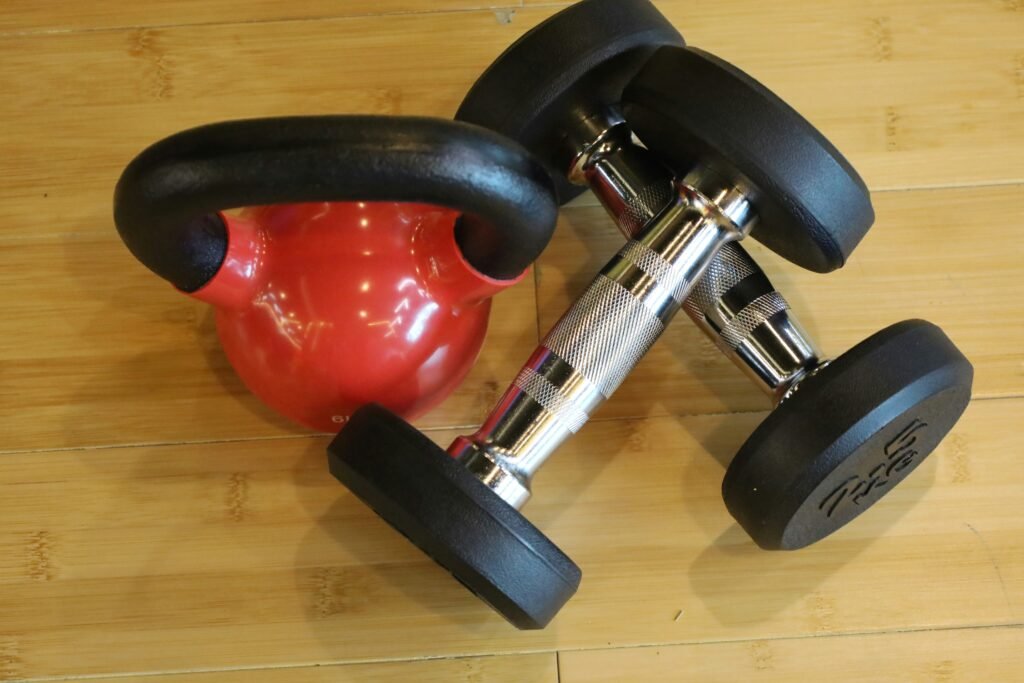
Here’s the physics that drives everything else in this guide: a dumbbell has weight distributed evenly on either side of a straight handle, keeping the centre of mass fixed at the grip. A kettlebell has its weight offset below and in front of the handle. That single difference in load distribution is why each tool excels at completely different types of movement.
Table of Contents
When Dumbbells Reign Supreme: Muscle Building and Isolation
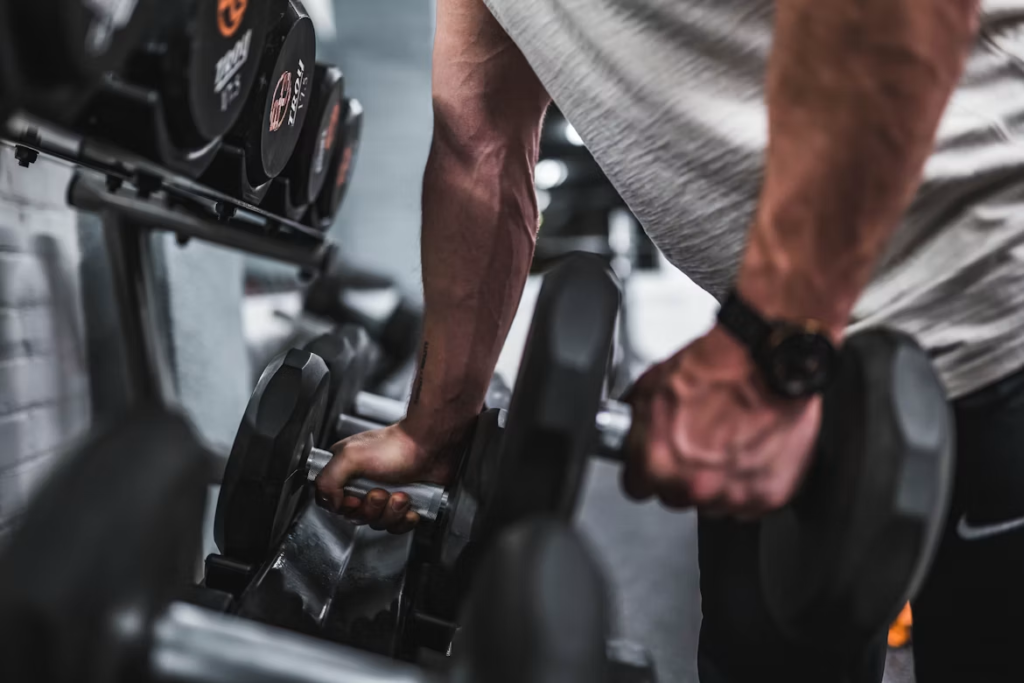
Dumbbells are the better choice when your primary goal is hypertrophy — building visible muscle size through controlled, isolated movements.
Because the load sits centred and balanced in your hand, dumbbells make it easy to isolate a single muscle group, control the tempo of each rep precisely, and progress in small, predictable weight increments week over week. This predictability is exactly what drives consistent progressive overload at home over months of training.
Dumbbells also demand genuine unilateral stability — training each side of your body independently — which helps identify and correct strength imbalances that barbell training can mask entirely.
For beginners specifically, dumbbells tend to feel far less intimidating for foundational movements like presses, curls, rows, and flyes. The straight, symmetrical handle behaves predictably, which means less coaching is required to use them safely compared to kettlebells.
🛒 Recommended gear: A compact adjustable dumbbell set replaces an entire rack of individual dumbbells in a footprint smaller than a shoebox — ideal for apartments and small training spaces where floor real estate matters.
When Kettlebells Win: Functional Power and Conditioning
Kettlebells earn their place when your goal shifts toward functional power, athletic conditioning, and cardiovascular endurance delivered through ballistic, full-body movements.
The offset centre of mass is what makes ballistic movements like swings, cleans, and snatches possible and effective. That same offset load challenges your core and grip in ways a symmetrical dumbbell simply can’t replicate — the weight is constantly trying to pull you off balance, forcing continuous stabilisation throughout every rep.
Kettlebell circuits combining swings, cleans, and get-ups deliver genuine cardiovascular conditioning alongside strength work, making them one of the most time-efficient tools available for full-body training in a compact space.
If you’re deciding between fixed and adjustable kettlebell options, the choice comes down to your available space and budget.
🛒 Recommended gear (fixed weight): A heavy-duty cast iron kettlebell offers a solid, single-piece construction that’s built to handle the repeated impact of ballistic swinging movements without any moving parts to loosen over time.
🛒 Recommended gear (adjustable): A space-saving adjustable kettlebell lets you progress through multiple weight levels from a single unit — better suited to controlled strength work like goblet squats than high-speed swings (more on this in the FAQ below).

Head-to-Head Feature Matrix
| Factor | Dumbbells | Kettlebells |
|---|---|---|
| Hypertrophy (muscle building) | Excellent — precise isolation and predictable overload | Good — but harder to isolate specific muscles |
| Conditioning / Fat Loss | Good — but less dynamic | Excellent — ballistic movements elevate heart rate fast |
| Space Efficiency | Excellent, especially adjustable models | Excellent, especially adjustable models |
| Cost per Pound | Generally lower, especially adjustable sets | Slightly higher for equivalent total weight |
| Learning Curve | Low — intuitive, predictable movement | Moderate to high — swings and cleans need proper coaching |
The Best of Both Worlds: The Hybrid Converter Hack
If your budget only stretches to one tool right now, there’s a genuine workaround worth knowing about.
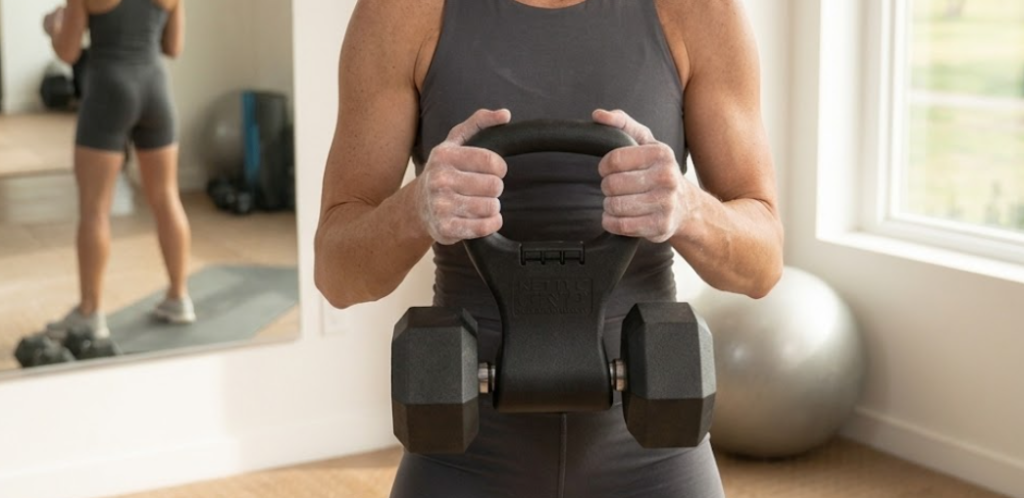
A grip converter attaches to a standard dumbbell handle, effectively turning it into a kettlebell-style grip. This lets you perform kettlebell swings, Turkish get-ups, and goblet squats using the dumbbells you already own — bridging both training styles without buying a second complete set of equipment.
🛒 Recommended gear: A dumbbell to kettlebell grip converter is a genuinely smart budget move for beginners who want exposure to both training styles before committing to a second full set.
Worth noting: this hack works best for controlled kettlebell-style movements like goblet squats and get-ups. For high-speed ballistic swings specifically, a genuine fixed-weight kettlebell remains the safer, more durable choice — see the FAQ below for why.
Decision Framework: Which One Should You Buy First?
Buy dumbbells first if your primary goal is muscle hypertrophy, bodybuilding-style aesthetics, or structured linear strength progression. If you understand [Internal Link: Link to Progressive Overload Guide] and want a tool built specifically for that kind of steady, incremental loading, dumbbells are the more versatile first purchase for most beginners.
Buy kettlebells first if your primary goal is dynamic athletic conditioning, posterior chain power, or fast, efficient full-body workouts using minimal equipment. If you’re short on time and want strength and cardio delivered in the same session, kettlebells offer that combination more effectively than dumbbells do.
If budget forces a single choice, dumbbells remain the more conservative starting point — they cover more training styles for more people. But if your goals lean specifically toward athletic, functional conditioning, kettlebells are worth prioritising from day one.
For the complete list of what else belongs in your starter setup, check out our minimalist home gym stet up on a budget.
FAQ and Safety Considerations
Can you replace kettlebell swings with dumbbell swings?
Not effectively. The centred, symmetrical weight distribution of a dumbbell doesn’t replicate the pendulum-like ballistic motion a kettlebell’s offset load creates. Attempting swings with a dumbbell also increases the risk of the weight slipping or rotating awkwardly in your grip during the fast hip-hinge motion.
Are adjustable weights safe for dynamic swinging movements?
Generally, no — and this is worth taking seriously. Adjustable dumbbells and adjustable kettlebells rely on locking collars, pins, or selector dials to hold their plates in place. The rapid deceleration and directional change involved in swings, cleans, and snatches place significant stress on those mechanisms. A fixed, single-piece cast iron kettlebell has no moving parts to work loose under that repeated impact, making it the genuinely safer choice for ballistic training. Reserve adjustable options for slower, more controlled movements like presses, rows, and goblet squats.
How heavy should a beginner start for dumbbells vs. kettlebells?
For dumbbells, most beginners start comfortably in the 5 to 15 pound range per hand, adjusting up as specific movements allow. For kettlebells, an 8 to 12 kilogram bell is a sensible starting point for most beginners to learn proper swing and clean technique before progressing heavier — moving to 12 to 16 kilograms as competency and strength develop.
Final Thoughts
The dumbbells vs kettlebells home gym decision doesn’t need to be permanent — most serious home lifters eventually own both. But if you’re buying your very first piece of free-weight equipment, match the purchase to your actual 90-day training goal rather than what looks impressive in a gym photo. Chasing muscle growth and structured strength? Start with dumbbells. Chasing conditioning, power, and efficient full-body sessions? Start with kettlebells. Either way, the right tool is simply the one that matches what you’re genuinely trying to build.
Disclaimer & Affiliate Disclosure:
This article is for informational purposes only and should not be taken as medical advice. Always consult with a qualified healthcare provider or certified fitness professional before starting or changing your exercise routine. This article may also contain affiliate links. If you purchase through these links, we may earn a small commission at no extra cost to you.