Meta Description: This 15-minute travel resistance band workout replaces hotel gyms entirely. Build real muscle anywhere with a portable band setup that fits in your carry-on.
Hotel gyms are a gamble. Sometimes it’s a single treadmill and a rusty dumbbell rack. Sometimes there’s no gym at all. A travel resistance band workout solves this permanently — a setup weighing under a pound that fits in your carry-on and replicates the tension of cable machines and free weights, anywhere you have a door.
Table of Contents
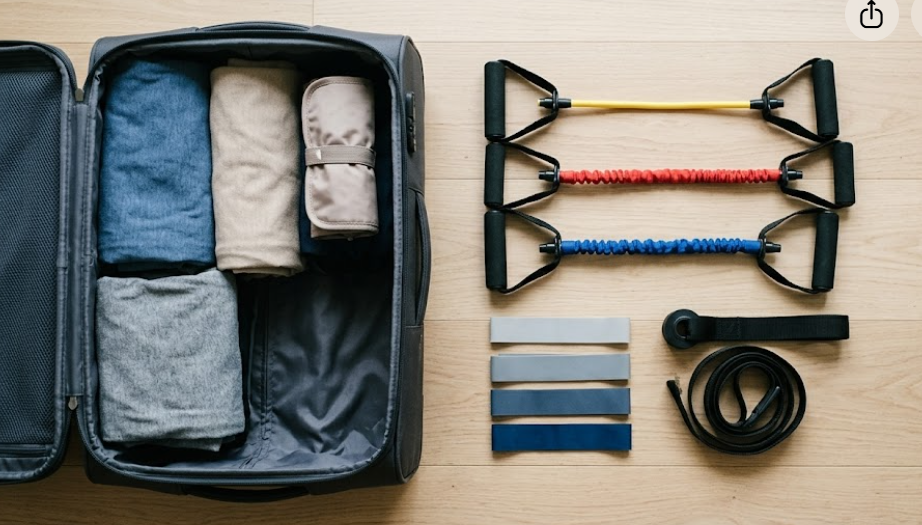
The Ultimate Travel Band Setup: 3 Must-Have Tools
Three items cover every movement pattern you need on the road.
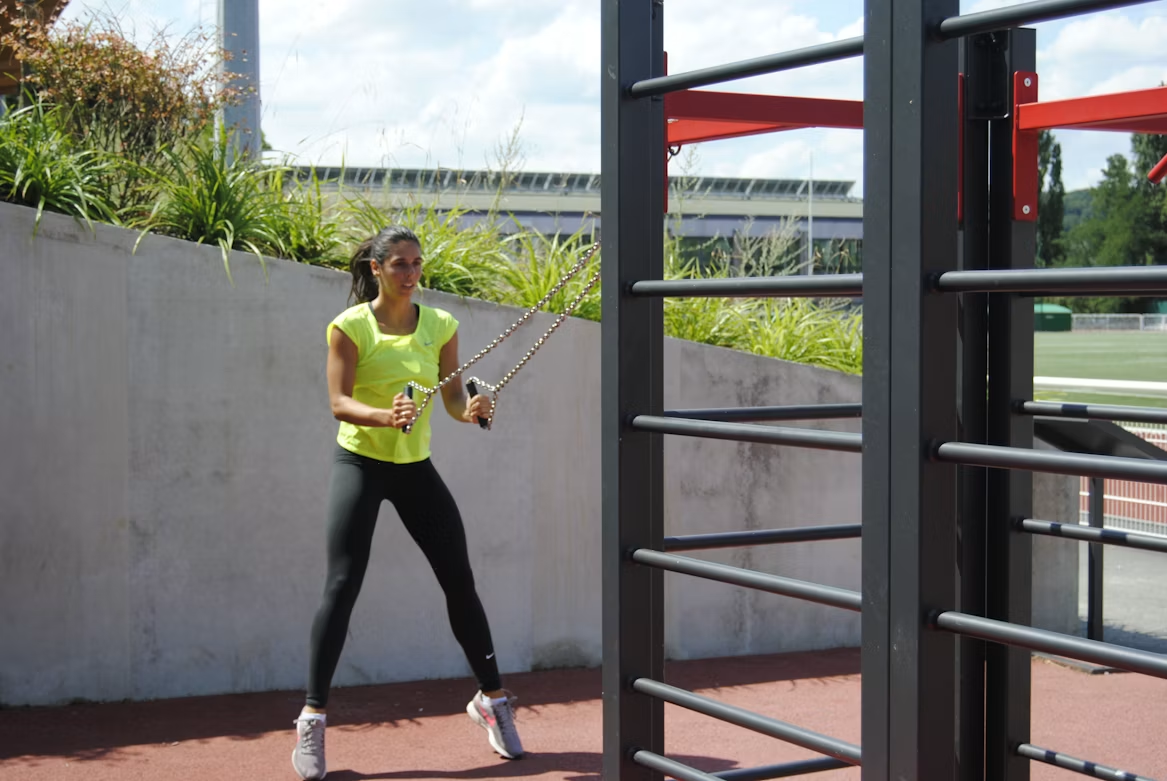
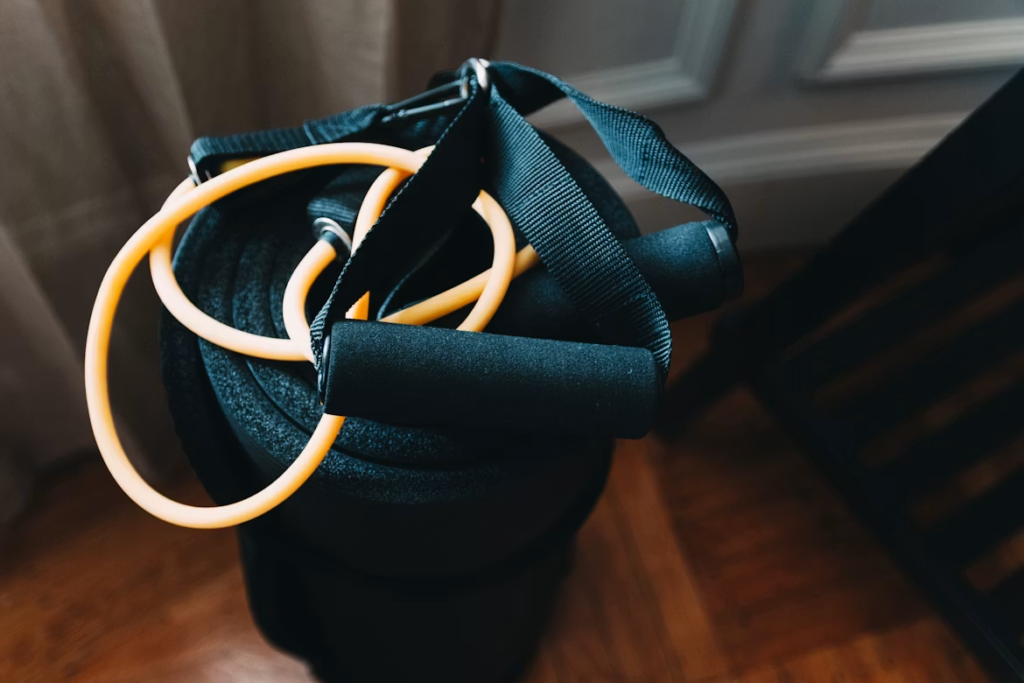
A tube band set with handles acts as your entire multi-gym in a drawstring bag. These replicate cable machine resistance for presses, rows, curls, and extensions — the exact movement patterns most beginners rely on for muscle building at home or in a gym.
🛒 Recommended gear: A portable tube resistance band set with handles typically comes with multiple resistance levels, comfortable handles, and a compact carrying pouch — genuinely functioning as a complete home gym replacement for travel.
Mini loop bands cover what tube bands can’t. These flat, continuous loops excel at lower-body glute activation, shoulder warm-ups, and joint stability work — movements where a handle would actually get in the way. They’re also small enough to disappear into a jacket pocket.
🛒 Recommended gear: A set of latex mini loop resistance bands in varying resistance levels gives you options for both warm-ups and genuinely challenging glute and hip work.
A door anchor turns any hotel door into a variable-height cable station. Without one, tube bands are limited to standing curls and presses. With one, you unlock rows, face pulls, and lat pulldowns — movements that train your entire posterior chain.
🛒 Recommended gear: A multi-loop door anchor strap distributes pressure evenly across the door edge rather than concentrating it on one point, reducing both door damage risk and anchor slippage.
The Science of Building Muscle with Elastic Resistance
Resistance bands work fundamentally differently from free weights, and understanding this is what makes this routine effective rather than a watered-down substitute.
A dumbbell provides constant resistance regardless of position — the weight feels the same whether your arm is extended or bent. A band provides accommodating resistance: tension is lowest at the start of the stretch and increases progressively as the band lengthens, peaking right at full contraction — exactly where your muscle is often mechanically strongest.
This creates significant time under tension (TUT), a key driver of muscular hypertrophy. According to research on resistance training adaptations, mechanical tension sustained across a full range of motion is one of the primary stimuli driving muscle growth — meaning bands can produce genuine hypertrophy when used with sufficient volume and controlled tempo, not just heavy loads.
The takeaway: bands aren’t a compromise while you wait for a real gym. Used properly, they’re a legitimate hypertrophy tool in their own right.
The 15-Minute Full-Body Travel Resistance band workout
Set your door anchor once and move through this circuit. Rest only between movements, not between rounds — the entire circuit fits inside 15 minutes.
| Movement | Target Muscle | Sets x Reps | Rest |
|---|---|---|---|
| Banded Door-Anchored Chest Press | Chest, triceps | 3 x 12-15 | 30s |
| High-to-Low Anchored Face Pulls | Upper back, rear delts | 3 x 15 | 30s |
| Loop Band Goblet Squats | Quads, glutes | 3 x 15-20 | 30s |
| Overhead Triceps Extension | Triceps | 2 x 12 | 20s |
| Standing Band Bicep Curl | Biceps | 2 x 12 | 20s |
Movement 1 — Chest Press or Fly: Anchor mid-height on the door. Face away from the door, step forward until you feel resistance, and press or fly through a full range of motion. Keep your core braced throughout.
Movement 2 — Face Pulls: Anchor slightly above head height. Pull the handles toward your face, elbows flaring wide, squeezing your shoulder blades together at the peak. This single movement does more for posture than almost anything else on this list.
Movement 3 — Goblet Squats: Loop a mini band around your thighs just above the knees. Hold a tube band handle at chest height or simply place hands on hips, and squat while actively pressing your knees outward against the band tension.
Movement 4 — Triceps and Bicep Superset: Anchor overhead for triceps extensions, then drop to standing curls without an anchor at all — just stand on the band and curl. Move directly between the two with no rest for maximum time under tension.
Hotel Room Anchor Safety and Setup Protocol
This is the section that actually determines whether this workout is safe or genuinely risky, so follow it exactly.
Position the door so it closes toward the pulling force, not away from it. Feed the anchor’s padded stopper through the gap at the hinge side of the door, close the door completely, and lock it if possible. The stopper sits on the far side of the door and cannot pull through a fully closed door — but only if the door is genuinely shut, not resting ajar.
Pull-test before every session, not just the first one. Grip the handles and give the band a hard, controlled tug from a safe distance before starting your actual set. Hotel doors vary wildly in build quality — a door that held fine yesterday isn’t automatically safe today if you’ve switched rooms.
Check the hinges, not just the anchor. A frayed anchor seam or a door with loose hinge screws are both reasons to stop and reposition rather than push through “because it feels fine.” It often feels fine right up until the first strong rep.
Choose your anchor height deliberately. Top of the door for downward pulling angles like lat pulldowns and triceps extensions. Middle for rows and presses. Bottom for curls and kickbacks. Matching the anchor height to the movement keeps the resistance path clean and predictable.
FAQ and Common Travel Workout Questions
Can you really maintain muscle mass on a 2-week vacation with just bands?
Yes. Maintaining muscle over a short travel period requires far less stimulus than building it in the first place. Two to three sessions per week using this circuit, with attention to proper tempo and full range of motion, is genuinely sufficient to preserve the muscle and strength you’ve built.
Will TSA allow resistance bands and door anchors in carry-on luggage?
Yes, both are permitted in carry-on bags without restriction. Fabric bands, tube bands, and door anchor straps contain no components that raise security concerns and are commonly seen in hand luggage.
How do you increase difficulty when bands aren’t heavy enough?
Slow your tempo dramatically — a 4-second controlled stretch and a 2-second controlled return dramatically increases time under tension without needing more resistance. You can also stack two bands together for combined resistance, or shorten your starting position to increase the stretch length throughout the movement.
For a deeper look at the muscle-building principles behind time under tension and progressive resistance, check out our progressive overload guide at home. And if you’re building out a permanent setup at home alongside your travel kit, our Home Gym Gear Essentials, which covers everything else worth owning.
Final Thoughts
Progress doesn’t pause just because you’re on the road. A 15-minute travel resistance band workout, done consistently across a trip, keeps the muscle and strength you’ve worked for fully intact — no hotel gym required, no excuses left. Pack the bands, set up the anchor properly, and treat every hotel room like the gym it’s about to become.
Disclaimer & Affiliate Disclosure:
This article is for informational purposes only and should not be taken as medical advice. Always consult with a qualified healthcare provider or certified fitness professional before starting or changing your exercise routine. This article may also contain affiliate links. If you purchase through these links, we may earn a small commission at no extra cost to you.