Knowing how to break a weight loss plateau starts with one reassuring fact: a stall is normal, and it almost always has a fixable cause. Most plateaus come from small things, such as portions that have crept up, a slightly smaller body that burns a little less, or fewer daily steps than before. To get moving again, measure your food accurately for two weeks, recalculate your calories for your current weight, add steps and strength training, and, if you’ve been dieting for a long time, take a short planned break at maintenance. Change one or two things at a time so you can see what actually works.
Table of Contents
Quick Summary
- A plateau is normal. It usually shows up weeks to months after you start, not because your body is “broken.”
- Check the boring stuff first. Portion creep and untracked bites are the most common cause of a stall.
- Recalculate your calories. A lighter body needs less energy than the one you started with.
- Add movement and lifting. Daily steps and strength training protect muscle and raise your energy use.
- Consider a diet break. One small trial found planned breaks at maintenance helped, though it has limits (see below).
What Is a Weight Loss Plateau (and What Isn’t)?
A plateau is a stretch where your weight and measurements stop changing even though you’re still following your plan. It is different from normal scale noise. Your weight can swing by a kilogram or more in a day because of water, salt, food still in your gut and, for women, the menstrual cycle.
A good rule of thumb is to judge your trend over several weeks rather than a few days. If your weight, waist measurement and how your clothes fit haven’t moved for around three to four weeks despite consistent effort, you’re likely on a true plateau. This is a common rule of thumb rather than a strict medical definition.
Why Weight Loss Stalls
Medical references list several reasons. A clinical review in StatPearls notes that plateaus commonly appear weeks to months after starting, and that maximal weight loss is generally reached at around six months. It lists adaptive thermogenesis, hormonal changes and muscle loss as contributors.
In everyday terms, four things usually happen at once:
- You weigh less, so you burn less. A smaller body needs fewer calories at rest and during exercise.
- You move less without noticing. Tired dieters fidget, stand and walk less through the day.
- Portions creep. A “tablespoon” of oil or a “handful” of nuts slowly gets bigger.
- You may be losing muscle. Less muscle means a lower calorie burn, especially if you aren’t lifting or eating enough protein.
If you’re still working out whether you’re in a real deficit, our guide on what a calorie deficit is walks through the basics.
How to Break a Weight Loss Plateau: 7 Fixes That Work
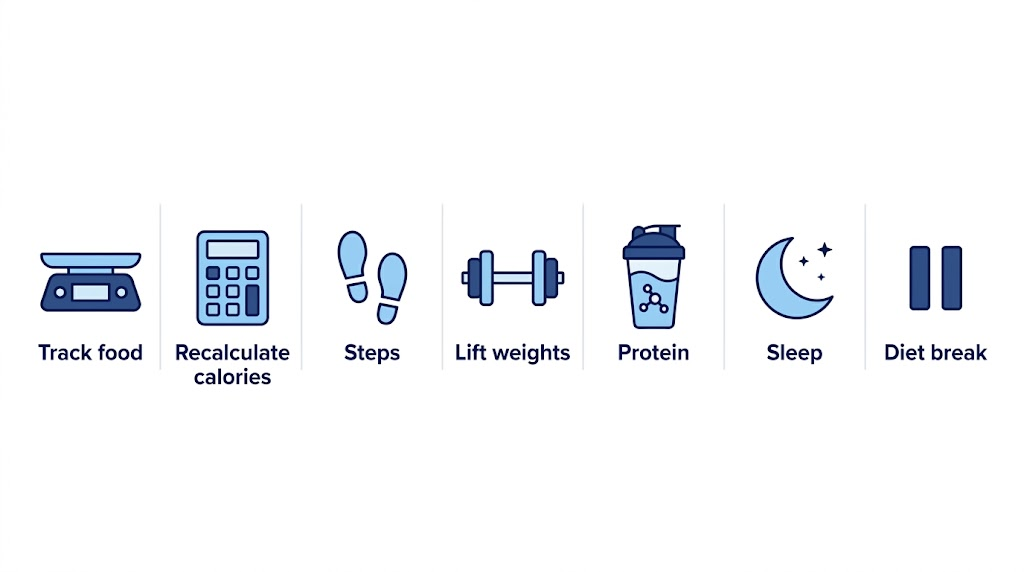
Work through these in order. The first three fix most stalls without any extreme measures.
1. Track Your Food Accurately for Two Weeks
You don’t have to track forever, but a short, accurate audit shows where calories are hiding. Weigh food in grams instead of using cups and spoons, especially calorie-dense items like oil, peanut butter, rice and cheese. A cheap digital food scale makes this quick and removes the guesswork.
Log drinks, sauces and weekend meals too. Most people find one or two categories that are quietly adding hundreds of calories a day.
2. Recalculate Your Calories for Your Current Weight
The number that worked at the start may now be your maintenance level. Re-run your numbers using your current weight and activity level. Our post on how many calories to eat to lose weight shows how to set a sensible target.
Aim for a moderate deficit rather than a steeper cut. The CDC notes that losing about 1 to 2 pounds per week is a safe rate and more likely to be kept off. Slashing calories to break a stall usually backfires through hunger, poor workouts and overeating.
3. Raise Your Daily Steps
Walking is the easiest way to increase energy use without adding stress or hunger. Add about 1,000 to 2,000 steps a day to your current average and hold it for two weeks. Our guide on how many steps a day to lose weight explains how to build up, and walking counts as real exercise if you’ve been wondering.
4. Lift Weights (or Progress the Weights You Lift)
Strength training helps you keep muscle while you diet, which protects your calorie burn. If you only do cardio, our comparison of cardio vs weights for fat loss shows why adding resistance work matters. Beginners can start with our strength training for beginners guide.
If you already lift, make sure you’re still progressing. Repeating the same weights for months sends your body no reason to hold onto muscle. A pair of adjustable dumbbells lets you add weight in small steps at home.
5. Check Your Protein
Higher protein helps you feel full and helps preserve muscle while you’re in a deficit. Use our protein intake calculator to find your target, and see how much protein beginners need for sources and safety notes. If food alone isn’t getting you there, a whey protein powder is a convenient option.
6. Fix Your Sleep and Stress
Poor sleep and high stress make hunger harder to manage and workouts harder to complete. If you’re regularly sleeping under seven hours, fixing that may help more than trimming another 100 calories. Treat it as part of the plan, not a bonus.
7. Try a Planned Diet Break
If you’ve been in a deficit for a long time and feel worn down, a short break at maintenance may help. The MATADOR trial randomized 51 men with obesity to either 16 weeks of continuous dieting or 16 weeks of dieting split into two-week blocks with two-week maintenance breaks. The intermittent group lost more weight (14.1 kg vs 9.1 kg) and more fat (12.3 kg vs 8.0 kg), and had a smaller drop in resting metabolic rate.
Read this with caution. Participants were men with obesity, the sample was small, and the intermittent group took far longer overall (about 30 weeks vs 16). It suggests planned breaks can help, not that they are a faster route or that they will work the same way for everyone.
A Simple Two-Week Plateau Reset

If you want a clear plan instead of a list, try this for two weeks:
- Days 1 to 14: weigh and log everything you eat, including drinks and sauces.
- Day 1: update your calorie target for your current weight and set your protein goal.
- Days 1 to 14: add 1,000 to 2,000 steps to your daily average.
- Each week: do at least two strength sessions and try to add a rep or a little weight.
- Every day: aim for seven hours of sleep or more.
- Day 14: compare your weekly average weight, waist measurement and energy levels with the two weeks before.
Only after two full weeks should you decide whether to change anything else. Small, consistent adjustments beat dramatic overhauls.
Plateau or Normal Fluctuation?
| What you see | Likely explanation | What to do |
|---|---|---|
| Up 1 kg overnight, then back down | Water, salt, food volume | Ignore it and keep the routine |
| Scale flat for 1 to 2 weeks, waist shrinking | Water masking fat loss | Keep going and track measurements |
| Nothing moving for 3 to 4 weeks | Possible true plateau | Work through fixes 1 to 3 |
| Fatigued, cranky, sleeping badly on a long diet | Diet fatigue | Consider a planned break (fix 7) |
What Not to Do When You’re Stuck
- Don’t slash calories. Very low intake makes you hungrier and increases the odds of rebound eating.
- Don’t add extreme cardio. More exercise on top of a big deficit raises injury risk and burnout.
- Don’t judge by one weigh-in. Use weekly averages, waist measurements and photos.
- Don’t change everything at once. You won’t know what worked.
When to See a Doctor
If you’ve followed a consistent plan and your weight still hasn’t changed for a long time, it’s worth speaking with a doctor or registered dietitian. Clinicians can check for medical causes, such as thyroid problems or medications that affect weight, and help you adjust safely. Talk to a professional before making big changes to your diet if you have a medical condition or take regular medication.
Recommended Tools to Break Through a Stall
- Digital food scale: the fastest way to find hidden calories.
- Adjustable dumbbells: progressive strength training at home.
- Resistance band set: a low-cost way to add resistance work. See our resistance bands for beginners guide.
- Whey protein powder: helps you reach your protein target.
Final Thoughts
Learning how to break a weight loss plateau is mostly about patience and precision. Check your tracking, update your calories, add steps and strength work, protect your sleep, and consider a short break if you’re worn out. Stay consistent, change one thing at a time, and give each change a couple of weeks before you judge it.
Disclaimer & Affiliate Disclosure
This article is for informational purposes only and should not be taken as medical advice. Always consult with a qualified healthcare provider or certified fitness professional before starting or changing your diet or exercise routine. This article may also contain affiliate links. If you purchase through these links, we may earn a small commission at no extra cost to you.