Figuring out how much protein for beginners is right can feel like guesswork — every fitness influencer seems to have a different number. The official dietary guidelines say one thing. Bodybuilders say another. Here’s the actual science, broken down into numbers you can use today.
Table of Contents
The Protein Paradox: Why Standard Guidelines Aren’t Enough
The official Recommended Dietary Allowance (RDA) for protein is 0.8 grams per kilogram of body weight — roughly 0.36 grams per pound. This number gets thrown around constantly, but here’s what most people miss: this figure is the minimum needed to prevent deficiency, not the optimal amount for anyone trying to change their body composition.
If your goal is body recomposition — losing fat while building or maintaining muscle mass at the same time — the RDA falls dramatically short.
Here’s why this matters more during fat loss specifically. When you’re in a calorie deficit, your body becomes more prone to breaking down muscle tissue for energy alongside fat. Higher protein intake directly counteracts this, signalling to your body that muscle should be protected even while total calories are reduced. Skip this step and you risk losing hard-earned muscle right alongside the fat.
The Exact Math: How Much Protein Do Beginners Need?
The science-backed target range for active beginners is 0.7 to 1.0 grams of protein per pound of total body weight — or roughly 1.6 to 2.2 grams per kilogram, consistent with the ISSN’s position stand on protein and exercise.
Here’s what that looks like in practice in pounds:
- 150 lb beginner: 105g to 150g of protein per day
- 175 lb beginner: 122g to 175g of protein per day
- 200 lb beginner: 140g to 200g of protein per day
If you think in kilograms:
- 60 kg beginner: 96g to 132g of protein per day
- 70 kg beginner: 112g to 154g of protein per day
- 80 kg beginner: 128g to 176g of protein per day
- 90 kg beginner: 144g to 198g of protein per day
One important adjustment: if your BMI is above 30, calculating protein based on total body weight can overshoot what you actually need, since a larger proportion of your weight is fat tissue rather than lean mass. In this case, use your goal weight or an estimate of your lean body mass instead of your current total weight for a more accurate target.
For most healthy people, going up to the higher end of this range daily is safe and effective — and even somewhat beyond it is unlikely to cause harm. But if you have any existing kidney or liver conditions, speak with your doctor before significantly increasing your protein intake.
3 Reasons Protein Is the Ultimate Nutrient for Fat Loss
1. High Thermic Effect of Food (TEF)
Every time you eat, your body burns calories simply digesting and processing that food. Protein has by far the highest thermic effect of any macronutrient — roughly 20 to 30% of protein calories are burned during digestion alone, compared to just 5 to 10% for carbohydrates and 0 to 3% for fats.
In practical terms, a 100-calorie serving of protein might only net your body around 70 to 80 usable calories. That difference adds up meaningfully across a full day and week.
2. Superior Satiety and Hunger Control
Protein is the most filling macronutrient, gram for gram. It directly influences the hormones that regulate hunger — suppressing ghrelin (your “I’m hungry” signal) and boosting leptin (your “I’m full” signal) more effectively than carbs or fat.
This matters enormously during a calorie deficit, when hunger is already working against you. A higher-protein diet is one of the most reliable tools for staying satisfied on fewer total calories without constant willpower battles.
3. Preserving Lean Muscle Mass Under Stress
This is the piece most beginners overlook entirely. Cutting calories without adequate protein and resistance training often leads to what’s commonly called “skinny-fat” — losing weight on the scale while muscle mass drops right alongside the fat, leaving you lighter but not actually leaner or stronger.
Preserving muscle keeps your resting metabolic rate higher, meaning you burn more calories simply existing, even at rest. This is one of the biggest long-term advantages of prioritising protein during any fat loss phase.
How to Calculate and Hit Your Daily Protein Target Step-by-Step
Step 1: Establish Your Daily Baseline Number
Take your body weight in pounds and multiply it by 0.7 for your minimum target, and by 1.0 for your maximum. Anywhere in that range effectively supports fat loss while protecting muscle. Beginners can comfortably start at the lower end and adjust upward over time.
Step 2: Weigh and Measure Food Accurately
Eyeballing portion sizes is one of the biggest reasons people underestimate their actual calorie intake while simultaneously overestimating how much protein they’re really getting. A chicken breast that “looks like” 150 grams is very often closer to 200 or 250 grams once it’s actually weighed.
Accurately measuring raw meat and meal portions using a reliable digital kitchen food scale on Amazon eliminates the guesswork so you hit your macros consistently without overeating.
Step 3: Prioritise High-Quality Whole Food Sources
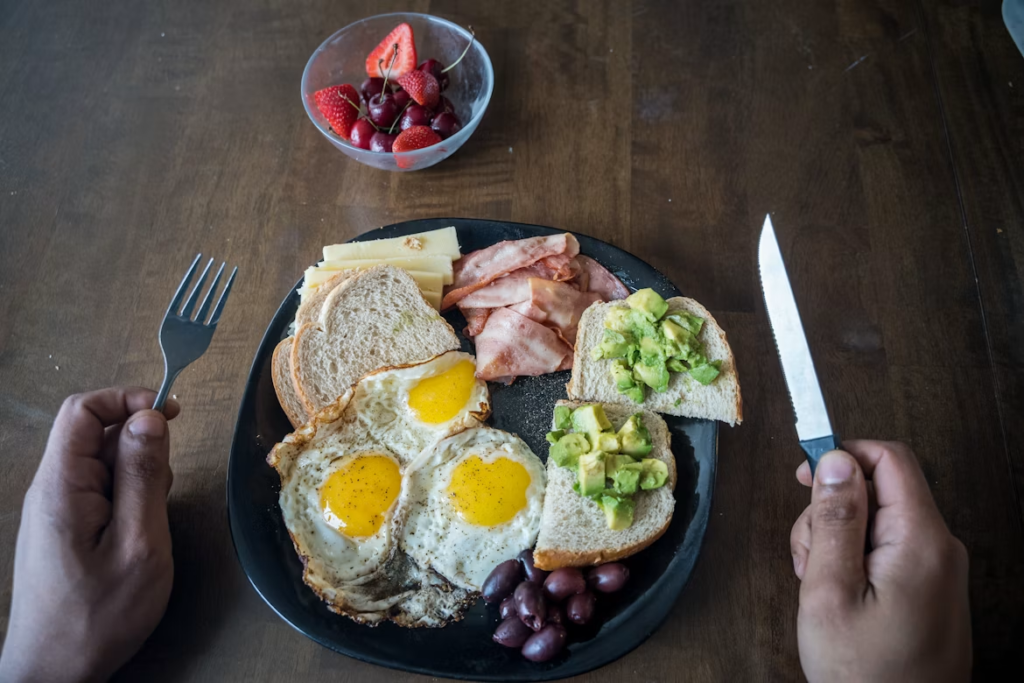
Whole foods should form the foundation of your protein intake. Here are the most efficient options for beginners:
- Chicken breast — roughly 31g protein per 100g, extremely lean
- 93/7 ground turkey — roughly 21g protein per 100g, versatile and affordable
- Eggs — roughly 6g protein per whole egg, complete amino acid profile
- Greek yogurt — roughly 10g protein per 100g, convenient and quick
- Canned tuna — roughly 26g protein per 100g, extremely cheap and shelf-stable
- Tofu — roughly 8g protein per 100g, excellent plant-based option
- Lentils — roughly 9g protein per 100g cooked, high in fibre too
What If You’re Vegetarian or Vegan?
Plant-based eaters can absolutely hit these targets and build or retain muscle just as effectively — you’ll just want to adjust the number slightly. Aim for 10 to 20% more total protein than the ranges above, since plant proteins are generally less digestible and often missing one or more essential amino acids individually.
Build your plate around a variety of sources — tofu, tempeh, lentils, chickpeas, quinoa, and edamame — rather than relying on just one. Combining sources across a day (rice + beans, for example) covers the amino acid gaps that any single plant protein leaves on its own. A plant-based protein powder (pea, rice, or hemp blend) is a practical way to close the gap on training days.
Supplementing for Convenience: Shakes and Snacks
Whole foods should always come first — but for most beginners, hitting 150g or more of protein purely through meals every single day isn’t always realistic, especially with work, study, and life getting in the way.
Whey protein digests quickly and works well post-workout or whenever you need a fast, convenient protein hit. Plant-based protein powders — pea, rice, or hemp blends — are a solid alternative for anyone avoiding dairy, though you may need a slightly larger serving to match whey’s amino acid profile.
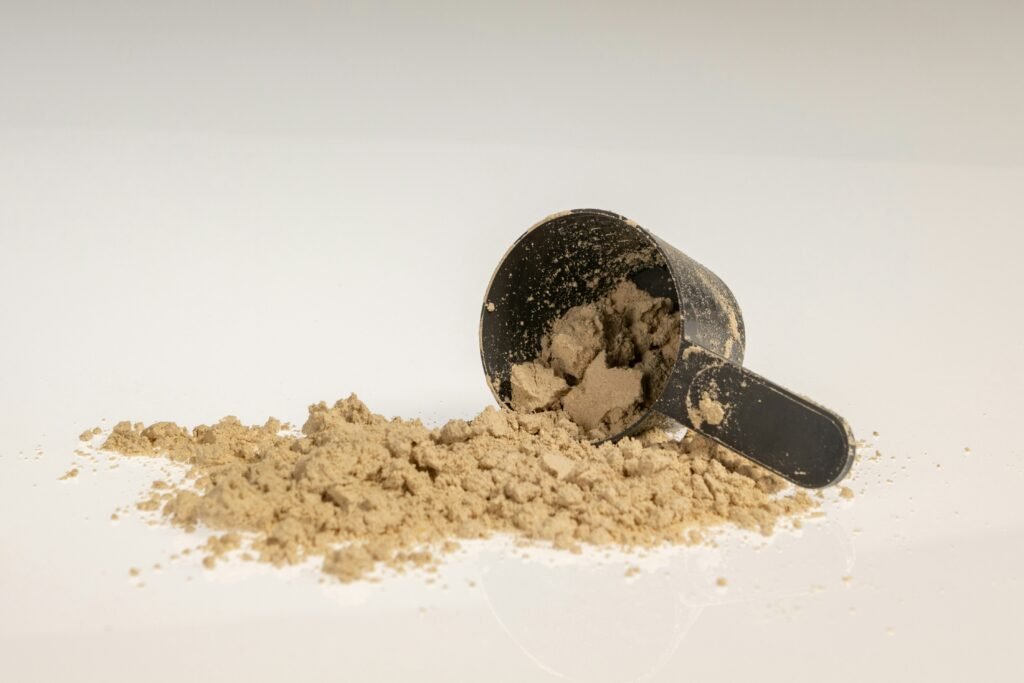
If you struggle to reach your daily targets through whole foods alone, mixing a scoop of Protein Powder into your morning smoothie provides 24g of rapid-digesting protein with minimal fat and carbs.
For busy days when sitting down to a full meal isn’t an option, keeping High Protein Bars in your gym bag ensures you feed your muscles without reverting to fast food.
Protein Timing and Meal Distribution Myths Debunked
You’ve probably heard about the “anabolic window” — the idea that you must consume protein within 30 minutes of finishing a workout or lose out on gains entirely. This is largely a myth. What actually matters far more is your total protein intake across the full 24-hour day, not a narrow post-workout window.
That said, distribution still matters for optimising muscle protein synthesis (MPS) — the process your body uses to repair and build muscle tissue. Aim for 20 to 40 grams of protein per meal, spread across 3 to 4 meals daily, rather than trying to consume it all in one or two sittings.
None of this protein strategy means anything without the training stimulus to back it up. Understanding progressive overload principles ensures your body actually has a reason to use that protein for muscle retention and growth, rather than simply storing the extra calories.
Top 4 Protein Mistakes Beginners Make
1. Focusing only on protein while ignoring total daily calories. Protein matters enormously, but if you’re eating in a calorie surplus regardless of protein intake, you won’t lose fat. Total calories still drive fat loss; protein protects your muscle throughout that process.
2. Jumping overnight from 50g to 200g. A sudden dramatic increase in protein intake commonly causes digestive discomfort — bloating, gas, and irregular digestion. Increase gradually over one to two weeks to let your gut adjust.
3. Neglecting fibre and water intake alongside high protein. A high-protein diet without adequate fibre and hydration is a common recipe for constipation and digestive issues. Pair your protein increase with plenty of vegetables and water.
4. Expecting protein to work without structured resistance training. Protein provides the building blocks for muscle, but without a training stimulus telling your body to actually use them, that protein simply gets stored or burned for energy instead. A minimalist home gym setup gives you everything needed to provide that stimulus consistently, even without a commercial gym membership.
Final Action Plan: How much Protein For Beginners
Three steps to implement today:
- Calculate your target — multiply your body weight in pounds by 0.7 and 1.0 to get your daily protein range
- Weigh your food for one week — get an accurate baseline of what you’re actually eating right now
- Fill any gaps with whole foods first, then supplement strategically with shakes or bars only when your schedule genuinely doesn’t allow for a full meal
Hit your number consistently, pair it with resistance training, and the body recomposition results will follow.
Disclaimer & Affiliate Disclosure
This article is for informational purposes only and should not be taken as medical advice. Always consult with a qualified healthcare provider or registered dietitian before making significant changes to your diet. This article may also contain affiliate links. If you purchase through these links, we may earn a small commission at no extra cost to you.