Quick Answer: The Ultimate Beginner Home Dumbbell Routine
A full body dumbbell workout at home for beginners consists of 5 fundamental compound movements — a squat, a press, a row, an overhead press, and a hip hinge — trained together 3 times per week on non-consecutive days. Each exercise is performed for 3 sets of 8 to 12 reps, resting 60 to 90 seconds between sets. This single routine covers your legs, chest, back, shoulders, and core in roughly 30 minutes, with no gym membership and no equipment beyond a pair of dumbbells.
Table of Contents
Why Dumbbell-Only Workouts Work for Home Fitness
Dumbbells are one of the most space-efficient training tools available — a single pair, or an adjustable set, fits in a closet corner and covers virtually every muscle group your body has.
Unlike a barbell, dumbbells force each side of your body to work independently. This unilateral demand builds equal strength on both sides and helps identify and correct imbalances that a barbell can otherwise mask entirely.
Research directly supports this: a systematic review and meta-analysis found no significant difference in muscle growth between unilateral and bilateral training — but each builds strength most specifically in the way you train it, with unilateral work producing greater unilateral strength gains. That’s exactly why dumbbells are valuable for catching and correcting side-to-side imbalances a barbell tends to mask.
Essential Gear for Home Dumbbell Training
| Gear | Space Needed | Primary Function | Beginner Value |
|---|---|---|---|
| Adjustable Dumbbells | Minimal — fits in a closet | Resistance for all 5 core movements | Essential |
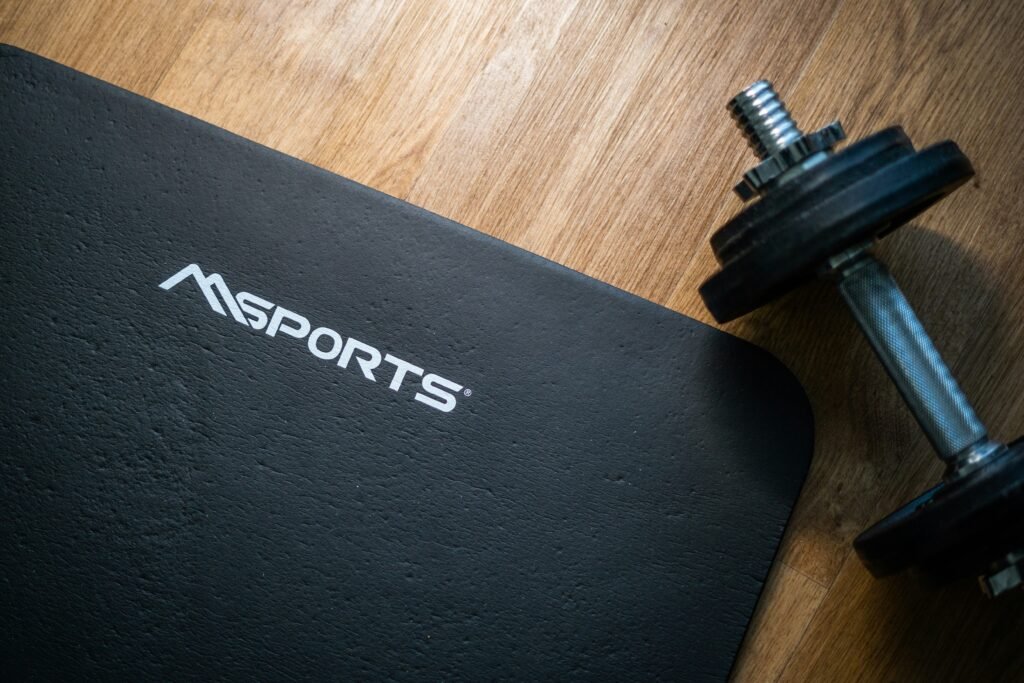
| High-Density Mat | Small — rolls up flat | Joint protection, floor work stability | Highly recommended |
| Adjustable Bench | Moderate — needs a dedicated corner | Expands press and row angles | Optional upgrade |
1. Adjustable Dumbbells
If you want to train effectively without cluttering your living room, grab this adjustable dumbbells set on Amazon to easily scale your weights as you get stronger.
2. High-Density Workout Mat
Protect your floors and reduce joint pressure during floor presses and squats by laying down an extra thick workout mat from Amazon.
3. Adjustable Weight Bench (Optional Upgrade)
To expand your chest and shoulder angle options at home, consider adding an adjustable weight bench on Amazon to your setup.
The 5 Essential Compound Dumbbell Movements
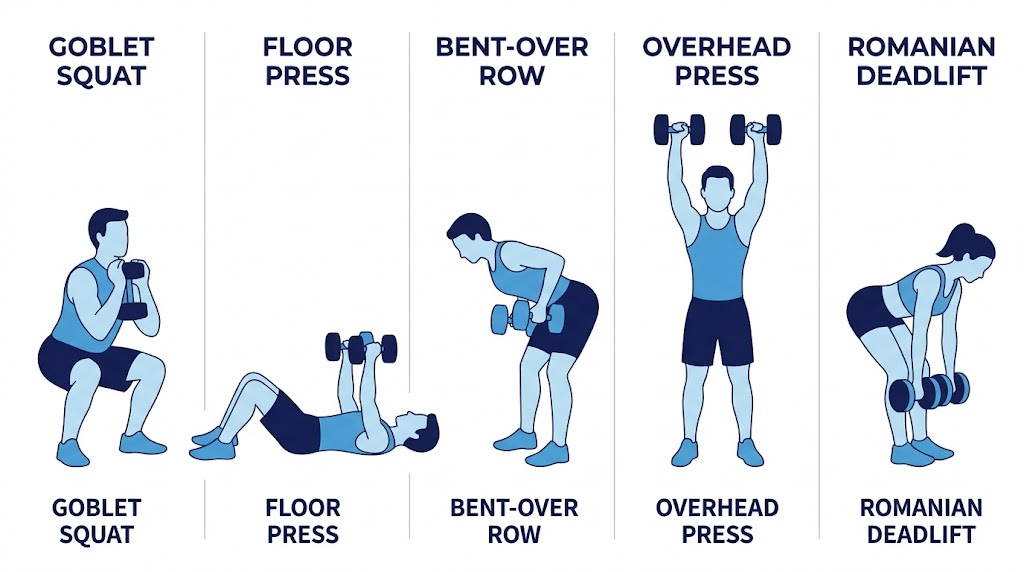
1. Goblet Squat (Legs and Core)
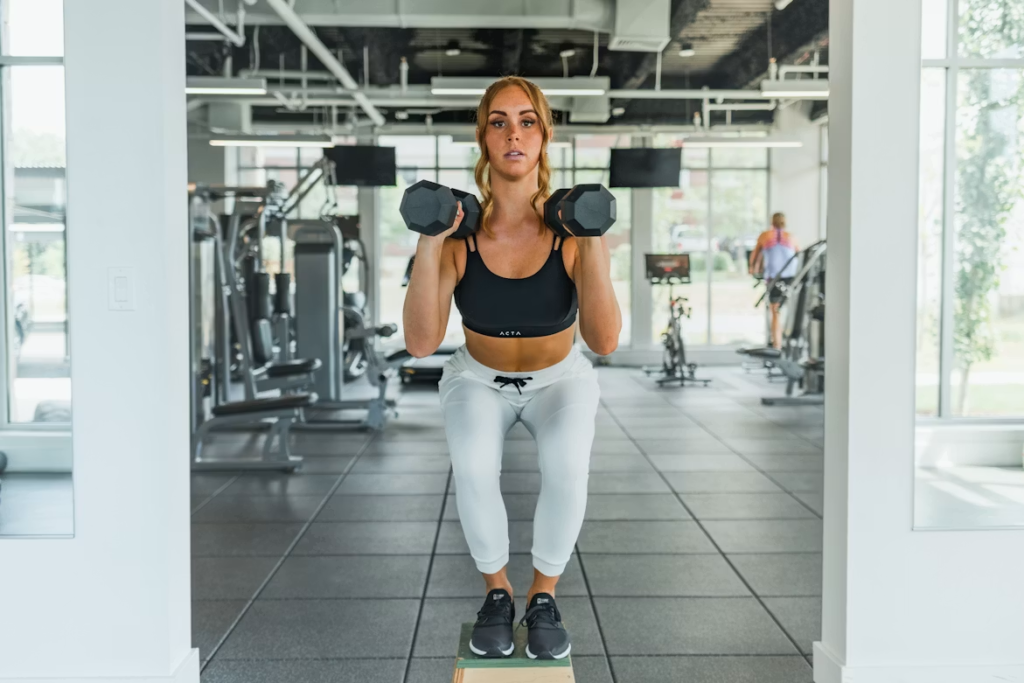
Hold one dumbbell vertically against your chest with both hands. Squat down until your thighs are roughly parallel to the floor, then drive back up through your heels. This single movement trains your quads, glutes, and core simultaneously.
2. Dumbbell Floor Press or Bench Press (Chest and Triceps)
Lying on the floor or a bench, press two dumbbells upward until your arms are fully extended, then lower with control until your elbows touch the ground or reach chest level. This builds chest, shoulder, and triceps strength together.
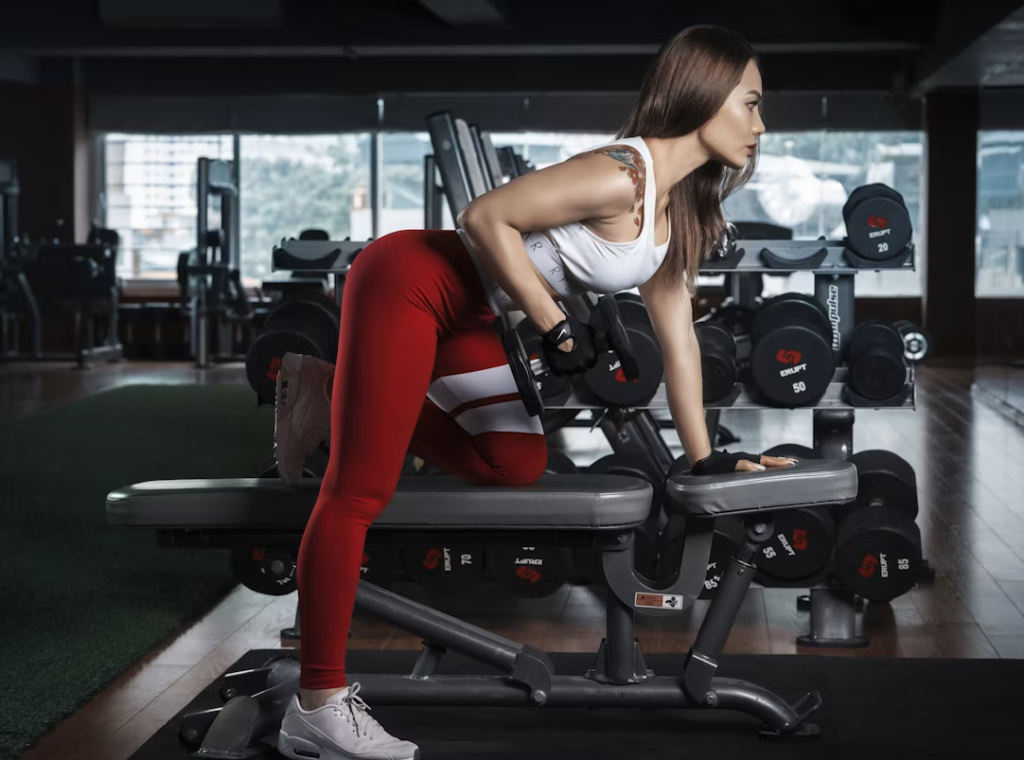
3. Bent-Over Dumbbell Row (Upper Back and Biceps)
Hinge forward at the hips with a flat back, letting the dumbbells hang below your shoulders. Pull both dumbbells toward your ribs, squeezing your shoulder blades together at the top. This is your primary pulling movement and directly balances out all the pressing work in this routine.
4. Dumbbell Overhead Press (Shoulders)
Standing tall with a dumbbell in each hand at shoulder height, press both overhead until your arms are fully extended, then lower with control. Keep your core braced throughout to avoid arching your lower back.
5. Dumbbell Romanian Deadlift or Glute Bridge (Posterior Chain)
Hold two dumbbells in front of your thighs, hinge at the hips while keeping a slight bend in your knees, and lower the weights along your legs until you feel a stretch in your hamstrings. Drive your hips forward to return to standing. This trains your hamstrings, glutes, and lower back — the posterior chain most home routines completely neglect.
The 30-Minute Beginner Full-Body Routine (3-Day Split)
Schedule: Monday, Wednesday, Friday — with rest days in between to allow full recovery.
Sets and Reps: 3 sets of 8 to 12 reps per exercise.
Rest Interval: 60 to 90 seconds between sets.
Run through all 5 movements in order — squat, press, row, overhead press, hip hinge — for one complete round, then repeat for a total of 3 rounds. The entire session fits comfortably inside 30 minutes once you’re familiar with the movements.
If you want a quiet, low-impact cardio option to pair with your lifting days, our guide on quiet home workouts gives you a 20-minute apartment-friendly circuit that won’t disturb anyone downstairs.
How to Progress at Home Without Heavy Gym Machines
Once these 5 movements start feeling manageable, progression is what keeps building strength and muscle over time. You don’t need a rack of increasingly heavy plates to achieve this — reps, tempo, and rest control all work as genuine progression tools.
For a full breakdown of exactly how to apply progressive overload without adding weight, that guide covers tempo manipulation, rep increases, and rest reduction in detail.
As your training matures and you outgrow this basic 5-movement routine, building out a proper minimalist home gym setup gives you the next layer of equipment worth adding.
Common Mistakes Beginners Make (and How to Avoid Them)
Ego lifting instead of controlled tempo. Rushing through reps with momentum instead of control reduces the actual muscle-building stimulus and increases injury risk. Slow the lowering phase of every movement — that’s where most of the growth stimulus happens.
Skipping warm-ups and mobility work. Cold muscles are stiffer and more injury-prone. Spend 5 minutes on light movement and dynamic stretching before picking up a single dumbbell.
Inconsistent training frequency. Strength and muscle gains come from consistent, repeated stimulus over weeks and months. Three structured sessions per week, done consistently, will always outperform five chaotic, unplanned sessions.
Frequently Asked Questions
Can you really build muscle with just dumbbells at home?
Yes. Dumbbells provide the same fundamental stimulus — progressive resistance against your muscles — that any other form of resistance training does. Muscle growth responds to mechanical tension and progressive overload, not to the specific tool creating that tension.
How heavy should my dumbbells be as a beginner?
Most beginners start comfortably in the 5 to 15 pound range per hand for pressing and overhead movements, and slightly heavier for squats and hip hinges where larger muscle groups are involved. Choose a weight that challenges you by the last 2 to 3 reps of each set while keeping your form solid throughout.
Should I do this full body workout every day?
No. Training the same muscle groups every day without rest prevents proper recovery and actually slows your progress. Three sessions per week with rest days between allows your muscles to repair and grow stronger between sessions.
Disclaimer & Affiliate Disclosure:
This article is for informational purposes only and should not be taken as medical advice. Always consult with a qualified healthcare provider or certified fitness professional before starting or changing your exercise routine. This article may also contain affiliate links. If you purchase through these links, we may earn a small commission at no extra cost to you.