
If you’re wondering how to tone your body, the short answer is to build a little muscle and lose a little body fat, because that combination is what “toned” actually looks like. You can’t tone one spot by exercising it, but a simple routine of strength training two to three days a week, regular walking, enough protein and a modest calorie deficit will get you there. Most beginners see strength improve within weeks and visible definition over a few months, though it varies from person to person.
Table of Contents
Quick Summary
- “Toned” is not a separate goal. It means more visible muscle plus less body fat covering it.
- You can’t spot-reduce fat. A six-week trial of ab exercises five days a week did not reduce belly fat.
- Lift two to three days a week. Public health guidelines recommend muscle-strengthening at least two days a week.
- Eat enough protein and a small deficit. Muscle needs protein and fat loss needs a calorie gap.
- Be patient. Expert estimates put visible changes at a few months, not a few weeks.
What Does “Toned” Actually Mean?
There is no formal scientific definition of “toning.” In practice, people use the word to describe a body that looks firm and defined, which comes down to two things: a decent amount of muscle and a low enough level of body fat that the muscle shows.
That matters because it changes the plan. You can’t “tone” a muscle by doing light reps forever, and you can’t make fat disappear from one area by working the muscle underneath. You build muscle with progressive strength training and you reduce fat with overall energy balance. If you’re unsure how those two goals differ, our guide on fat loss vs weight loss explains why the scale isn’t the whole story.
Why You Can’t Spot-Tone One Area
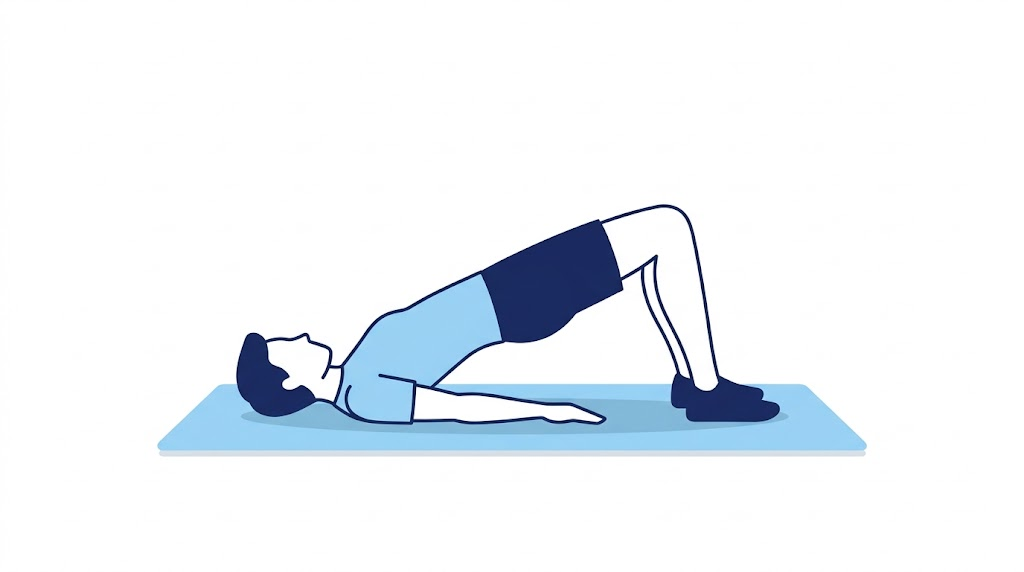
The most common toning myth is that crunches flatten your stomach or leg lifts slim your thighs. Research doesn’t support it. In a study by Vispute and colleagues, 24 sedentary adults did seven abdominal exercises, two sets of ten reps, five days a week for six weeks. They found no significant effect on body weight, body fat percentage or waist circumference, although their curl-up endurance did improve.
This is a small study, and researchers still debate the details. The safe takeaway is that working a muscle strengthens it, but it doesn’t reliably burn the fat sitting on top of it. Fat comes off from across your body based on your overall energy balance and genetics, not the exercise you choose.
How to Tone Your Body: The 4-Part Plan
Every effective toning plan has the same four parts. Miss one and progress slows.
1. Strength Train Two to Three Days a Week
The US Physical Activity Guidelines say adults should do muscle-strengthening activity on at least two days each week, alongside 150 to 300 minutes of moderate aerobic activity. For toning, use exercises that train several muscles at once, such as squats, rows, presses and bridges. Beginners can follow our strength training for beginners guide or the home routine below.
Use weights heavy enough that the last two or three reps of each set feel hard. Light weights for endless reps are far less effective than most people expect.
2. Progress Over Time
Your muscles change only if the challenge increases. Add a rep, add a little weight, slow the lowering phase or move to a harder variation every week or two. Our guide to progressive overload at home shows simple ways to do it without a gym.
3. Eat Enough Protein
Protein gives your muscles the building material to grow and to hold on while you lose fat. A meta-analysis of 49 trials by Morton and colleagues found that the benefit of extra protein for muscle gain levelled off at about 1.6 g per kg of bodyweight per day. Use our protein intake calculator to find your number, and see how much protein beginners need for food sources and safety notes.
4. Create a Small Calorie Deficit
To see muscle definition you usually need to lose some fat, and that requires eating a bit less energy than you burn. Keep the deficit modest so you have energy to train and don’t lose muscle. Our post on what a calorie deficit is shows how to set one, and walking more is an easy way to widen the gap. See how many steps a day to lose weight for a realistic target.
A 3-Day Full-Body Toning Routine at Home
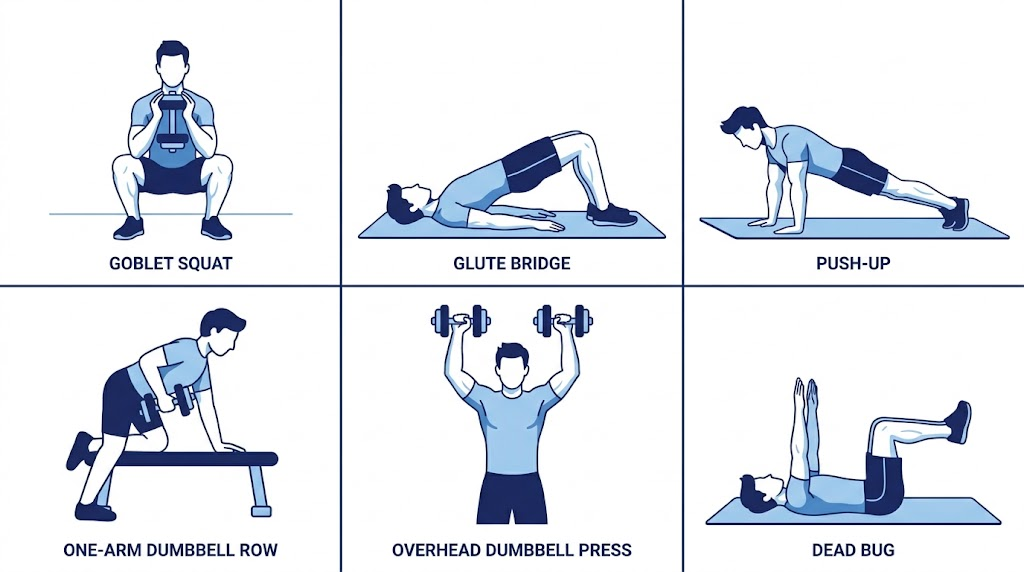
Do this on three non-consecutive days, such as Monday, Wednesday and Friday. Do 3 sets of 10 to 12 reps of each move, stopping when you have about two reps left in the tank.
- Goblet squat: hold one dumbbell at your chest and squat to a comfortable depth (legs and glutes).
- Glute bridge: lie on your back, feet flat, and drive your hips up, pausing at the top (glutes and hamstrings).
- Push-up: use an incline or your knees if needed (chest, shoulders and triceps).
- One-arm dumbbell row: brace on a bench or chair and pull the weight to your hip (back and biceps).
- Overhead press: press two dumbbells or a resistance band overhead (shoulders and triceps).
- Dead bug: lie on your back and slowly extend opposite arm and leg (core).
If you want more variety, our full-body dumbbell workout at home has extra options, and the resistance bands for beginners guide shows band-based alternatives. Want to go further? Our post on how to build muscle fast explains how weekly sets and progression drive growth.
On your non-lifting days, walk. Consistent walking supports fat loss and recovery without adding much fatigue.
How Long Does It Take to See Results?
Nobody can promise an exact timeline, because starting body fat, genetics, food and consistency all matter. As a rough guide, a Cleveland Clinic article quoting an athletic trainer describes strength gains in about three to four weeks, slight visible definition in two to three months and more obvious changes at four to six months. Treat these as expert estimates, not research findings.
The best way to track progress is not the mirror or the scale. Take a photo and a waist measurement every two to four weeks and log your reps. If your lifts are improving, you’re on track even when the scale barely moves.
Will Lifting Make You Bulky?
This is the most common worry, especially for beginners who want a leaner look. Building a large amount of muscle takes years of dedicated training and usually eating in a calorie surplus. A few strength sessions a week combined with a modest calorie deficit will build firmness and definition, not bulk. If your goal is a lean, athletic look, lifting is the tool that gets you there.
Do You Need Cardio to Tone Up?
Cardio helps, but it isn’t the main driver. Walking, cycling or short interval sessions raise your weekly energy use and support heart health, which helps you create the calorie gap you need for fat loss. Aim to meet the 150 minutes a week of moderate activity that public health guidelines recommend, and use strength training to shape the body underneath. If you’re short on time, our 10 minute no-equipment full-body workout is a way to stay consistent on busy days.
Don’t Skip Sleep and Rest Days
Muscles respond to training while you recover, not while you lift. Aim for at least seven hours of sleep and take at least one full rest day between hard sessions for the same muscles. If you feel constantly sore or worn out, our guide on how many rest days you should have will help you adjust.
Common Toning Mistakes
- Doing only cardio. Cardio burns calories but does little to build the muscle that creates definition.
- Using weights that are too light. If every set feels easy, your muscles have no reason to change.
- Chasing spot reduction. Hundreds of crunches won’t remove belly fat.
- Eating too little. Aggressive cuts cost you muscle and energy for training.
- Quitting at week three. Changes take months, not days.
Recommended Equipment for Toning at Home
- Adjustable dumbbells: the easiest way to keep progressing your squats, rows and presses.
- Resistance band set: portable resistance for glute bridges, rows and presses.
- Whey protein powder: a convenient way to reach your daily protein target.
- Doorway pull-up bar: an option for building your back and arms as you progress.
Final Thoughts
Learning how to tone your body is simpler than the fitness industry makes it sound. Lift a few times a week, progress steadily, eat enough protein, keep a small calorie deficit, walk often and give it time. Stop looking for the one exercise that targets one spot, and start building the routine that changes your whole body. Pick three days, write down your first workout, and treat the next twelve weeks as your starting point. Consistency, not a perfect plan, is what produces visible results.
Disclaimer & Affiliate Disclosure
This article is for informational purposes only and should not be taken as medical advice. Always consult with a qualified healthcare provider or certified fitness professional before starting or changing your diet or exercise routine. This article may also contain affiliate links. If you purchase through these links, we may earn a small commission at no extra cost to you.