Table of Contents
Quick Summary Box
- The routine: 2 to 3 sessions per week, 5 core movements, 25 to 30 minutes
- Top beginner gear: A Multi-Grip Doorway Pull-Up Bar is the single essential purchase for this entire routine
- The goal: Build a genuinely strong, complete back — not just chase a pull-up count
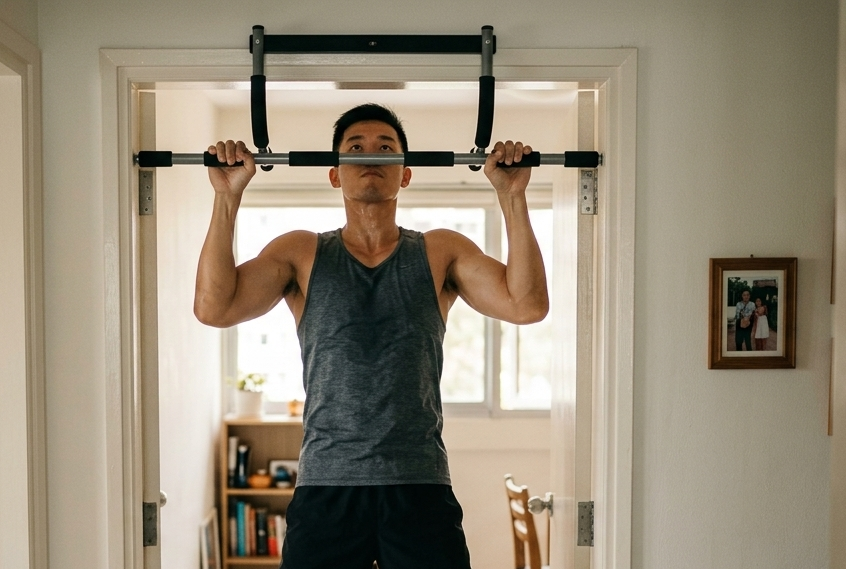
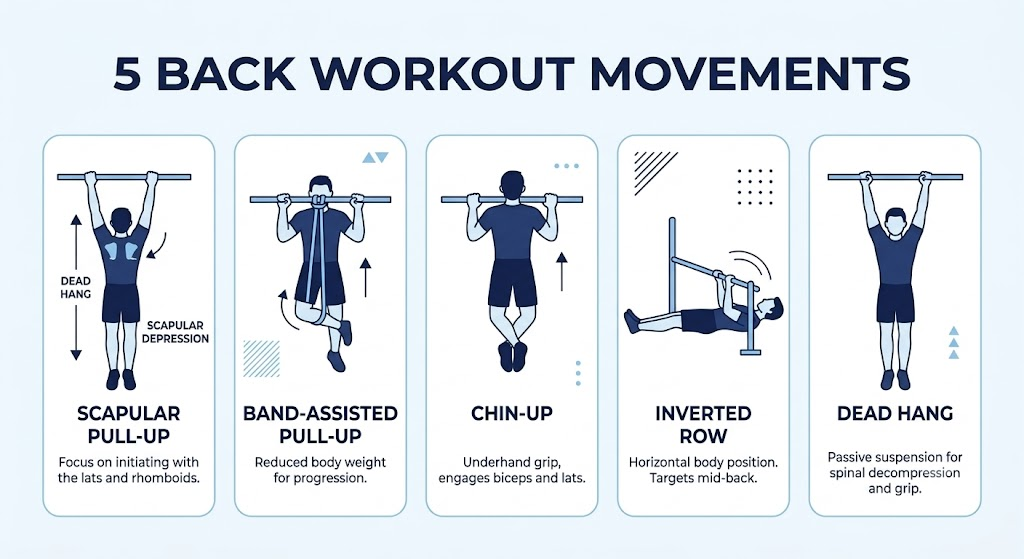
An at home back workout with pull up bar covers your entire upper back through five movements: scapular pull-ups for shoulder blade control, band-assisted pull-ups for vertical pulling strength, chin-ups or controlled negatives for lat development, inverted rows for horizontal pulling, and dead hangs for grip and spinal decompression. Done 2 to 3 times per week in roughly 25 to 30 minutes, this routine builds the lats, rhomboids, traps, and rear delts together rather than isolating pull-ups alone.
Most home training setups solve pushing and squatting well — push-ups and squats need no equipment at all — but vertical pulling has no real bodyweight substitute. A pull-up bar isn’t optional if you want genuine back width and pulling strength at home. It’s the single piece of equipment that unlocks an entire missing movement category.
Anatomy of Upper-Body Pulling: Which Back Muscles Are Worked?
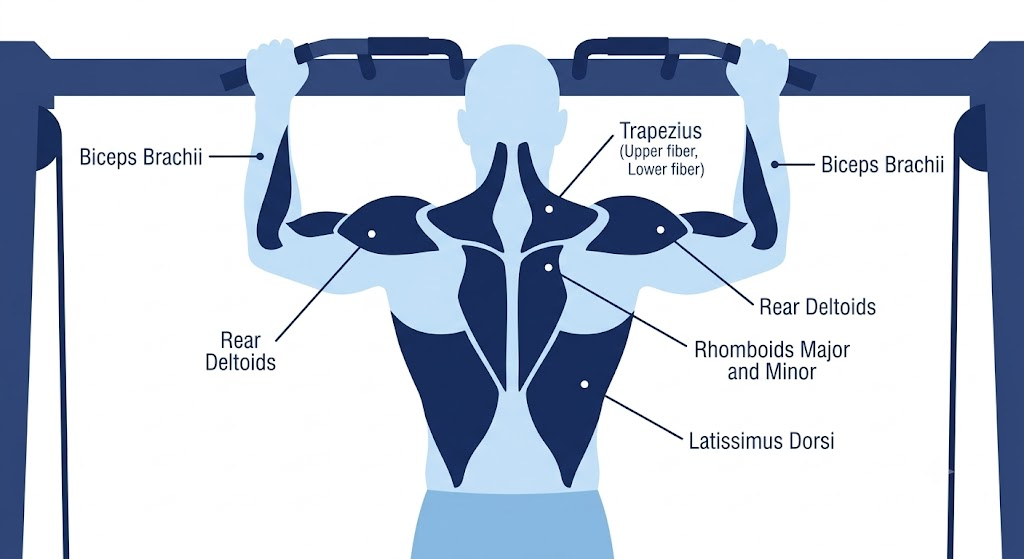
Every movement in this routine targets a specific combination of these five muscle groups:
Latissimus dorsi (lats) are the largest muscles in your upper back, running from your lower spine up to your upper arm. They’re the primary driver of vertical pulling movements like pull-ups and chin-ups, and they’re responsible for the visible width across your back.
Rhomboids sit between your shoulder blades, connecting your spine to the inner edge of each scapula. They control scapular retraction — pulling your shoulder blades together — and are the main target of rowing movements.
Trapezius (traps) run from your neck across your shoulders and down your back. The middle and lower fibers specifically assist scapular retraction and stabilization during pulling movements.
Rear deltoids sit at the back of your shoulders and assist horizontal pulling movements like rows and face pulls, working alongside your rhomboids.
Biceps act as secondary movers throughout every pulling exercise in this routine, particularly during chin-ups where the underhand grip increases their involvement.
According to Healthline, strengthening these back muscles through targeted resistance work also plays a direct role in improving posture, since weak rhomboids and traps allow the shoulders to round forward over time.
Essential Pull-Up Gear for Home Gyms
| Gear | Setup Required | Movement Options | Beginner Value |
|---|---|---|---|
| Doorway Multi-Grip Bar | No drilling, fits most doorways | Wide, narrow, neutral grip | Excellent — most accessible entry point |
| Wall-Mounted Station | Permanent drilled installation | Pull-ups, dips, leg raises | Great for long-term dedicated setups |
| Assistance Bands | None — used with any bar | Reduces effective bodyweight | Essential for true beginners |
For most people starting this routine, a Multi-Grip Doorway Pull-Up Bar installs in minutes with no drilling and offers multiple grip positions from one piece of equipment.
If you’re building a more permanent home setup and want dip capability alongside pulling, a Wall-Mounted Pull-Up & Dip Station offers a sturdier, more versatile long-term option.
Regardless of which bar you choose, a Heavy-Duty Pull-Up Assistance Band Set is genuinely non-negotiable for most beginners — it’s what makes the full range of pulling motion achievable before you can do it unassisted.
The Beginner At-Home Back Routine
| Movement | Sets x Reps/Time | Rest |
|---|---|---|
| Scapular Pull-Ups | 3 x 8-10 reps | 45s |
| Band-Assisted Pull-Ups | 3 x 5-8 reps | 60s |
| Neutral-Grip Chin-Ups or Negatives | 3 x 5 reps | 60s |
| Inverted Rows / Band-Resisted Pulls | 3 x 10-12 reps | 45s |
| Dead Hang | 2 x 30-45s | 30s |
1. Scapular Pull-Ups (Scap Retractions)
Hang from the bar with straight arms. Without bending your elbows, pull your shoulder blades down and together, lifting your body slightly, then release with control. This teaches the exact scapular engagement every other pulling movement depends on.
2. Band-Assisted Overhand Pull-Ups
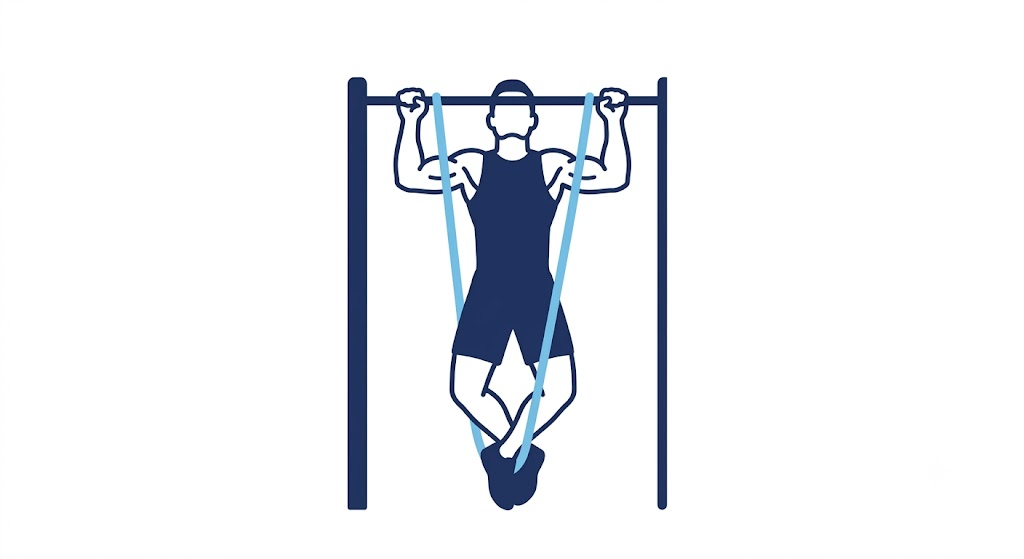
Loop a resistance band over the bar and place your foot or knee in the loop. Pull yourself up until your chin clears the bar, then lower with control until your arms are fully extended. The band reduces your effective bodyweight, letting you practice the full range of motion safely.
3. Neutral-Grip Chin-Ups or Controlled Negatives
If you can manage unassisted reps, use a neutral or underhand grip and pull yourself up fully. If not, start from the top position and lower yourself over 3 to 5 seconds with maximum control — this builds real strength even without a single full rep yet.
4. Inverted Rows or Band-Resisted Pulls
Using a lower anchor point or a sturdy table edge, pull your chest toward the bar while keeping your body in a straight line. This trains horizontal pulling strength that complements the vertical pulling from the movements above.
5. Dead Hang for Grip and Decompression
Simply hang from the bar with relaxed shoulders, letting your spine lengthen naturally. This builds grip endurance while gently decompressing your spine after a session of loaded pulling work.
How to Progress From 0 to 10 Unassisted Pull-Ups
Building toward your first — and eventually multiple — unassisted pull-ups follows a predictable ladder: dead hangs, scapular pulls, banded pull-ups, eccentric negatives, and finally full unassisted pull-ups. Each stage builds the specific strength the next stage demands.
For a complete week-by-week breakdown of this exact progression, our doorway pull-up progression guide walks through a full 4-week plan covering each of these stages in detail.
Common Pull-Up Mistakes That Waste Effort (and Cause Injury)
Kipping and swinging momentum. Using body momentum to yank yourself upward feels like progress but builds almost no genuine strength and places unnecessary strain on your shoulders. Every rep in this routine should be slow and controlled.
Partial range of motion. Stopping short of a full dead hang at the bottom or chin-over-bar at the top trains a shortened, incomplete version of the movement, limiting the strength and muscle development you actually build.
Shrugging shoulders into the neck. Letting your shoulders rise toward your ears during a hang or pull disengages your lats and shifts load onto smaller stabilizing muscles. Actively pull your shoulder blades down and back throughout every rep.
If you’re managing soreness from ramping up your pulling volume, our guide on working out with sore muscles covers exactly when it’s fine to keep training and when you genuinely need to rest.
Frequently Asked Questions
Can you build a full back with just a pull-up bar?
Largely yes. A pull-up bar covers vertical pulling comprehensively through pull-ups, chin-ups, and hangs, and inverted rows performed from the same bar add horizontal pulling coverage. Combined, these movements train your lats, rhomboids, traps, and rear delts thoroughly enough for genuine back development.
What if I can’t do a single pull-up yet?
That’s exactly what this routine is built for. Scapular pull-ups, band-assisted reps, and controlled negatives all build real strength toward your first unassisted pull-up without requiring you to already have one.
Do doorway pull-up bars damage door frames?
A quality no-drill bar distributes pressure evenly across the frame and won’t damage a solid, properly mounted doorway when used within its stated weight capacity. Avoid mounting on hollow or damaged frames.
How many times a week should a beginner do a pull-up bar back workout?
Two to three sessions per week with rest days between is ideal for beginners — your back, shoulders, and grip need genuine recovery time between sessions to adapt and get stronger.
Disclaimer & Affiliate Disclosure
This article is for informational purposes only and should not be taken as medical advice. Always consult with a qualified healthcare provider or certified fitness professional before starting or changing your exercise routine. This article may also contain affiliate links. If you purchase through these links, we may earn a small commission at no extra cost to you.