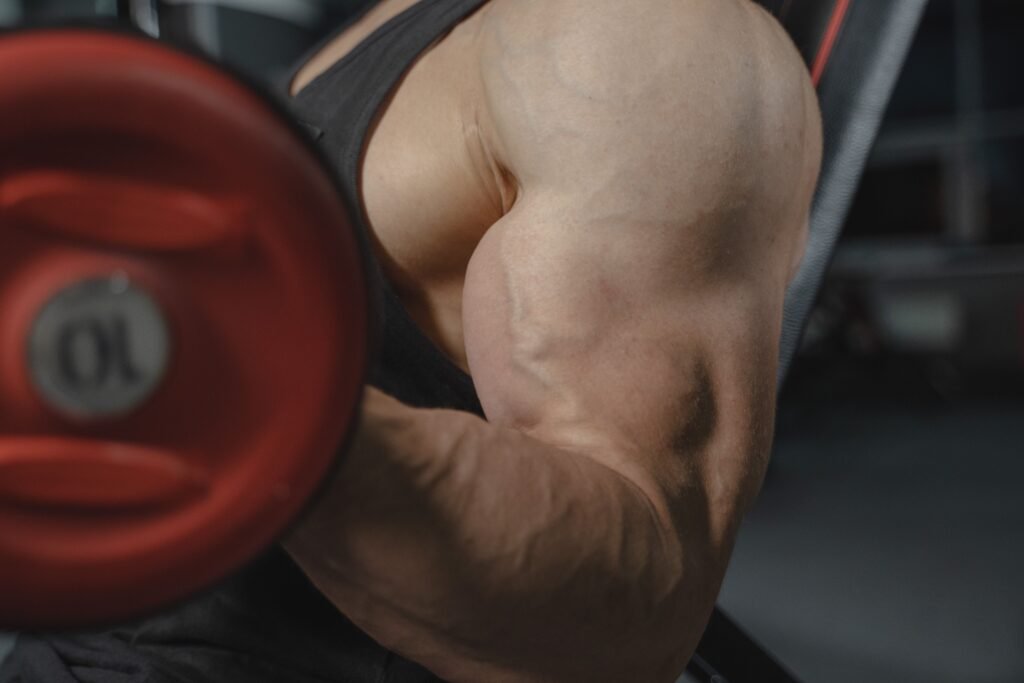
Learning how to fix muscle imbalances in arms comes down to one core method — plus a genuinely surprising research finding about how training one arm affects the other.
Table of Contents
Quick Summary
- Arm imbalances are completely normal — a strength difference of roughly 10% or less between arms is considered typical, largely from everyday dominant-hand use.
- Bilateral exercises let your stronger arm quietly compensate for your weaker one, which is exactly why the imbalance never gets fixed through barbell or machine work alone.
- Unilateral (single-arm) exercises are the actual fix — they remove your stronger side’s ability to cover for the weaker one.
- A meta-analysis on “cross-education” found that training one arm can produce measurable strength gains of roughly 9% in the completely untrained opposite arm — a real neurological effect, not just anecdote.
- Start every unilateral exercise with your weaker side, then match that same number of reps on your stronger side.
Why Arm Imbalances Happen
Most people have some degree of arm imbalance, and it develops gradually — your dominant arm handles more daily tasks (carrying bags, opening doors, everyday reaching), building a small but real strength advantage over years.
In the gym, bilateral exercises like barbell curls or bench presses make this worse, not better. Your stronger arm quietly picks up more of the load without you noticing, while the weaker side coasts along. The bar moves, the set feels successful, but underneath, the imbalance persists or even grows — because bilateral lifts let the compensation hide in plain sight.
The Fix: Unilateral Training
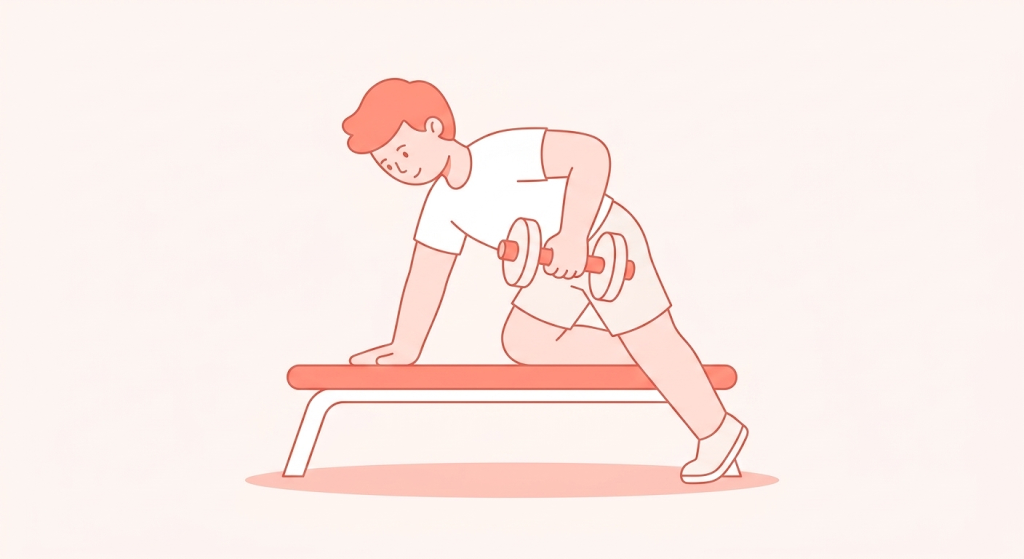
Switching to single-arm exercises removes your stronger side’s ability to compensate. When you do a single-arm dumbbell row or curl, each arm has to handle its own load — there’s nowhere for the weak side to hide.
The practical method: start with your weaker arm first, performing reps until form genuinely starts to break down. Then match that exact number of reps on your stronger arm, even if it could technically do more. This lets your weak side set the pace, gradually catching up over weeks of consistent training rather than being perpetually outpaced.
The Surprising Cross-Education Effect
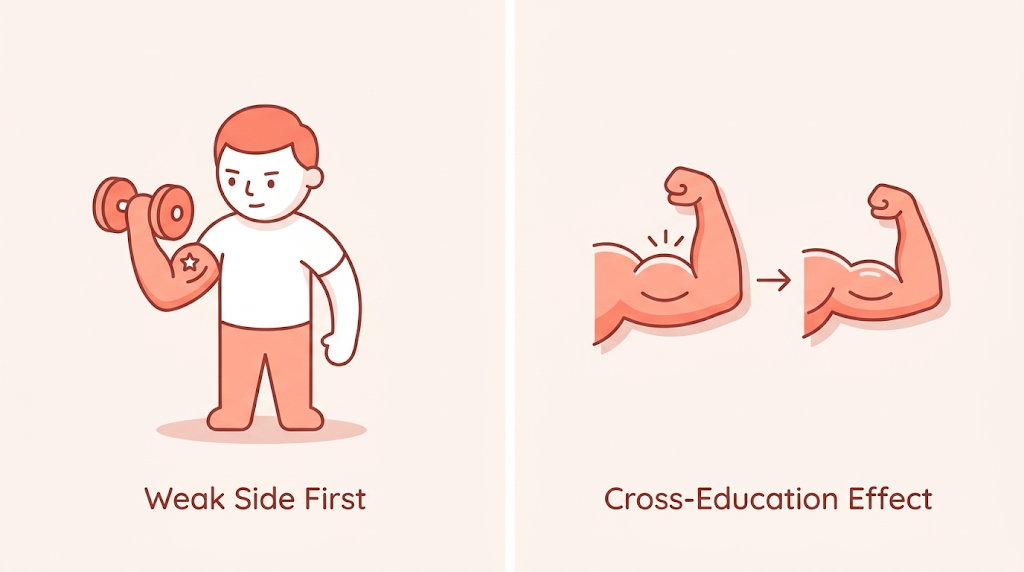
Here’s something almost no beginner guide mentions: training just one arm doesn’t only strengthen that arm. A well-documented phenomenon called “cross-education” — first observed back in 1894 and studied extensively since — shows that unilateral training produces measurable strength gains in the completely untrained opposite limb too.
A meta-analysis pooling multiple studies on this effect found average contralateral (opposite-side) strength gains in the range of roughly 9%, purely from training the other arm — no exercise on that side at all. The mechanism appears to be neurological: training one limb improves the motor cortex’s ability to drive muscles on the opposite side, not just the trained muscle itself.
The practical relevance: if you’re working hard on your weaker arm specifically, your stronger arm is likely getting a small, genuine neural benefit too — even without you touching it directly.
How to Fix Muscle Imbalances in Arms: A Simple Approach
- Replace barbell curls/presses with dumbbell equivalents for at least part of your routine
- Perform unilateral exercises weak-side first, matching reps on the strong side
- Track rep differences over time — a 2+ rep gap between sides is a reasonable threshold worth addressing
- Be patient — minor imbalances often improve within a few weeks of consistent unilateral training; larger ones can take several months
Common Mistakes to Avoid
- Sticking exclusively to barbell exercises. This is exactly what allows the imbalance to persist unnoticed.
- Matching reps to your stronger side instead of your weaker one. Let the weak side dictate the rep count and weight.
- Expecting an overnight fix. Consistency over weeks matters more than any single session.
- Ignoring genuinely large imbalances. Minor differences are normal, but a significant, persistent gap is worth paying real attention to.
Recommended Equipment
- Adjustable dumbbell set — essential for unilateral training, since dumbbells (unlike barbells) force each arm to work independently
Learning how to fix muscle imbalances in arms really comes down to switching to unilateral work and letting your weaker side set the pace — and it’s genuinely reassuring to know that training it also gives your stronger arm a small neurological boost in the process. If you’re building your broader dumbbell routine around this, our dumbbell exercises for beginners guide and dumbbell shoulder workout both fit naturally alongside this approach.
Disclaimer & Affiliate Disclosure
This article is for informational purposes only and should not be taken as medical advice. Always consult with a qualified healthcare provider or certified fitness professional before starting or changing your diet or exercise routine. This article may also contain affiliate links. If you purchase through these links, we may earn a small commission at no extra cost to you.