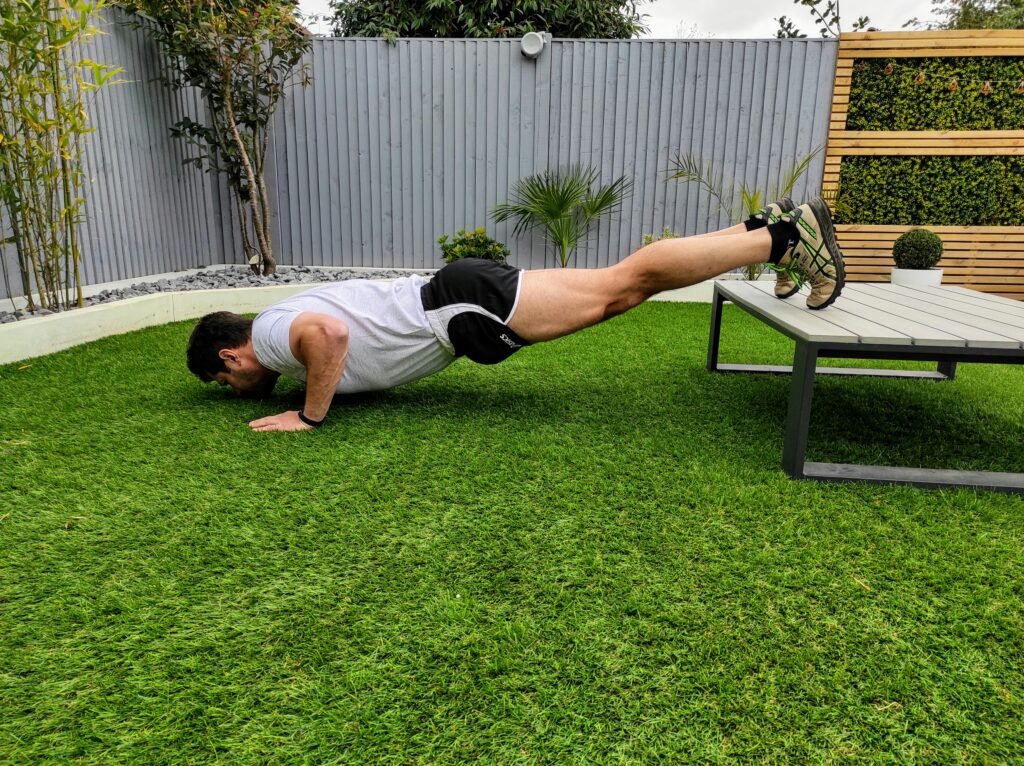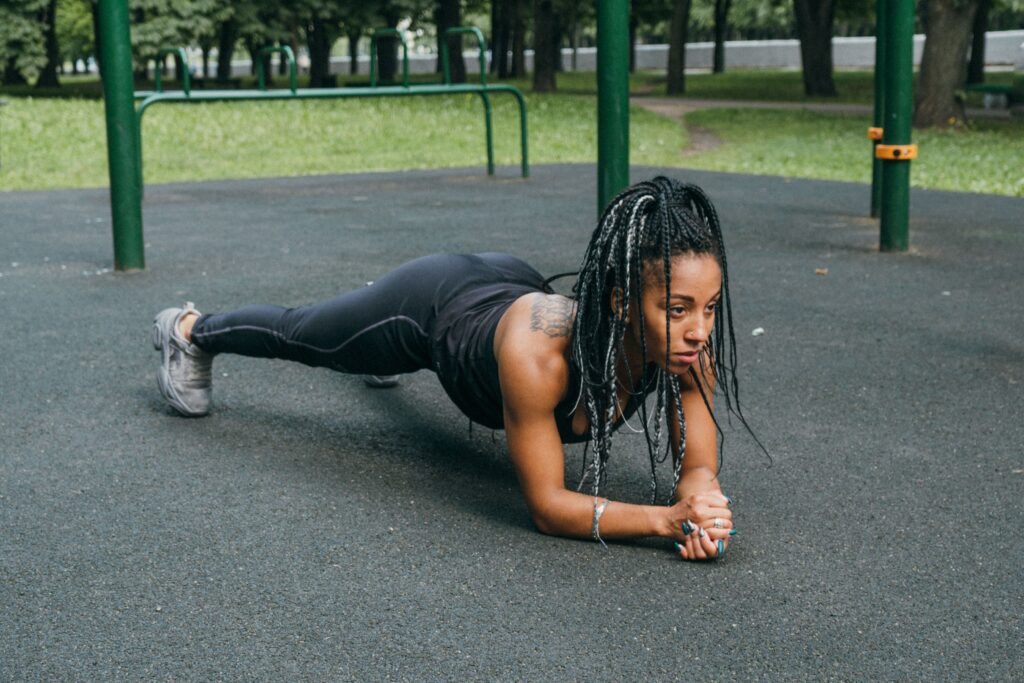
The plank muscles worked go well beyond your abs: a plank trains your core, shoulders, back, glutes and legs all at once, which is why it feels so hard.
Table of Contents
Quick Summary
- Core: rectus abdominis, obliques, transverse abdominis and the spinal erectors.
- Upper body: shoulders, chest, upper back and arms work to hold you up.
- Lower body: glutes, quads and hamstrings keep your body in a straight line.
- Hold time: start with short holds of about 10 seconds and build up as your form stays solid.
- Who should be careful: anyone with chronic back pain, and women who are postpartum, should check with a professional first.
Many guides say a plank “works your abs” and stop there. This one breaks down every muscle group, explains what each one does, and shows how to make the exercise easier or harder.
Plank Muscles Worked: The Core
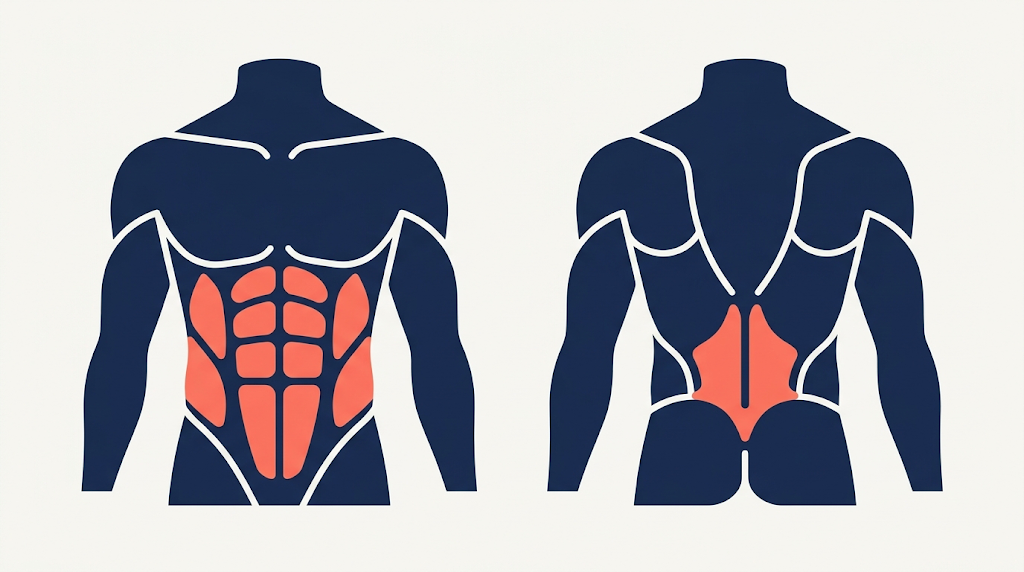
A plank is an isometric exercise, which means your muscles hold a position instead of moving. Healthline’s guide to the muscles a plank works lists the main core muscles involved.
- Rectus abdominis: the “six-pack” muscle at the front. It stops your hips from sagging.
- Obliques: the muscles along your sides. They keep your torso from twisting or tilting.
- Transverse abdominis: a deep muscle that wraps around your trunk like a belt and helps stabilize your spine.
- Spinal erectors: the muscles along your back that keep your spine in a neutral line.
Together these muscles brace your trunk, which is why planks are often used to build a stable core rather than to make your abs bigger.
Upper Body Muscles in a Plank
You hold your weight on your arms, so your upper body works harder than most people expect. Healthline lists these muscles as helping in a plank:
- Trapezius and rhomboids: upper back muscles that keep your shoulder blades steady.
- Latissimus dorsi: the large back muscles that help stabilize your shoulders.
- Pectorals: your chest muscles.
- Serratus anterior: muscles along your ribs that keep your shoulder blades from winging out.
- Deltoids, biceps and triceps: your shoulders and arms, which support your weight.
If your shoulders shake first, that is normal. It usually means your upper body is the limiting factor, not your abs.
Lower Body Muscles in a Plank
Your legs matter too. A strong plank needs your glutes, quadriceps and hamstrings to stay tight so your body stays in one straight line from head to heels.
A simple cue is to squeeze your glutes and press your heels back. Many people find their plank gets easier and steadier the moment they do this.
What Is a Plank Good For?
Because a plank trains the muscles that stabilize your trunk, it helps with posture and with carrying and lifting everyday loads. Healthline notes planks can also support balance and lower back strength.
It is not the most efficient way to burn belly fat. No single exercise removes fat from one area, so pair planks with strength training and a sensible diet. Our guide on how to get abs explains what actually shows your abs.
How to Do a Plank With Good Form
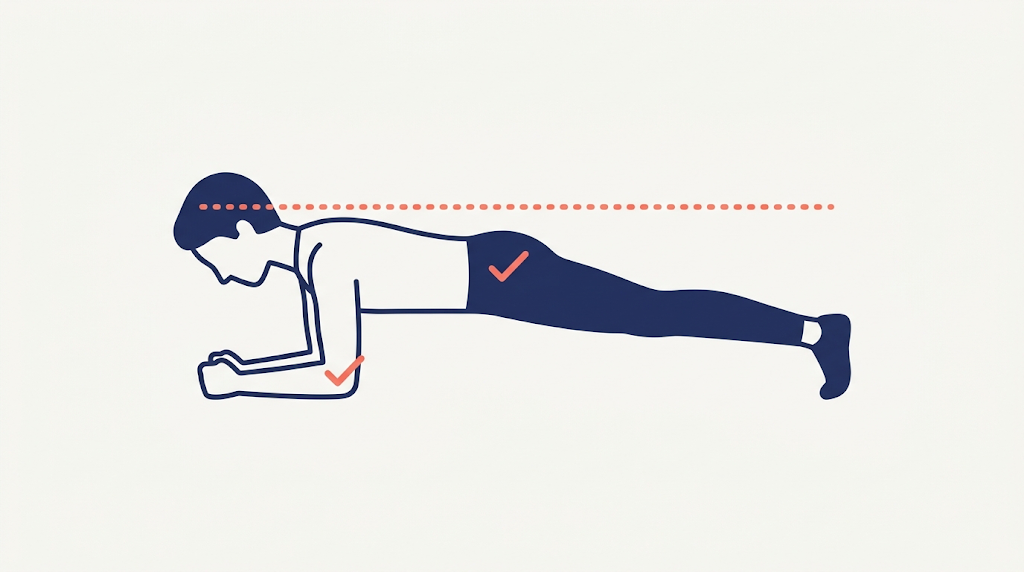
- Set your hands or forearms. For a forearm plank, place your elbows directly under your shoulders.
- Extend your legs. Step your feet back so your body forms a straight line.
- Brace your core. Imagine tightening your abs as if you are about to be nudged in the stomach.
- Squeeze your glutes. This stops your hips from sagging.
- Keep your neck long. Look at the floor just ahead of your hands.
- Breathe. Do not hold your breath.
A mat makes the floor kinder on your elbows, and a thick exercise mat is a simple upgrade for floor exercises. Check the listing for size and thickness before you buy.
How Long Should You Hold a Plank?
Advice varies. Healthline suggests holding a plank for at least 10 seconds and moving on to longer holds once you can keep good form for 15 seconds. Other trainers set goals closer to 60 seconds.
A practical approach is to do several short holds with good form instead of one long hold with a sagging back. When you can do three holds of 20 to 30 seconds easily, add time or try a harder variation. Longer is not always better: if your hips sag, stop the set.
Plank Variations: Easier and Harder
| Level | Variation | What changes |
|---|---|---|
| Easier | Knee plank | Less body weight to hold |
| Easier | Incline plank (hands on a bench) | Less load on shoulders and core |
| Standard | Forearm plank | Classic version, elbows under shoulders |
| Harder | Side plank | Challenges the obliques more |
| Harder | Plank with a leg lift | Adds glute work and balance demand |
| Harder | Plank with a resistance band | Adds outward tension for your shoulders and hips |
Change one thing at a time. If you add a new variation, shorten the hold until your form is clean again.
For ideas on how to train your core beyond planks, try our pull-up bar ab workout, and a resistance band set or a pair of adjustable dumbbells can help you build the strength to progress.
Common Plank Mistakes
- Sagging hips. It shifts the load to your lower back. Squeeze your glutes and shorten the hold.
- Piking your hips up. It makes the exercise easier and works your core less.
- Looking up or letting your head drop. Keep your neck in line with your spine.
- Holding your breath. Breathe slowly through the hold.
- Chasing long times. Good form for 20 seconds beats poor form for a minute.
Who Should Be Careful With Planks
If you have chronic back pain, see a healthcare professional or physical therapist before adding planks. Healthline says the same.
Planks are also not recommended after childbirth until you are healed. Healthline’s guide to diastasis recti advises avoiding planks postpartum until the abdominal separation has healed and you have a doctor’s approval. Stop any plank if you feel sharp pain.
Quick Answers
What are the main plank muscles worked? Your rectus abdominis, obliques, transverse abdominis and spinal erectors in the core, plus your shoulders, glutes and legs.
Do planks work your back? Yes. The spinal erectors work to keep your spine straight, but they are not the only muscles involved.
Are planks better than crunches? They train the core in a different way. Planks build stability, while crunches move your spine. Many programs use both.
How often can I do planks? Two to four times a week works for most beginners, with rest days between harder sessions.
The Bottom Line
The plank muscles worked include the whole trunk, shoulders, glutes and legs, which makes it one of the most efficient bodyweight exercises you can do. Keep your form tight, build time slowly and choose a variation that fits your level.
Add it to a routine with strength work for your legs, back and arms, and you will see why it is a staple in so many programs.
Disclaimer & Affiliate Disclosure
This article is for informational purposes only and should not be taken as medical advice. Always consult with a qualified healthcare provider or certified fitness professional before starting or changing your diet or exercise routine. This article may also contain affiliate links. If you purchase through these links, we may earn a small commission at no extra cost to you.