Learning how to lose weight without losing muscle comes down to one counterintuitive finding: going slower can mean keeping — or even gaining — more muscle, not less.
Table of Contents
Quick Summary
- A controlled study of elite athletes compared losing weight at 0.7% of body weight per week versus 1.4% per week. Both groups lost similar fat — but the slower group gained 2.1% lean muscle mass, while the faster group’s muscle mass stayed flat.
- The 3 things that actually protect muscle during weight loss: adequate protein, regular strength training, and a deficit that isn’t too extreme.
- Aim for 1.6-2.2g of protein per kg of body weight daily — the range consistently linked to muscle preservation during a deficit.
- Strength training, not cardio alone, sends the biological signal that muscle is still needed — cardio burns calories but doesn’t provide this same protective signal.
- A deficit of roughly 300-500 calories per day (not a drastic cut) supports slower, muscle-preserving weight loss.
The Real Study That Changes Everything
Most advice on this topic is vague — “eat protein, lift weights, don’t crash diet.” A real controlled study put actual numbers behind this. Researchers split 24 athletes into two groups: one losing weight at 0.7% of body weight per week (slow), the other at 1.4% per week (fast) — both combined with regular strength training.
Both groups lost a similar amount of fat. But the results for muscle were dramatically different: the slow group actually gained 2.1% lean body mass, while the fast group’s muscle mass stayed essentially unchanged — a statistically significant difference between the two approaches. In other words, cutting weight too aggressively didn’t just risk losing muscle — it prevented the muscle-building benefit that slower, more moderate weight loss allowed for.
The 3 Pillars: Protein, Strength Training, Deficit Size
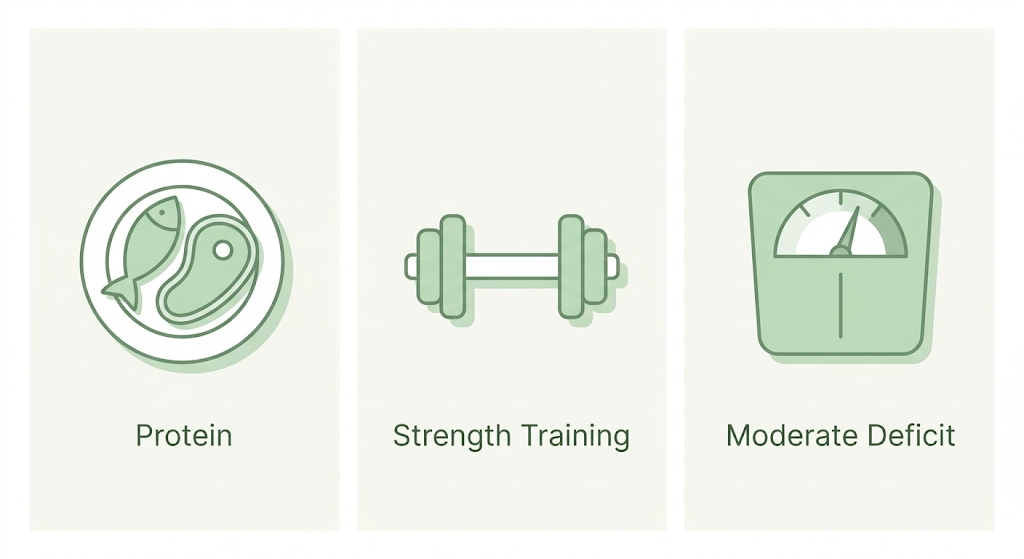
Protein — Aim for 1.6-2.2g per kg of body weight daily. This range is consistently linked to preserving (and in some cases building) lean mass during a calorie deficit. Our protein guide for beginners covers this in more detail, including vegetarian sources.
Strength training — This is what actually signals to your body that muscle needs to be kept. Cardio burns calories effectively, but strength training specifically recruits the muscle fibers responsible for maintaining and building lean mass — a signal cardio alone doesn’t send.
Deficit size — A moderate deficit (roughly 300-500 calories below maintenance) supports the kind of gradual weight loss the research above shows protects muscle. Our calorie deficit guide walks through how to calculate this for yourself.
How to Lose Weight Without Losing Muscle: A Simple Approach
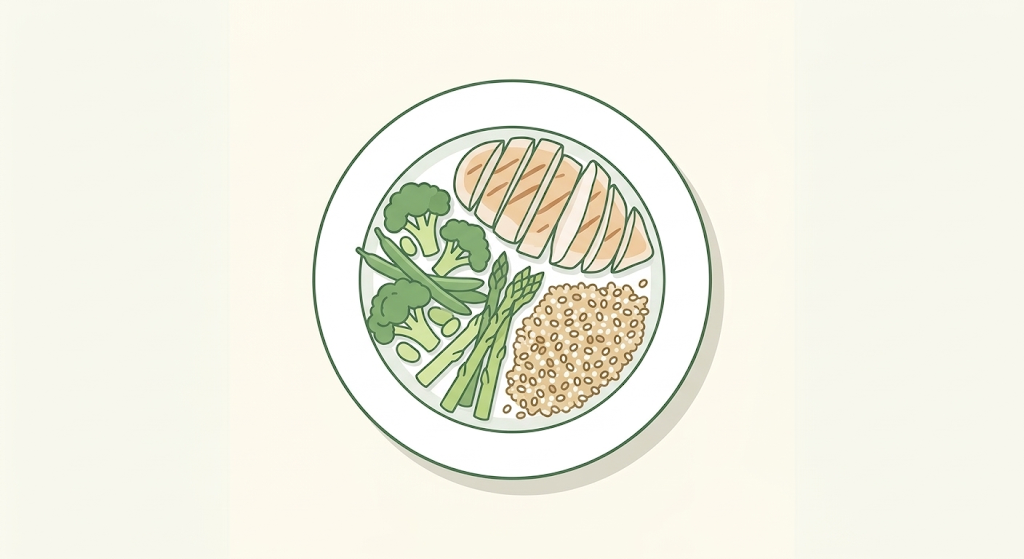
- Set a moderate deficit (300-500 calories/day), not an aggressive one
- Hit your protein target daily — 1.6-2.2g/kg body weight
- Strength train 3-4x per week, focusing on compound movements
- Track your progress with more than just the scale — strength levels holding steady is a good sign muscle is being preserved
- Be patient — the research suggests slower is genuinely better here, not just safer
Common Mistakes to Avoid
- Cutting calories too aggressively. As the research shows, this doesn’t just risk muscle loss — it can prevent the muscle-preserving benefit slower loss provides.
- Relying on cardio alone. Without a strength-training signal, your body has less reason to hold onto muscle during a deficit.
- Under-eating protein. This is one of the most common, most avoidable mistakes during weight loss.
- Judging progress only by the scale. Two people losing the same weight can have very different fat-to-muscle outcomes.
Recommended Equipment
- Adjustable dumbbell set — strength training is central to muscle preservation, and dumbbells cover a full-body routine without needing a gym
Learning how to lose weight without losing muscle isn’t about a special trick — it’s about respecting a slower pace than feels tempting, backed by a real study showing that pace difference actually determines whether you gain or hold steady on muscle, not just how much fat you lose. If you want the specifics on protein and deficit sizing, the two guides linked above cover both in depth.
Disclaimer & Affiliate Disclosure
This article is for informational purposes only and should not be taken as medical advice. Always consult with a qualified healthcare provider or certified fitness professional before starting or changing your diet or exercise routine. This article may also contain affiliate links. If you purchase through these links, we may earn a small commission at no extra cost to you.