Table of Contents
Quick Summary Box
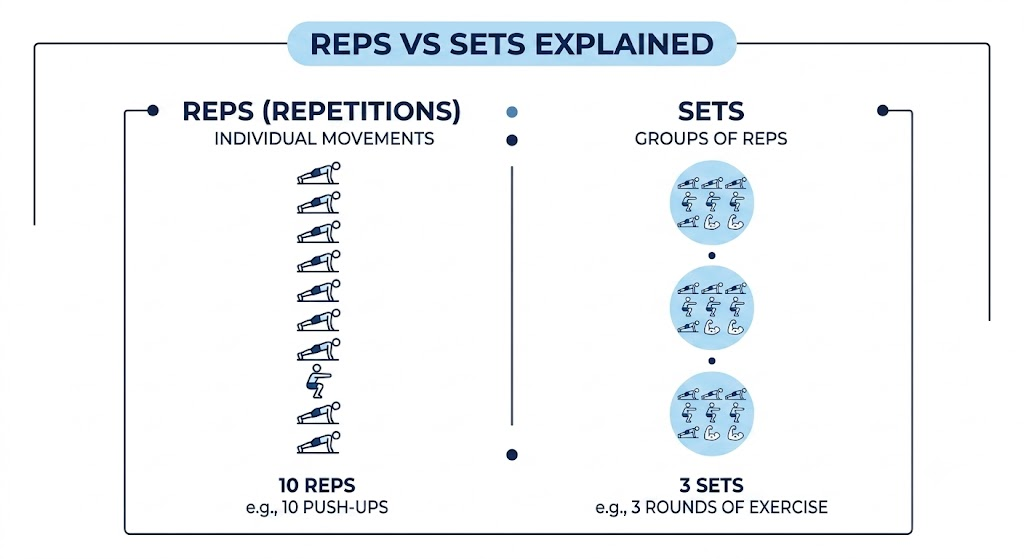
- Reps = individual repetitions of a movement (one squat, one push-up)
- Sets = groups of reps separated by rest (3 sets of 10 reps = 30 total reps, split into 3 rounds)
- Beginner starting point: 3 sets of 8-12 reps per exercise, 2-3 days per week
- Protect your joints while you learn: An Amazon Basics Extra Thick Exercise Mat cushions floor-based sets from day one
Reps vs sets for beginners comes down to two simple building blocks. A rep (repetition) is one full completion of a movement — one push-up, one squat, one curl. A set is a group of reps performed in a row before you rest. So “3 sets of 10 reps” means you do 10 push-ups, rest, do 10 more, rest, then do 10 more — 30 total reps, organized into 3 rounds. For most beginners training at home, 3 sets of 8 to 12 reps per exercise is a genuinely solid starting point, though the full picture is a bit more nuanced once you understand your specific goal.
Breakdown of Rep Ranges: Strength vs. Muscle Building vs. Endurance
Different rep and set combinations produce different training outcomes. Here’s how the three main goals break down.
| Goal | Rep Target | Set Range | Rest Period |
|---|---|---|---|
| Strength | 4-6 reps | 2-3 sets | 2-3 minutes |
| Muscle Building (Hypertrophy) | 8-12 reps | 3-4 sets | 60-90 seconds |
| Muscular Endurance | 15-25 reps | 2-3 sets | 30-60 seconds |
Lower reps with heavier resistance build raw strength. Moderate reps in the middle range build muscle size. Higher reps with lighter resistance build endurance. Most beginners land somewhere in the muscle-building range, since it also delivers a meaningful strength and endurance benefit alongside visible muscle development.
How Many Reps and Sets Should Beginners Do at Home?
The updated 2026 position stand from the American College of Sports Medicine — their first major resistance training update in 17 years — offers a more nuanced answer than the old “always do 3×10” rule most people have heard.
For muscle building specifically, the current guidance targets roughly 10 total sets per muscle group per week, not a fixed number per single session. This means a beginner doing 3 sets of push-ups twice a week is only hitting 6 sets weekly for that muscle group — worth knowing if your goal is genuine hypertrophy over time, since it may mean adding a session or a few extra sets to reach that weekly target.
The same guidelines confirm that home-based training — bodyweight, resistance bands, or basic equipment — is explicitly validated as equally effective as traditional gym equipment, provided the core variables (effort, weekly volume, range of motion) are managed properly. This applies progressive overload directly to your home setup: adding reps, adding sets, or increasing resistance over time is what actually drives results, regardless of whether you’re using a barbell or a resistance band.
For upper body pressing movements like push-ups, joint stability matters as much as rep count. Using REDIFO Ergonomic Push Up Bars puts your wrists in a neutral position rather than fully extended, reducing joint strain across higher rep counts.
For any floor-based sets — planks, glute bridges, kneeling movements — protecting your knees and spine matters just as much as counting reps correctly. An Amazon Basics Extra Thick Exercise Mat cushions repeated floor contact so discomfort doesn’t cut your sets short before your muscles are actually done.
Rest Between Sets: The Forgotten Variable
Most beginners obsess over reps and sets but completely ignore rest periods — despite rest being just as important to your results.
60 to 90 seconds is the sweet spot for beginner muscle-building work at home. This is long enough to partially recover your strength for the next set, but short enough to keep your session efficient and maintain training density.
Resting too little means your form breaks down as fatigue accumulates faster than your muscles can recover between sets. Resting too long — several minutes for a light bodyweight set — offers no additional benefit for most beginner goals and just makes your workout take longer than it needs to.
Recovery between sessions matters too, not just between sets. Using a TriggerPoint GRID Foam Roller after your workout helps address the muscle tightness that builds up across a full session, speeding up how quickly you’re ready for your next one.
Sample Beginner Home Workout Routine
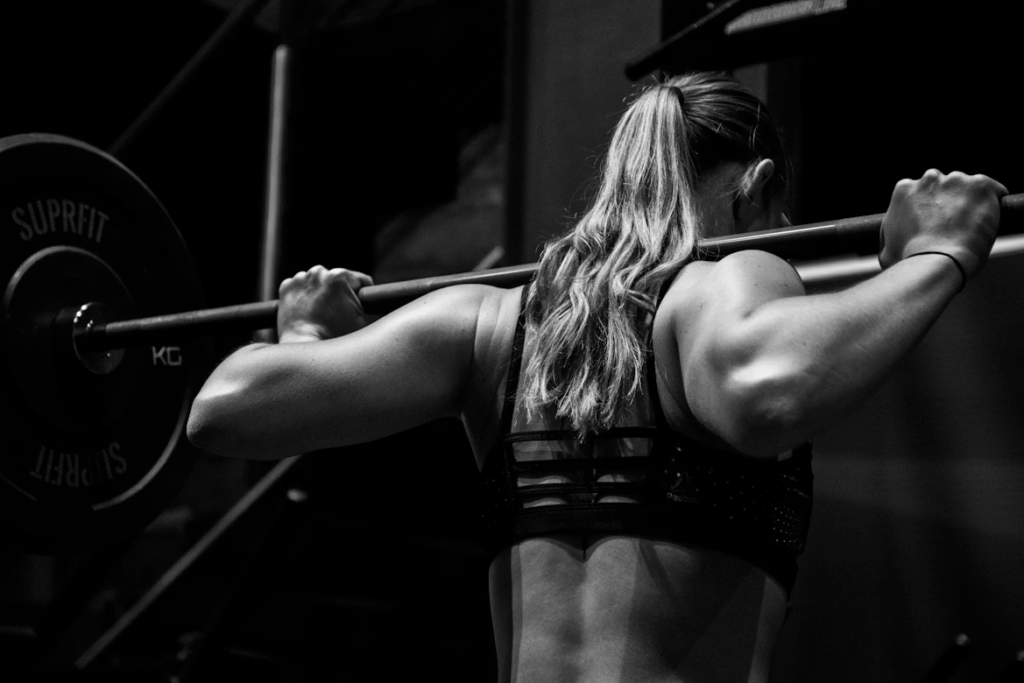
Here’s how the reps and sets principles above apply to an actual session:
| Exercise | Sets | Reps | Rest |
|---|---|---|---|
| Bodyweight Squat | 3 | 10-12 | 60-90s |
| Push-Up (or push-up bar variation) | 3 | 8-10 | 60-90s |
| Glute Bridge | 3 | 12-15 | 60s |
| Plank Hold | 3 | 20-30 sec | 45s |
Run through all four exercises, resting between each set as indicated. This single session, repeated 2 to 3 times per week, provides a solid foundation while you build toward the weekly volume targets discussed above.
If you’re looking to add variety, our 3-day resistance band workout schedule applies these same rep and set principles across a full weekly split using minimal equipment.
3 Common Beginner Mistakes with Sets and Reps
Sacrificing form to hit a rep number. Grinding out a technically-completed but sloppy final rep just to “hit 12” builds bad movement patterns and increases injury risk. A clean 10 beats a messy 12 every time.
Junk volume — doing sets that don’t actually challenge you. Three easy sets of 15 reps that you could keep going well past isn’t driving much adaptation. Your working sets should genuinely challenge you within a few reps of the target, not feel effortless throughout.
Ignoring progressive overload entirely. Doing the exact same 3 sets of 10 reps with the exact same difficulty level for months produces diminishing returns. Once a rep range starts feeling easy, it’s time to add reps, add a set, slow your tempo, or increase resistance.
Frequently Asked Questions
Should beginners train to failure?
Not necessarily. Current research-backed guidance favors stopping a couple of reps before complete failure — often called “reps in reserve” — since this produces similar strength and muscle gains with less accumulated fatigue and lower injury risk, especially useful for beginners still learning proper form under fatigue.
How many sets per muscle group per week?
Roughly 10 total sets per muscle group per week is the current evidence-based target for building muscle, spread across 2 to 3 sessions rather than crammed into one. This is a weekly total, not a per-workout number — worth planning your week around rather than obsessing over a single session.
What if I can’t finish all reps in a set?
That’s useful information, not failure. If you consistently can’t complete your target reps with good form, reduce the difficulty slightly — fewer reps, an easier exercise variation, or a lighter resistance band — and build back up from there rather than forcing reps with breakdown form.
Is doing more reps better than adding weight?
Neither is universally better — they serve different goals. More reps at a manageable difficulty builds endurance and can still build muscle when taken close to fatigue. Adding resistance while keeping reps in the 8-12 range is generally more efficient for building strength and size specifically, since it allows you to hit meaningful effort in less total training time.
For more on building a complete home routine using these principles, our home HIIT workouts guide and our article on the best time to work out at home both cover how to fit consistent training into a realistic weekly schedule.
Disclaimer & Affiliate Disclosure
This article is for informational purposes only and should not be taken as medical advice. Always consult with a qualified healthcare provider or certified fitness professional before starting or changing your exercise routine. This article may also contain affiliate links. If you purchase through these links, we may earn a small commission at no extra cost to you.