Table of Contents
Quick Summary Box
- The routine: 15 minutes total, 5 targeted core movements, 3 days per week
- Top beginner weight: A Vinyl Coated Cast Iron Kettlebell gives you a stable, durable starting point for every movement below
- The goal: Build genuine anti-rotational core strength, not just abdominal appearance
A kettlebell core workout for beginners trains your entire core through five movements built around offset load control — halos, suitcase carries, plank pull-throughs, Russian twists, and windmills. Done in 15 minutes, 3 days per week, this routine builds anti-rotational strength that standard sit-ups and crunches simply don’t address, since a kettlebell’s off-centre weight forces your core to actively resist rotation rather than just flex your abs.
Why Kettlebells Build Dynamic Core and Ab Strength
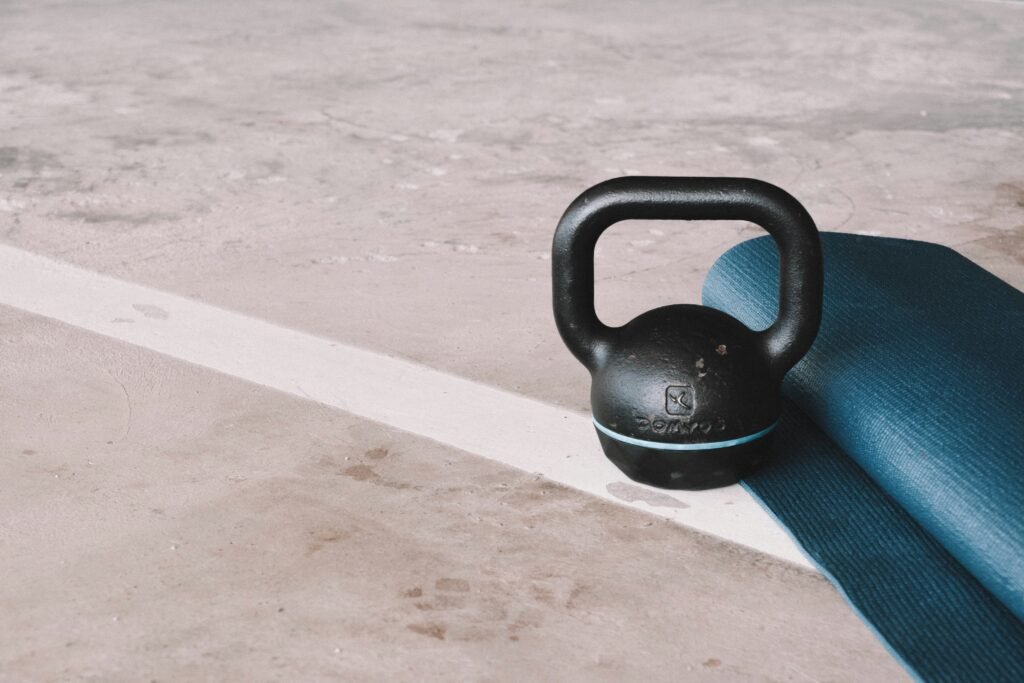
A kettlebell’s handle sits above an offset ball of weight, unlike a dumbbell’s symmetrical load. This offset centre of mass means your core has to work continuously to control the kettlebell, whether you’re holding it still or moving it through space — turning even simple positions into genuine core training.
This is the essence of anti-rotation training: instead of your core actively bending or twisting your spine (like a crunch does), it’s bracing to resist an external force trying to rotate or destabilize you. Real-world movements — carrying uneven grocery bags, catching your balance, twisting to reach something — all demand this exact anti-rotational skill, not the sagittal-plane flexion a sit-up trains.
According to Mayo Clinic Health System, core muscles work together to provide stability and balance, and a strong core plays a direct role in posture and injury prevention — benefits that anti-rotational, load-based training like kettlebell work is particularly well suited to deliver.
Kettlebell Weight Selection Guide and Top Gear Options
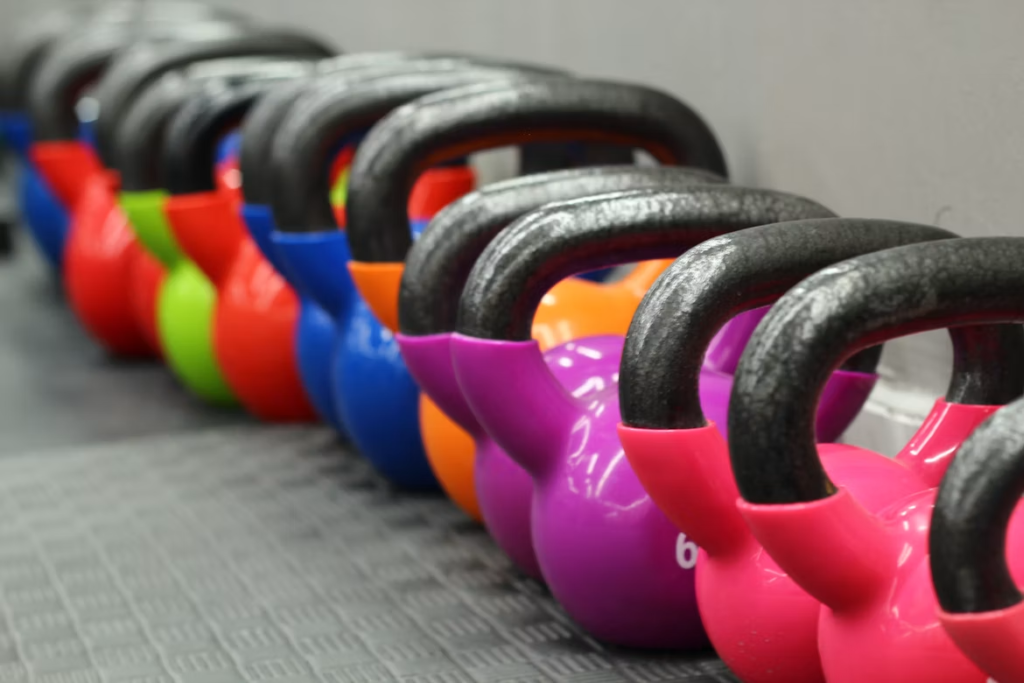
Choosing your starting weight matters more for core work than most people realise, since rotational and anti-rotational movements demand control over raw strength.
Women typically start comfortably in the 8 to 15 pound (4 to 6 kg) range for core-specific work — light enough to maintain control through windmills and twists without straining the lower back.
Men typically start in the 15 to 25 pound (8 to 12 kg) range, though this varies significantly with prior training experience.
These figures are meaningfully lighter than general kettlebell training weights (swings, squats, presses), because core-specific rotational movements place more demand on control and spinal stability than raw strength. Your actual starting point should be based on experience level first, gender second — someone with no prior resistance training experience of any gender should start at the lighter end regardless, while anyone returning from injury or new to exercise generally should start lighter still and prioritize movement quality over load.
| Kettlebell Type | Weight Range | Floor Protection | Beginner Suitability |
|---|---|---|---|
| Cast Iron | Fixed per bell, 10-60 lbs available | None built in | Excellent — most durable option |
| Adjustable Dial | 8-40 lbs in one unit | None built in | Great for progressing without buying multiple bells |
| Soft Cushioned | Fixed per bell | Built-in cushioning | Best for true beginners and indoor floor protection |
For most beginners, a Vinyl Coated Cast Iron Kettlebell — available from 10 to 60 lbs — offers the durability and stability this routine’s control-focused movements demand.
If you’d rather progress through weights without buying multiple bells, an Adjustable Dial Kettlebell covers an 8 to 40 lb range in one compact unit.
If you’re training on hard flooring and want built-in protection along with secure grip, a Cushioned Soft Kettlebell with Non-Slip Gloves combines floor-friendly padding with a grip solution in one package.
The 15-Minute Kettlebell Core Workout
| Movement | Sets x Reps/Time |
|---|---|
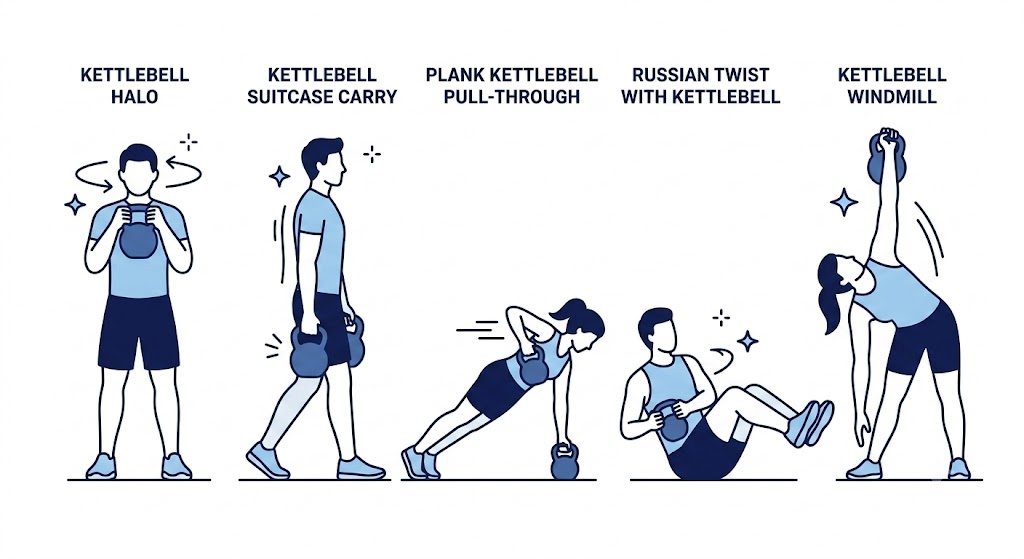
| Kettlebell Halos | 3 x 8 reps each direction |
| Suitcase Carry / Single-Arm March | 3 x 30 sec per side |
| Kettlebell Plank Pull-Throughs | 3 x 8 pulls per side |
| Seated Russian Twists | 3 x 10-12 reps |
| Half-Kneeling Windmills | 3 x 5 reps per side |
1. Kettlebell Halos
Hold the kettlebell by the horns at chest height. Circle it slowly around your head in one direction, keeping your core braced and torso still, then reverse direction for the next set. This builds shoulder mobility alongside genuine core control.
2. Suitcase Carry / Single-Arm March
Hold the kettlebell in one hand at your side, standing tall with shoulders level. Walk with control, resisting the urge to lean toward the weighted side — this anti-lateral-flexion demand is exactly what makes suitcase carries so effective for core stability.
3. Kettlebell Plank Pull-Throughs
Set up in a high plank with the kettlebell beside one hand. Reach under your body with the opposite hand and pull the kettlebell across to the other side, keeping your hips level throughout. This is a genuine anti-rotation exercise disguised as a simple pull.
4. Seated Kettlebell Russian Twists
Sit with knees bent and feet slightly elevated, holding the kettlebell at chest height. Rotate side to side with control, keeping your core engaged rather than relying on arm momentum to swing the weight.
5. Half-Kneeling Kettlebell Windmills
From a half-kneeling position, press the kettlebell overhead with one arm. Hinge at the hips, reaching your opposite hand toward the floor while keeping the kettlebell arm locked and vertical. This trains rotational control through a genuinely demanding range of motion — go slowly here.
Core Safety Rules: Protecting Your Lower Back
Maintain a neutral spine throughout every movement. Avoid excessive arching, particularly during windmills and halos, where the overhead position can tempt you into hyperextending your lower back if your core isn’t actively braced.
Avoid hyperextension during carries and windmills. If you feel your lower back taking the load rather than your core and hips, reduce your weight or range until your form is solid.
Engage your lats during suitcase carries. Actively pulling your shoulder down and back on the weighted side, rather than letting it shrug upward, keeps tension in your core and lats rather than your neck and upper trapezius.
For a deeper breakdown of protecting your spine during core-specific training more broadly, our ab roller workout schedule covers similar anti-extension principles that apply directly here too.
How to Progress Over Time
Once this routine starts feeling manageable, three tools keep it challenging without simply grabbing a heavier bell every week.
Increasing duration on time-based movements like the suitcase carry and plank pull-throughs adds genuine endurance demand without changing anything else.
Adjusting lever length — holding the kettlebell further from your body during halos and windmills — increases the rotational demand on your core significantly, even at the same weight.
Stepping up in weight should come last, once your control and form are consistently solid across every movement in this routine, not before.
If you’re deciding between a kettlebell and dumbbell as your primary home equipment investment, our dumbbells vs kettlebells comparison breaks down exactly which suits your specific training goals better.
Frequently Asked Questions
What weight kettlebell should a beginner use for core workouts?
Most women start comfortably in the 8 to 15 pound range and most men in the 15 to 25 pound range specifically for core-focused work, which is lighter than general kettlebell training weights. Prior training experience matters more than gender alone — anyone new to resistance training should start at the lighter end regardless.
Is a kettlebell core workout better than crunches or sit-ups?
It trains a genuinely different quality of core strength. Crunches train spinal flexion in isolation, while kettlebell anti-rotational work builds the bracing and stability your core actually uses during real-world movement. A well-rounded core routine benefits from both, but anti-rotational training addresses a gap that crunches alone leave completely untouched.
Can I do kettlebell core exercises every day?
Two to three sessions per week with rest days between, as outlined in this routine, allows your core muscles adequate recovery while still building strength consistently. Training the same core movements daily without rest increases the risk of overuse strain, particularly around the lower back.
What if a kettlebell feels too heavy for Russian twists?
Drop to a lighter kettlebell specifically for rotational movements like twists and windmills, even if you’re using a heavier bell for carries or halos. Different movements in this routine legitimately call for different weights, and matching the load to the specific demand of each exercise is smarter than forcing one weight through everything.
Disclaimer & Affiliate Disclosure
This article is for informational purposes only and should not be taken as medical advice. Always consult with a qualified healthcare provider or certified fitness professional before starting or changing your exercise routine. This article may also contain affiliate links. If you purchase through these links, we may earn a small commission at no extra cost to you.