This quiet HIIT workout at home no equipment routine burns real calories in 20 minutes — no jumping, no noise, no disturbing your downstairs neighbors.
You want a proper cardio session that leaves you sweating. You also live above someone who will absolutely hear every jump you make. A hiit workout at home no equipment approach doesn’t have to mean choosing between intensity and being a decent neighbor. This routine gets your heart rate genuinely up in 20 minutes — no jumping jacks, no burpees, no complaints from downstairs.
Here’s the myth worth busting first: high-impact jumping isn’t what makes HIIT effective. What drives results is intensity, time under tension, and short rest periods — none of which require your feet leaving the ground.
Table of Contents
The 3 Golden Rules of Neighbor-Friendly HIIT
Rule 1 — Eliminate landing impact. Every jump requires a landing, and every landing sends vibration through the floor. Swap jumping movements for explosive driving movements instead — the same muscular effort and heart rate spike, minus the impact that travels through your ceiling.
Rule 2 — Increase time under tension. Slowing the eccentric (lowering) phase of a movement and adding pulsing holds keeps your muscles working harder for longer without a single loud step. This alone can make a controlled squat feel just as demanding as a jump squat.
Rule 3 — Shorten rest intervals. Keeping rest periods brief maintains an elevated heart rate throughout the session rather than letting it drop and spike repeatedly. Short, consistent rest is one of the primary tools driving HIIT’s cardiovascular benefit — and it costs nothing in terms of noise.
The 20-Minute No-Jump Apartment HIIT Routine
Format: 4 exercises, 40 seconds work, 20 seconds rest, 4 rounds total.
| Exercise | Target | Work / Rest | Rounds |
|---|---|---|---|
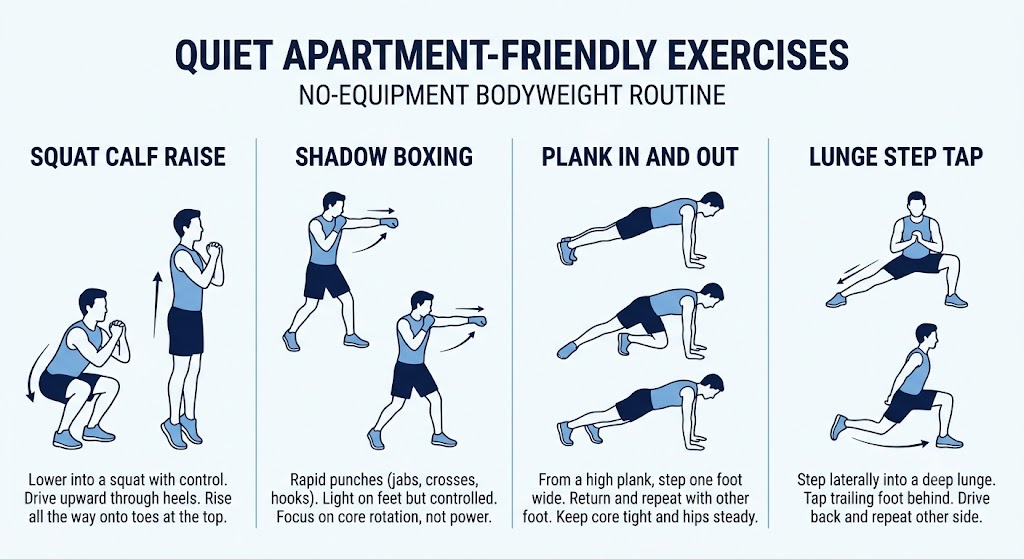
| Explosive Squat to Calf Raise | Legs, glutes | 40s / 20s | 4 |
| Fast-Paced Shadow Boxing | Cardio, shoulders, core | 40s / 20s | 4 |
| Quiet Plank In-and-Outs | Core, shoulders | 40s / 20s | 4 |
| Speed Skater Step-Taps | Legs, glutes, balance | 40s / 20s | 4 |
Exercise 1 — Explosive Bodyweight Squat to Calf Raise
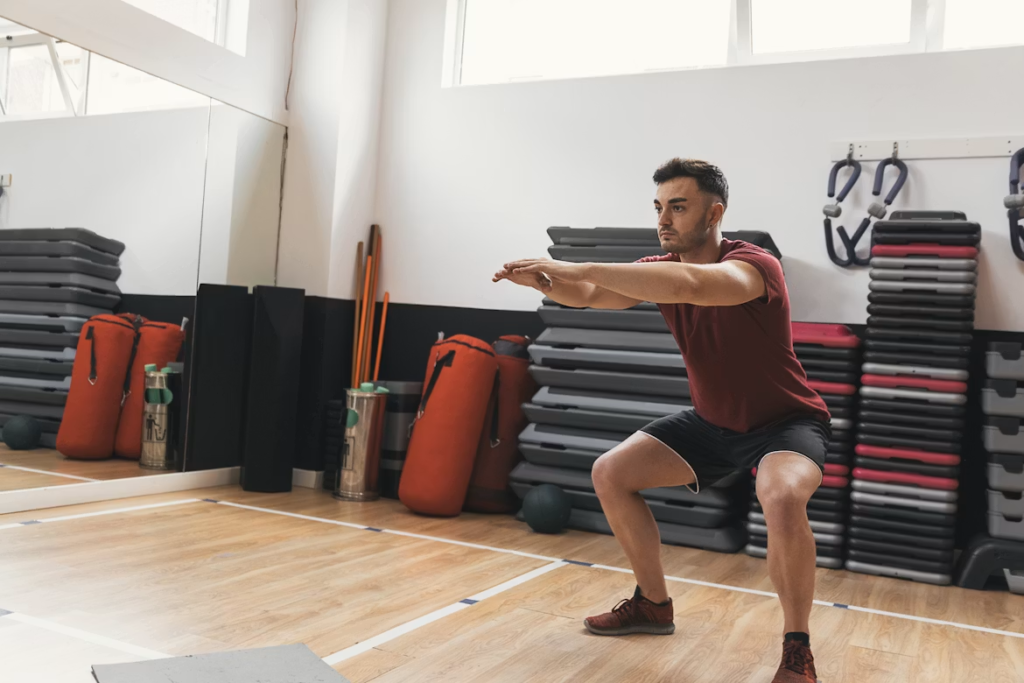
Lower into a squat with control, then drive upward explosively through your heels — but instead of leaving the ground, rise all the way onto your toes at the top for a calf raise. The explosive intent is what raises your heart rate; the controlled landing is what keeps your neighbors happy. Keep your knees tracking over your toes throughout.
Exercise 2 — Fast-Paced Shadow Boxing or High Knee Drives
Throw rapid punches — jabs, crosses, hooks — while staying light on your feet, or drive your knees up quickly without any hop between steps. Both options spike your heart rate through sheer movement speed rather than impact. Keep your core braced and your movements sharp and controlled.
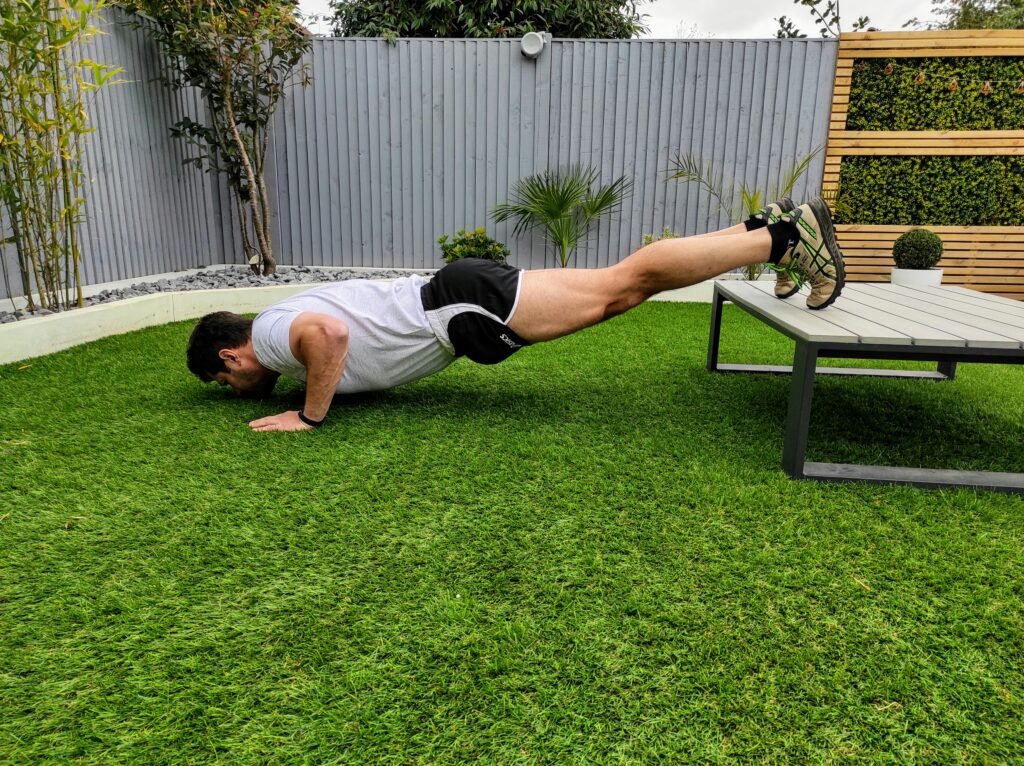
Exercise 3 — Quiet Plank In-and-Outs
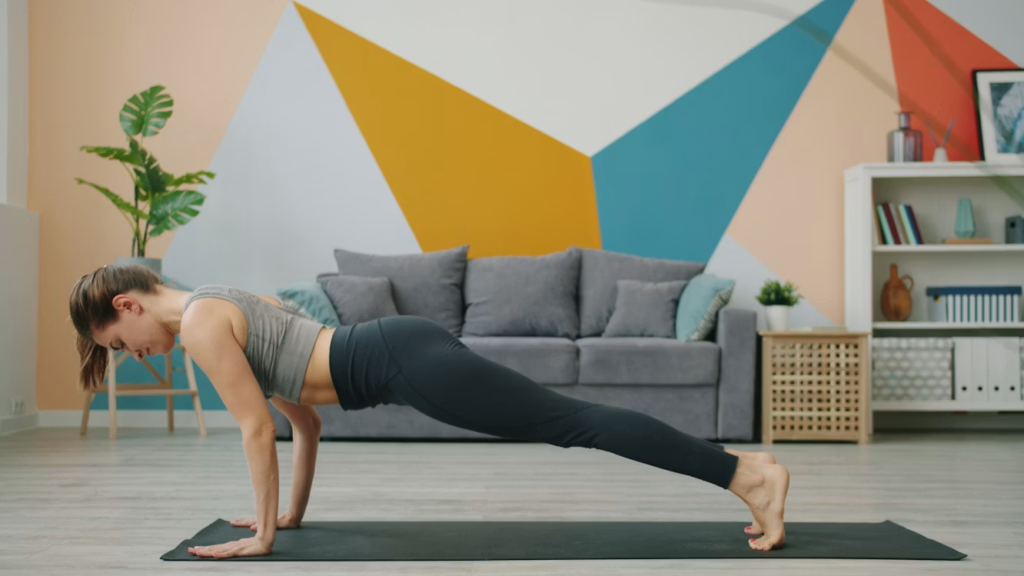
From a high plank position, jump your feet is replaced here: step one foot at a time out wide and back in, moving as quickly as your control allows. Keep your hips level throughout — this is a core and shoulder burner that never leaves the floor.
Exercise 4 — Speed Skater Lunge Step-Taps
Step laterally into a deep lunge, tapping your trailing foot behind you, then drive back to the other side — mimicking a speed skater’s motion without the jump between sides. This trains lateral power and balance while keeping both feet controlled at all times.
How to Make Bodyweight HIIT Harder Over Time
The same progressive overload principles that build muscle without added weight apply directly to bodyweight cardio too.
Slow your tempo further — a 4-second controlled squat descent is dramatically harder than a 1-second drop, with zero added noise. Reduce your rest intervals from 20 seconds to 15, then 10, as your conditioning improves. Extend your work intervals from 40 seconds to 45 or 50 while keeping rest fixed — this increases total time under tension without changing a single movement.
Essential Gear to Upgrade Your Apartment Workouts
A proper mat does double duty — cushioning your joints and deadening sound transfer through hardwood or laminate flooring. This matters more than most people realise; a thin yoga mat barely dampens vibration, while a genuinely dense mat absorbs a meaningful amount of impact noise.
🛒 Recommended gear: A high-density exercise mat cushions your joints during floor work while also reducing the sound that travels to the apartment below during more explosive movements.
A fitness tracker helps confirm you’re actually hitting an effective intensity zone — since without jumping as an obvious intensity marker, it’s easy to underestimate how hard you’re working.
🛒 Recommended gear: A budget fitness tracker lets you verify you’re reaching 80%+ of your max heart rate during work intervals, confirming the low-impact routine is genuinely delivering HIIT-level intensity.
Hydration matters just as much indoors as it does during an outdoor run. Intense indoor sweat sessions in a warm apartment can dehydrate you quickly, particularly without airflow from outdoor movement.
🛒 Recommended gear: Electrolyte hydration packets provide fast rehydration during and after intense indoor sessions, replacing what a sweaty 20-minute circuit genuinely depletes.
Post-Workout Recovery and Fuel
A high-intensity circuit like this one places real demand on your legs, core, and cardiovascular system — recovery matters just as much as the session itself.
🛒 Recommended gear: Rolling out your legs and back with a high-density foam roller after a high-intensity session helps reduce next-day soreness and maintains the range of motion your next workout depends on.
Protein intake also plays a direct role in how well your muscles recover between sessions. For a full breakdown of exactly how much you need, check out our guide on protein requirements for beginners.
FAQ
Can you actually lose weight with low-impact HIIT?
Yes. Weight loss depends on maintaining a calorie deficit, and low-impact HIIT is genuinely effective at burning calories and elevating heart rate when work-to-rest ratios and intensity are managed properly — the absence of jumping doesn’t reduce the calorie burn, it simply removes the impact.
How many times a week should a beginner do home HIIT?
Two to three sessions per week, with rest or active recovery days between sessions, is the sensible starting frequency. HIIT places significant demand on your nervous system and joints even without jumping, so adequate recovery between sessions matters for consistent progress.
Is HIIT better than steady-state cardio for home workouts?
Neither is universally “better” — they serve different purposes. HIIT is more time-efficient and produces a strong post-exercise calorie burn effect, while steady-state cardio is gentler on recovery and easier to sustain for longer durations. Most well-rounded routines include both.
Final Thoughts
A hiit workout at home no equipment routine doesn’t require choosing between real intensity and being considerate of the people living below you. Explosive intent without impact, controlled tempo, and short rest periods deliver the cardiovascular and calorie-burning benefits HIIT is known for — quietly, consistently, and entirely within your own four walls.
Disclaimer & Affiliate Disclosure:
This article is for informational purposes only and should not be taken as medical advice. Always consult with a qualified healthcare provider or certified fitness professional before starting or changing your exercise routine. This article may also contain affiliate links. If you purchase through these links, we may earn a small commission at no extra cost to you.