You can measure body fat percentage at home with a tape measure, skinfold calipers or a body-composition scale, but none of them is perfectly accurate, so the smart approach is to pick one method and track your trend over time. The tape-measure (Navy) method is free and easy to repeat, calipers are cheap but depend on your technique, and smart scales are convenient but can be off by several points. This guide shows you how each one works, how accurate they really are, and how to use the numbers without obsessing over them.
Table of Contents
Quick Summary
- No home method is exact. Even good ones can be off by several percentage points compared with a DEXA scan.
- The tape-measure (Navy) method is the best free option. Use the calculator in this article with a cloth tape.
- Smart scales vary widely. A 2022 study found relative errors of about 10% to 22% for the devices it tested.
- Consistency beats accuracy. Measure the same way, at the same time, and watch the trend.
- Ranges are descriptive, not targets. Don’t chase very low numbers.
Why Measure Body Fat at All?
Scale weight can’t tell fat from muscle, so it can mislead you when you’re lifting and losing fat at the same time. Body fat percentage gives a clearer picture of what’s changing. If you’re unsure why the scale isn’t the whole story, our guide on fat loss vs weight loss explains it.
The catch is that home methods estimate rather than measure. That’s fine, as long as you treat the number as a rough guide and focus on how it changes.
How to Measure Body Fat Percentage at Home: 4 Methods Compared
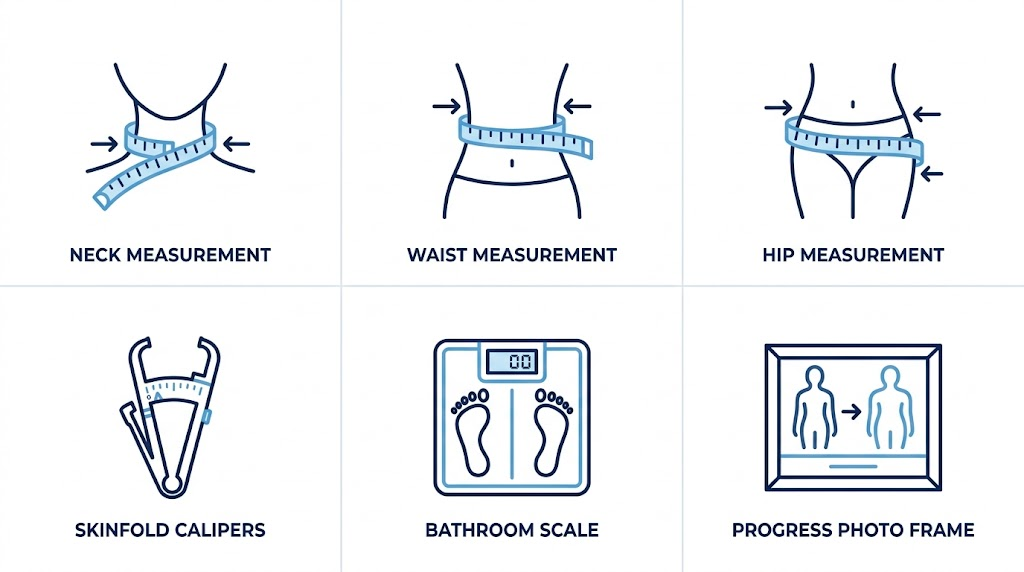
| Method | Cost | Ease | Main weakness |
|---|---|---|---|
| Tape measure (Navy method) | Very low | Easy | Uses averages, so it can be off for your body type |
| Skinfold calipers | Low | Moderate | Results depend heavily on technique |
| Body-composition scale | Low to moderate | Very easy | Affected by hydration and can be far off |
| Photos and waist trend | Free | Easy | No number, only a visual trend |
Method 1: Tape Measure (US Navy Method)
The Navy method estimates body fat from your height and a few circumference measurements. It was developed by researchers at the U.S. Navy, and the original validation was in men. That study, compared against underwater weighing, found a standard error of about 3.5 percentage points.
A more recent study of 62 adults in Military Medicine compared a military tape method with DEXA. The tape method read lower than DEXA on average, by about 5.5 percentage points in men and 1.7 in women. That study used the Army’s version of the tape method rather than the exact Navy formula, but it shows why you should treat the result as an estimate.
How to measure:
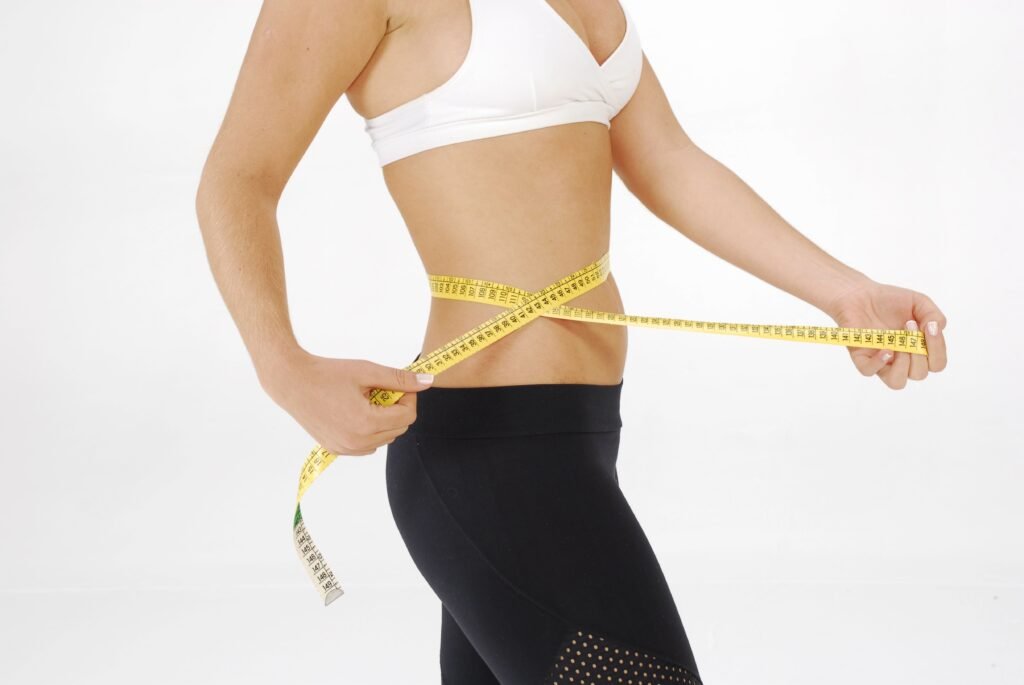
- Height: stand barefoot against a wall and measure to the nearest half centimetre.
- Neck: measure just below the Adam’s apple, with the tape sloping slightly downward at the front.
- Waist (men): measure at the navel, relaxed, at the end of a normal breath out.
- Waist (women): measure at the narrowest point between your ribs and hips.
- Hips (women): measure at the widest point of your hips and buttocks.
- Repeat each measurement twice and use the average. Keep the tape snug but not tight.
Enter the numbers into the calculator below. For example, a man who is 180 cm tall with a 38 cm neck and 85 cm waist gets about 16.1%. A woman who is 165 cm tall with a 32 cm neck, 72 cm waist and 98 cm hips gets about 27.4%.
Body Fat Percentage Calculator (Navy Method)
Based on the U.S. Navy circumference method (Hodgdon & Beckett, 1984). Category ranges follow the American Council on Exercise (ACE) chart and are descriptive, not targets. This is general information, not medical advice. If you have a history of disordered eating, please speak with a professional rather than tracking body fat.
Method 2: Skinfold Calipers
Calipers pinch the fat just under your skin at several sites, and a formula turns those readings into a body fat percentage. They’re cheap and can work well in trained hands, but the numbers depend on exactly where you pinch, how hard, and how consistent you are. It’s very hard to do this on yourself, so a friend or a coach usually gets better results.
If you use them, mark the sites, take each measurement two or three times and always test at the same time of day. You’ll get a more reliable trend than a precise number.
Method 3: Body-Composition (Smart) Scales
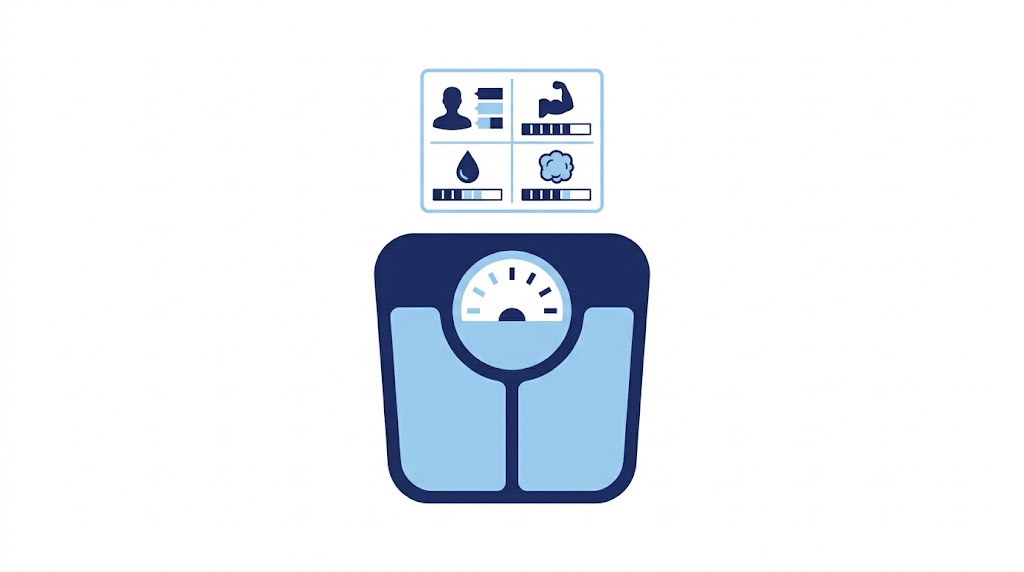
These scales send a tiny electrical current through your body and estimate fat from how easily it flows, a technique called bioelectrical impedance. They’re the easiest option but not the most accurate. A 2022 study in the Journal of Exercise and Nutrition compared several impedance devices with DEXA and found that average errors in body fat percentage ranged from about 10% to 22%, and the authors described the errors at the individual level as unacceptable.
In fairness, those were clinical and prosumer devices rather than typical bathroom scales, and the figures are relative errors. Even so, they show that a single reading can mislead. Hydration matters a lot, so for the best consistency weigh yourself in the morning, after using the toilet and before eating or drinking.
Safety note: the British Heart Foundation says smart scales are not suitable if you have a pacemaker. Research on clinical devices hasn’t shown interference, but the risk hasn’t been ruled out for consumer scales. Check with your cardiologist first.
Method 4: Photos and Waist Measurements
If you don’t want a number, take a front, side and back photo every two to four weeks in the same lighting, and measure your waist at the same spot each time. Together with your strength numbers in the gym, this often tells you more about progress than any single percentage.
Which Method Should You Choose?
If you want the simplest low-cost start, choose the tape measure. It costs almost nothing, takes five minutes and gives you a repeatable number. Add calipers only if you have someone to help you measure consistently. Choose a scale if convenience matters most, and accept that its reading is a trend indicator rather than a true value. Whatever you choose, write the date and the number in a notebook or phone note so you can see your progress at a glance.
What Is a Healthy Body Fat Percentage?
The American Council on Exercise (ACE) publishes ranges that many trainers use. They are general estimates, not medical thresholds:
| Category | Men | Women |
|---|---|---|
| Essential fat | 2 to 5% | 10 to 13% |
| Athletes | 6 to 13% | 14 to 20% |
| Fitness | 14 to 17% | 21 to 24% |
| Average | 18 to 24% | 25 to 31% |
| Above average | 25% and over | 32% and over |
“Essential fat” is the minimum your body needs to function, not a goal. Pushing towards very low numbers can hurt your health, energy and hormones, so use these ranges to understand where you are, not to set a target. If you’ve ever struggled with disordered eating, it’s wise to talk to a professional before tracking body fat at all.
How to Track Your Body Fat Over Time
- Pick one method and stick with it, since different methods won’t agree with each other.
- Measure under the same conditions: same time of day, same hydration, same clothing.
- Measure every two to four weeks, not every day. Small daily changes are mostly noise.
- Use the trend. If your number is drifting down and your waist is shrinking, you’re on track.
- Combine with other signs, such as photos, how your clothes fit and your strength in the gym.
If your measurements stall, see our guide on how to break a weight loss plateau. If you want to lose fat while keeping muscle, our post on what a calorie deficit is and the protein intake calculator are good next steps. Wondering how to firm up? Read how to tone your body.
Common Mistakes When Measuring Body Fat
- Comparing different methods. A scale and a tape measure will give different numbers, so don’t mix them.
- Measuring at random times. Hydration and meals change readings, especially on scales.
- Pulling the tape too tight. It compresses the skin and lowers the reading.
- Measuring daily. Day-to-day changes are mostly noise.
- Treating the number as exact. It’s an estimate with a margin of error.
Recommended Tools to Measure Body Fat at Home
- Body measuring tape: everything you need for the Navy method. Use a flexible cloth tape.
- Skinfold calipers: a low-cost option if you have a partner to help.
- Body-composition scale: the easiest way to track trends, as long as you weigh at the same time each day.
Final Thoughts
The best way to measure body fat percentage at home is the method you’ll repeat consistently. Start with a tape measure and the calculator above, add photos and waist checks, and look at your trend over weeks and months instead of chasing one perfect reading. Keep in mind that the number is a guide, not a grade.
Disclaimer & Affiliate Disclosure
This article is for informational purposes only and should not be taken as medical advice. Always consult with a qualified healthcare provider or certified fitness professional before starting or changing your diet or exercise routine. This article may also contain affiliate links. If you purchase through these links, we may earn a small commission at no extra cost to you.