Table of Contents
Quick Summary Box
- The honest answer: Consistency and total calorie deficit matter far more than clock time — but morning workouts tend to support consistency better, while evening workouts allow for greater training intensity
- The real deciding factor: Which time you’ll actually show up for, week after week
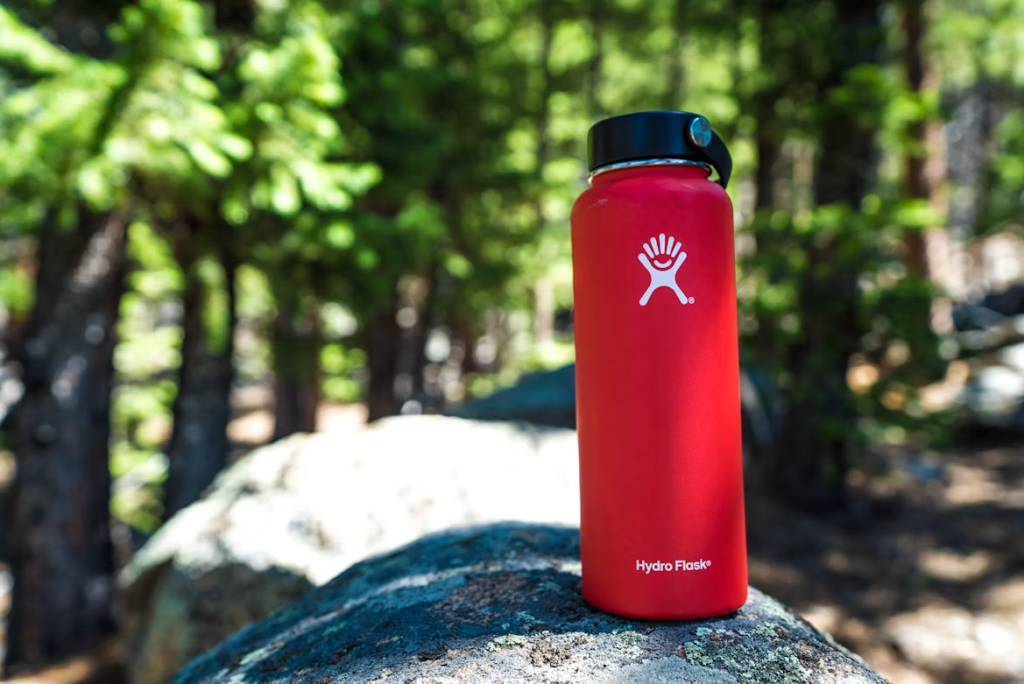
- Hydration essential: An Enerbone Motivational Water Bottle with Hourly Hydration Tracker helps whichever time you choose
The best time to work out at home for weight loss isn’t a fixed clock time — it’s whichever time you’ll consistently repeat, week after week, since consistency and maintaining a calorie deficit drive fat loss far more than exercise timing itself. That said, the two options aren’t identical: morning workouts tend to support better long-term consistency and habit formation, while evening workouts generally allow for higher training intensity since your body performs better later in the day. Neither is universally “better” — the right choice depends on your schedule, energy patterns, and which time you can genuinely sustain.
Morning Workouts for Weight Loss: Advantages and Potential Drawbacks
Advantage — consistency. Morning is often the only time of day that hasn’t already been claimed by work, family, or social commitments. Training before your day starts removes the risk of “something coming up” later and derailing your session.
Advantage — habit formation. Completing your workout before you even begin your day creates a sense of accomplishment early, and that consistency compounds into a genuinely sustainable long-term habit for many people.
Consideration — fasted versus fed training. Some people train fasted in the morning, before eating anything. Fasted cardio does increase fat oxidation during the session itself, but research consistently shows this doesn’t translate into meaningfully greater fat loss over time when total daily calories and protein intake are matched between fasted and fed groups. If fasted training feels good and fits your schedule, it’s a perfectly valid choice — just don’t expect it to be a fat-loss shortcut on its own.
Drawback — lower body temperature and cortisol timing. Your core body temperature and muscle function are naturally lower first thing in the morning, which can make early sessions feel harder or slightly reduce peak performance compared to later in the day.
Evening Workouts for Weight Loss: Advantages and Potential Drawbacks

Advantage — peak physical performance. Your body temperature rises throughout the day, and by late afternoon and early evening, your muscles, joints, and enzyme activity are generally primed for higher-intensity work — meaning evening sessions often allow for better strength and speed output.
Advantage — stress relief after work. For many people, an evening workout provides a genuine release valve after a demanding day, transforming accumulated stress into productive physical output rather than carrying it into the evening.
Drawback — competing priorities. Evening time is also when social plans, family obligations, and simple fatigue are most likely to interfere, making consistency genuinely harder to maintain compared to a protected morning slot.
Drawback — potential sleep impact. Training too close to bedtime can interfere with sleep quality for some people, since intense exercise raises core body temperature and stimulates your nervous system in ways that can delay winding down.
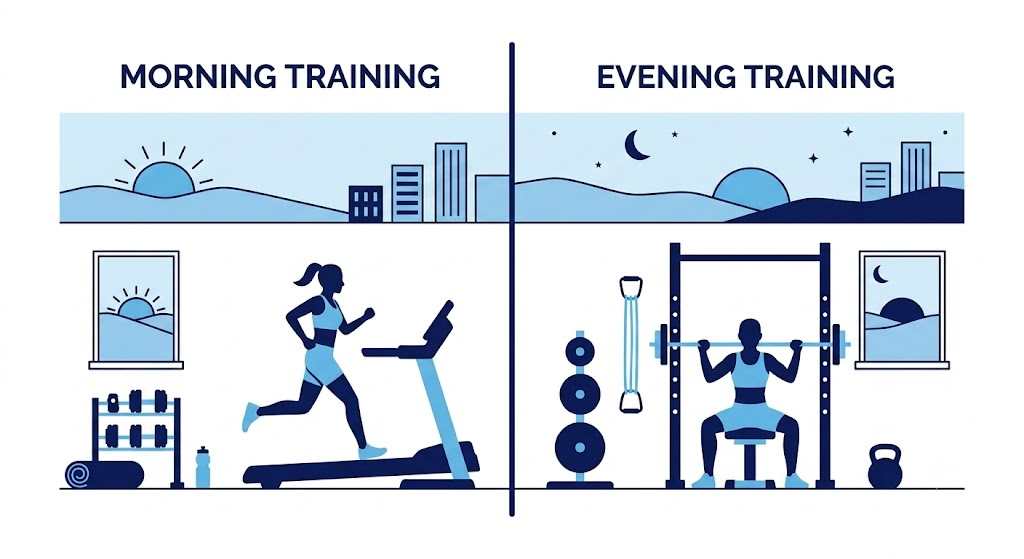
Morning vs. Evening Comparison Matrix
| Factor | Morning | Evening |
|---|---|---|
| Energy Levels | Lower initially, rises with warm-up | Naturally higher — peak performance window |
| Consistency Rate | Higher — protected time slot | Lower — competes with daily obligations |
| Fat Loss Potential | Equal, when calories are matched | Equal, when calories are matched |
| Ideal Person | Busy schedules, early risers, habit-builders | Night owls, those training for strength/performance |
Hydration, Temperature, and Tracking Tools for Home Workouts
Whichever time you choose, a few tools make consistency genuinely easier to sustain.
Hydration matters regardless of when you train, but morning sessions in particular start from a slight deficit after a full night without fluids. An Enerbone Motivational Water Bottle with Hourly Hydration Tracker builds a visible reminder into your day, whether you’re rehydrating post-morning-workout or fueling up before an evening session.
Managing sweat and body temperature matters more for evening sessions, where your core temperature is already elevated before you even start. An Instant Cooling Microfiber Towel Set helps you cool down quickly between sets regardless of time of day.
Tracking your workouts helps you notice, over weeks, which time slot you actually stick with most consistently — the real answer to the morning-versus-evening question, for you specifically. Most people track digitally through apps like MyFitnessPal, Strong, or Hevy, which sync automatically and calculate volume for you. But for lifters who find a phone screen distracting mid-session, or who simply prefer a tactile, screen-free way to log training, a Hardcover Daily Fitness Planner and Workout Log offers a genuinely distraction-free paper alternative that many people find easier to stick with long term.
How to Choose Your Ideal Home Workout Time: 3-Step Decision Framework
Step 1 — Identify your protected time. Look honestly at your schedule and find the block least likely to get interrupted by work, family, or social plans. That’s your most reliable training window, regardless of whether it’s morning or evening.
Step 2 — Test both for two weeks each. Rather than guessing, actually try a consistent morning routine for two weeks, then switch to evening for two weeks. Track how many sessions you genuinely complete in each block — the data will tell you more than any general advice can.
Step 3 — Commit to whichever produced better consistency. Once you have real data on which time you actually show up for, commit to it. For a structured routine to test during this trial period, our 3-day workout schedule gives you a repeatable framework to run during both your morning and evening trial weeks.
Frequently Asked Questions
Is it bad to work out on an empty stomach in the morning?
For most healthy adults doing moderate-intensity training, fasted morning workouts are safe and simply a personal preference rather than a requirement. If you feel dizzy, weak, or notice your performance dropping significantly, eating a small snack beforehand is a reasonable adjustment.
How soon before bed should I avoid evening workouts?
Finishing intense exercise at least 1 to 2 hours before bedtime gives your core body temperature and nervous system time to settle before sleep. If you notice evening training consistently disrupts your sleep, shifting your session earlier in the day is worth testing.
Does fasted cardio actually burn more fat than eating before a workout?
Fasted cardio does increase fat oxidation during the session itself, but multiple controlled studies — including a well-designed four-week randomized trial comparing fasted and fed groups on matched calories — found no significant difference in actual fat loss between the two approaches over time. Total calorie balance matters far more than whether you ate before training.
What if my work schedule changes and I need to switch workout times?
Switching is completely fine and sometimes necessary — the goal is finding whatever time currently fits your life, not permanently locking into one schedule. Use the same 3-step framework above whenever your schedule shifts to identify your new most reliable training window.
For a deeper breakdown of why calorie balance matters more than workout timing, our guide on maintaining a consistent calorie deficit covers exactly why this is the real driver of fat loss results. And if you want a time-efficient session that works well in either a morning or evening window, our home HIIT workout routine fits into a tight schedule either way.
Disclaimer & Affiliate Disclosure
This article is for informational purposes only and should not be taken as medical advice. Always consult with a qualified healthcare provider or certified fitness professional before starting or changing your exercise routine. This article may also contain affiliate links. If you purchase through these links, we may earn a small commission at no extra cost to you.