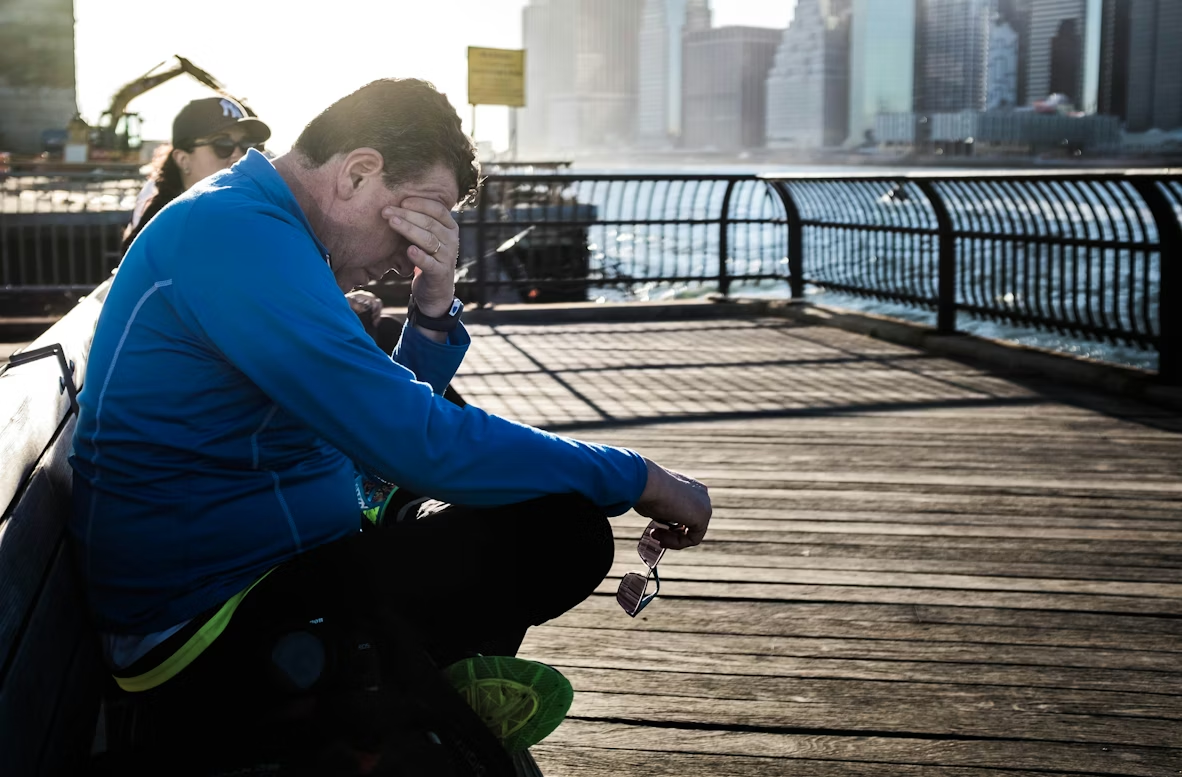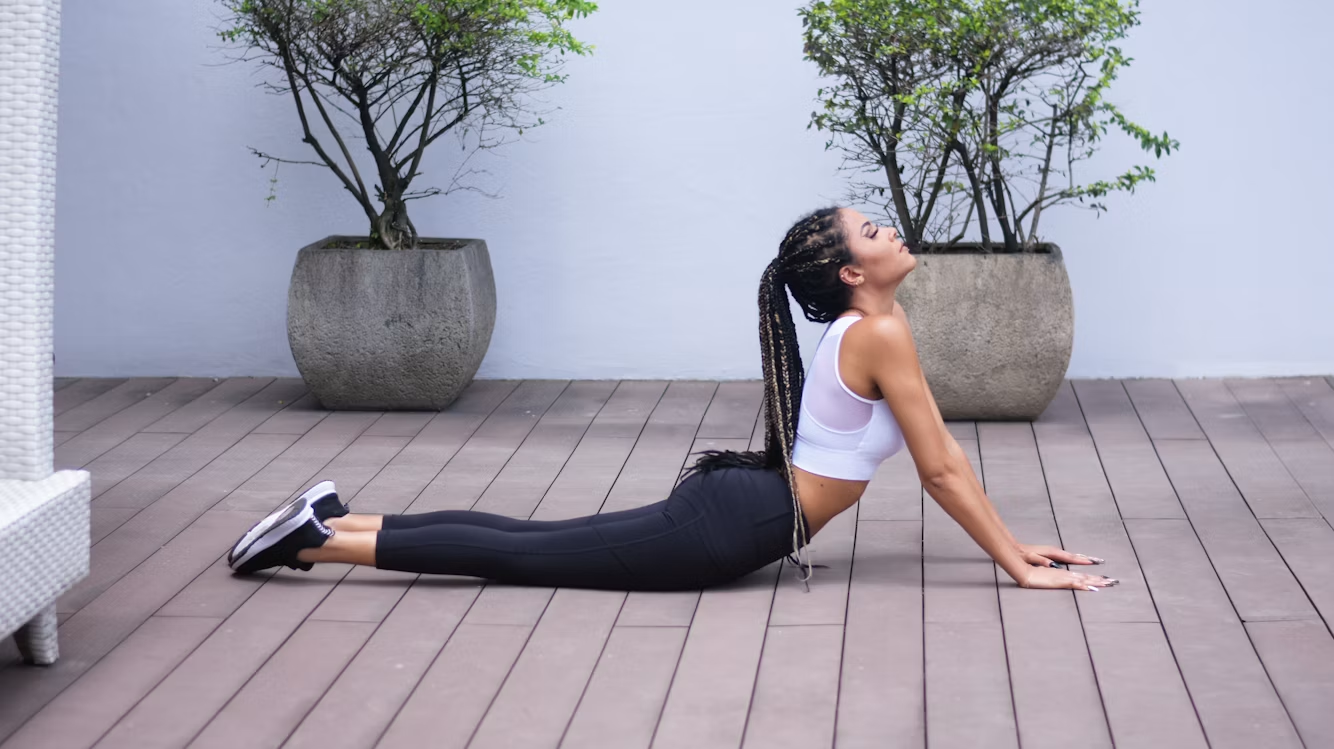
Should I work out with sore muscles? You wake up two days after leg day and going downstairs feels like a personal attack. Every beginner has been there. Here’s exactly what to do when soreness hits.
Table of Contents
What Is That Soreness? (It Has a Name)
That deep, achy feeling 24 to 48 hours after a workout is called DOMS — Delayed Onset Muscle Soreness. It’s caused by tiny microscopic tears in your muscle fibres during exercise. Your body responds by increasing inflammation around the affected area, which creates that painful sensation.
DOMS is completely normal — especially when you try something new or push harder than usual. It’s a sign your body is adapting and getting stronger.
Should I Work Out With Sore Muscles? The Simple Answer
Yes — but it depends on how sore you are and what workout you’re planning.
Mild soreness means light exercise is not just fine — it can actually help. Gentle movement increases blood flow to sore muscles, which speeds up recovery.
Moderate soreness means you should either train a completely different muscle group, or stick to active recovery like walking, swimming, or yoga.
Severe soreness — where your muscles are painful to touch or your range of motion is significantly limited — means you should rest completely. Pushing through severe soreness risks turning a minor issue into a real injury.
The Simple Decision Rule
Ask yourself two questions before every workout when you’re sore:
Which muscles are sore? If it’s your legs, train upper body. If it’s your chest, train legs. Rotating muscle groups means you never have to choose between training and recovering.
How intense is today’s workout? A gentle walk or yoga session when sore is almost always fine. A heavy squat session on already-sore legs is not.

What Actually Helps DOMS Recover Faster?
According to Medical News Today, DOMS typically peaks between 24 and 72 hours after exercise and resolves on its own with rest and light movement.
Light movement is the best medicine for DOMS. A 20-minute walk or easy cycle increases blood flow and flushes out the soreness faster than lying completely still.
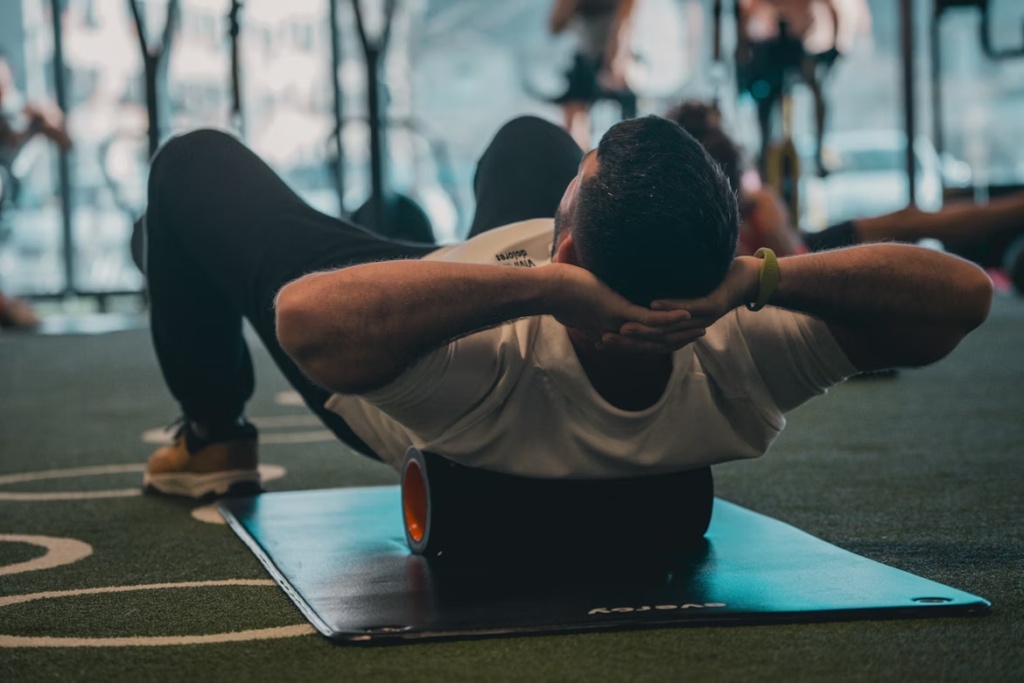
Foam rolling and gentle massage apply light pressure to sore areas and help speed up the recovery process significantly.
Sleep is when most of your muscle repair happens. Prioritise 7 to 9 hours, especially after hard sessions.
Protein and water are non-negotiable. Your muscles need both to rebuild properly. Eat enough protein throughout the day and stay well hydrated.
Dynamic stretching — moving through your full range of motion gently — helps keep tight muscles mobile without adding more stress.
What Makes DOMS Worse?
Training the same sore muscles hard before they’ve recovered is the biggest mistake. It doesn’t make you tougher — it just slows down your progress and increases injury risk.
Sitting completely still all day actually makes DOMS worse, not better. Light movement is always more helpful than total inactivity.
Skipping sleep and eating poorly after a hard session will significantly extend how long the soreness lasts.
A Note for Beginners
DOMS hits hardest when you’re new to exercise because your body isn’t used to the movement patterns yet. The good news is it gets much better over time. The more consistently you train, the less severe DOMS becomes. Stick with it — the soreness is temporary, the results are permanent.
For more on how to structure your training around recovery, check out our guide on how many rest days should I have.
The Bottom Line
Should you work out with sore muscles? Yes — but smart. Light movement and training different muscle groups is not just fine, it’s often beneficial. Hammering the same sore muscles before they’ve recovered is where things go wrong. Listen to your body, keep moving gently, and trust the process.
Disclaimer
This article is for informational purposes only and should not be taken as medical advice. Always consult with a qualified healthcare provider or certified fitness professional before starting or changing your exercise routine — especially if you have existing health conditions, injuries, or concerns about overtraining.